Author: Article999

  • Template CPD Log – Changelog

    Template CPD Log – Changelog

    02/04/2023 – V1.6:

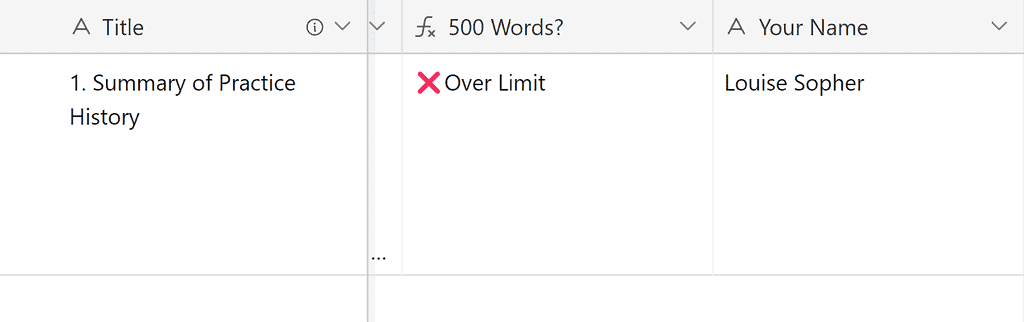
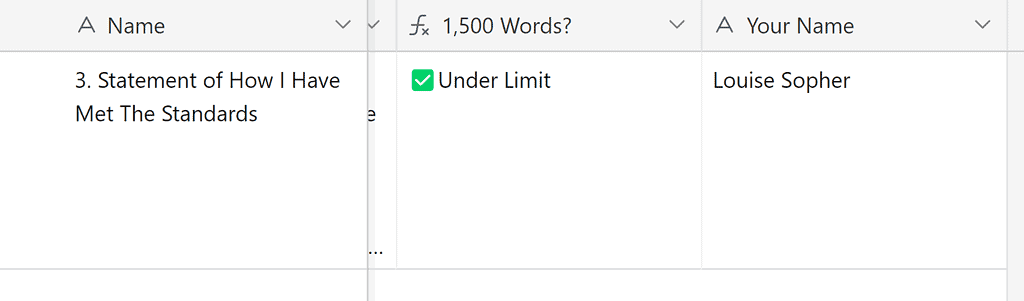
    • The HCPC elements – the 500 word summary of practice history & 1,500 word supporting statement, which are both currently in the OneNote template (now called the ‘help file’) will now be inside the Airtable database. This means everything can be printed/exported directly from Airtable, without the need to transfer everything into OneNote at the end or the need to print directly. 
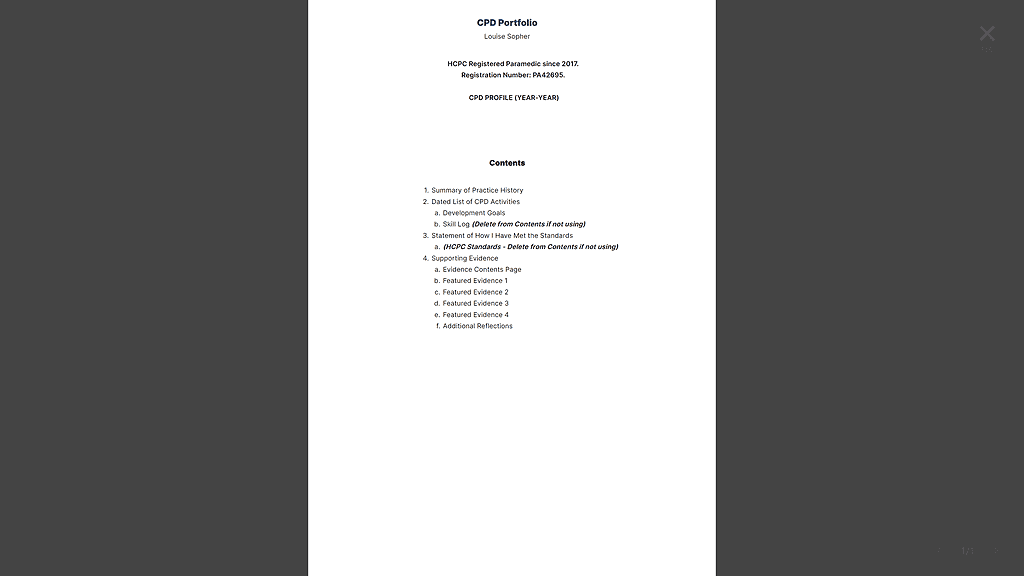
    • A cover page can now also be printed from Airtable
    • An empty signature column will be added to the NQP learning outcomes table allowing these to be a) printed and signed/dated on paper, then uploaded as evidence, or (b) saved as PDF then signed/dated electronically when shared directly from Adobe, then uploaded as evidence.
      • There are options to customise this further with multiple signature columns and the potential to allow mentors to log in via a link and type a date in a field, which will then automatically record their name as evidence (not a true signature but effectively a stamped name). 
    • All chosen tables and pages can be exported via the print, then ‘print to pdf’ option. These should then be merged using Adobe’s free online tool: https://www.adobe.com/uk/acrobat/online/merge-pdf.html?promoid=DD5B1KXF&mv=other
    • Also new to v1.6 from 13/04/2023 – the skills log has been moved to the main table for ease of logging; you can now tag skills to your CPD entries, rather than logging them separately. A column has been added to the development goals to encourage you to write or list how you are meeting them.

    See below for screenshots of use.

    21/08/2022 – V1.5 – Updated tick boxes for the HCPC standards 3+4 – these are now ‘tags’ to encourage actively thinking about whether you have met each standard. Also added a table for the 2023 HCPC Standards of Proficiency so you can now map your CPD against these if you choose.

    01/07/2022 – v1.4 has now been released. For more info, head to the post about v1.4.

    A number of updates have been made to the CPD log templates recently which, if you have saved an earlier version, will not be reflected in your versions. If you have not begun using the templates, please copy the relevant new version. If you are using an older version, you may simply need to change some settings to help you when it comes to printing your templates. Remember, if you are having any technical issues, you can email me at article999uk[at]gmail[dot]com. If you have been using an older version of the template and wish to update it, I will offer free Teams support to get you to the current version and to help you get set up with these templates.

    Let’s have a look at what’s been changed for both NQPs and Post-NQPs:

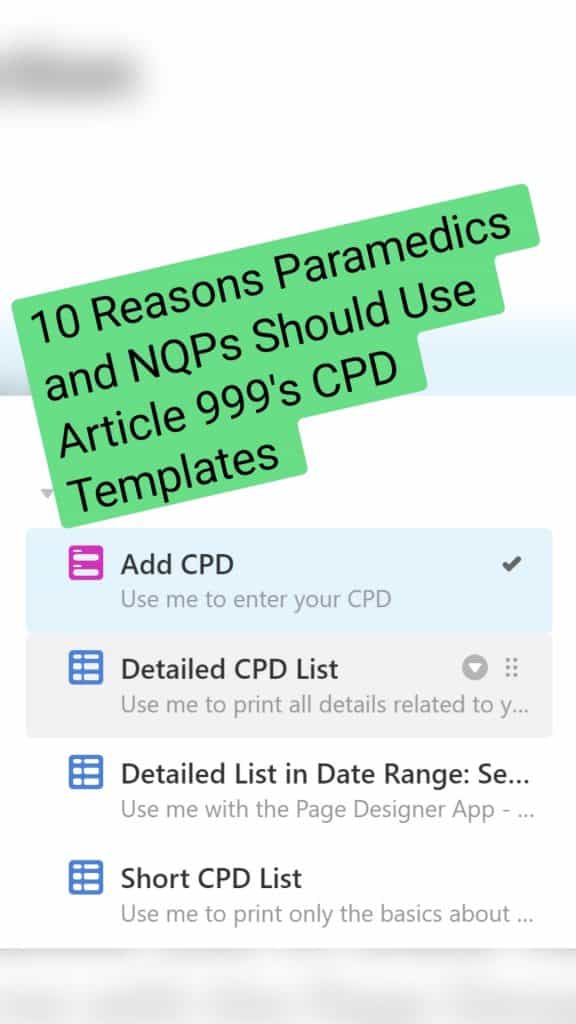
    • The order of tables on the left-hand side has been adjusted for clarity. It now looks like this:

    What do all of those mean?

    1. Add CPD is the form you should use to add new entries. Just click on the tab, then click ‘open form’.
    2. 3 options for printing:
      1. Detailed CPD List shows every field in your CPD log, including the full names of NQP learning outcomes, if you’re using the NQP template. Print using the Page Designer extension (right-hand-side). This shows every record, too.
      2. Detailed List in Date Range… is the same, but with date filters applied; you can use this table to search for entries within a specific date range, e.g. the current HCPC registration period if you’re audited. Print using the Page Designer extension (right-hand-side).
      3. Or Short CPD List shows only the basics of your CPD log. You can print this as a table view from this option:

    If you choose to print the short CPD list, you should also print the Evidence List and Reflections separately.

    3) Calendar – This shows all your entries in a calendar view, which is a great way of checking when you’ve done CPD and whether you have left gaps of more than 3 months (which you really shouldn’t do).

    What else is new?

    • A new ‘Development Goals’ table has been added. This replaces the field in your CPD log where you could previously add goals. Instead, you can now choose to add:
      • The development goal itself
      • The date you created this goal or started working towards it.
      • The date you completed working on this goal (leave blank if it’s an ongoing goal).
      • Reasoning – You could choose to write about feedback you have received that has led you to start improving a specific skill, or a job you have been to that led to you identifying an area of improvement, or you could answer questions relating to SMART goals.
      • Optional Uploads – You can choose to upload anything relevant to your reasoning, for example written feedback, or other goal-setting sheets you have completed.
      • Status – Here, you can tag a goal as todo, in progress, or completed.
    • You can print the development goal table. It should look something like this:

    What else has been changed?

    For NQPs:

    • Your template previously had a long field containing the names of the NQP learning outcomes, then a separate field containing the number of the learning outcome, e.g. A1a. This was causing issues with printing as the long names would run off the page. To solve this, I have hidden the field with the long names in your CPD list. The learning outcome number is still there. I would recommend printing the long list of learning outcomes separately, like a key. It should look something like this:

    So now your short CPD list will look something like this, with the reference number only:

    Help: I’ve already started using the templates, but I want these updates. What do I do?

    No worries. These are relatively minor changes. Here’s how you can make these changes:

    1. See the four squares on the corner of Detailed CPD List? Click and drag to change the order of the tables as you see fit.
    2. NQPs – in your Short CPD List, your Evidence List, and your Reflections, check the NQP Learning Outcomes option is hidden:

    3) NQPs – In your NQP Learning Outcomes table, hide or unhide the CPD log field – hiding is good for printing. Unhiding is good as a way of checking how many learning outcomes you have matched to your CPD entries:

    4) For all – if you want to set up a Development Goals table to replace the current development goals field and enable you to print more details about your development goals, you can do so. However, this element is a little more complicated, so if you would like some help to do this then I would suggest emailing me or sending me a message via the Article999uk Facebook or Instagram pages.

    That’s it? How do I print it all then?

    More info on printing, and more general instructions are coming soon 🙂
  • Interpreting the Acid-Base Balance Using Tic Tac Toe (0s and Xs)

    Interpreting the Acid-Base Balance Using Tic Tac Toe (0s and Xs)

    This information is taken from an excellent video by Radiometer, shown here:

    Put Simply:

    To interpret the acid-base blood gas results, you first need to know what normal levels are – and be careful, because there are international variations in what units we use, and you may also find slight variations in results. You also need to know what a high figure means vs a low figure – is this acidemia, or alkalemia? Let’s help you out:

    Your normal levels are:

    Ph = 7.35-7.45

    Pc02 = 4.7-6.0 kPa

    Hc03 = 22-26 mmol L

    Which way is acid, and which way is alkaline?

    You might notice that respiratory acidosis and respiratory alkalosis are in bold. That is to highlight the fact that these are opposite to the other parameters – a high pC02 = acidotic. A low pC02 – alkalosis. One simple way to remember this is to try to spell ‘opp’ (opposite) backwards, using the other parameters. To enable you to do this, you’re only allowed to swap one C for a P. Go ahead, try it.

    For pH, you obviously can’t do this.

    For HC03, you still can’t: Even if you change the C to a P, you still have an H in the way.

    For pc02, you can swap the C for a P and you can spell: 0PP backwards… That’s the parameter that is opposite to the others!

    How to Use Tic-Tac-Toe (0s and Xs)

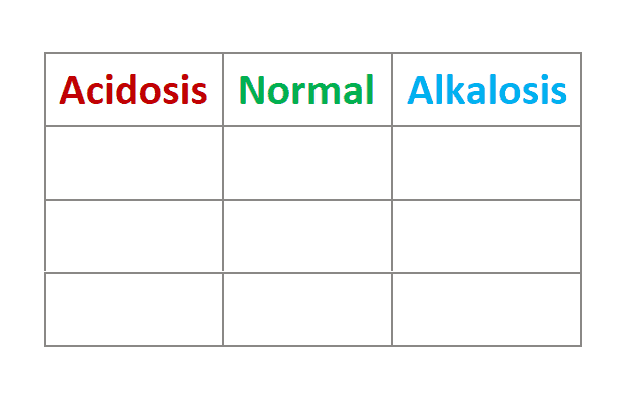
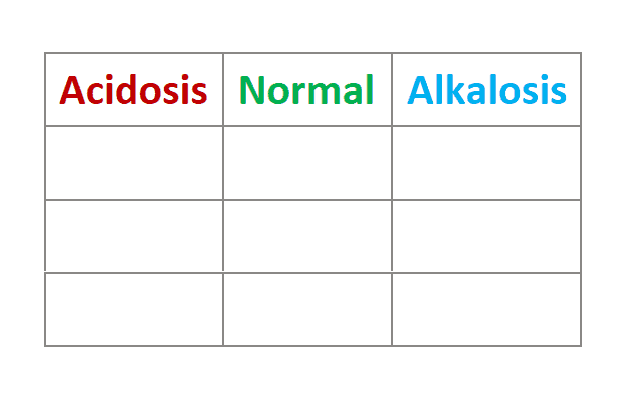
    First, draw a tic-tac-toe table like so.

    Next, put your pH into the acidosis, normal, or alkalosis column:

    AcidosisNormalAlkalosis
    pH 7.12  
      

    Next, put your HC03 or pC02 into the corresponding column. In this case, it’s the pC02:

    AcidosisNormalAlkalosis
    pH 7.12  
    pC02 13.9  

    It only takes 3 in a row for tic-tac-toe, and that includes the title, so you have an acidosis here. Because we are looking at the respiratory component (pC02), this is a respiratory acidosis.

    But we keep looking because we want to know if the body is trying to compensate. If it is, the opposite component – in this case, the metabolic component, HC03 – will be going in the opposite direction to the general trend. In this case, the general trend is respiratory acidosis, so we’re looking to see if the metabolic component is alkalotic. If there is no compensation, it will be in the normal range.

    AcidosisNormalAlkalosis
    pH 7.12  
    pC02 12  
      HC03 33

    And it’s above the reference range, so there is partial compensation here. But it’s only partial compensation because the pH isn’t normal.

    AcidosisNormalAlkalosis
     pH 7.36 
    pC02 11  
      HC03 33

    This is now fully compensated. We know it was probably respiratory acidosis before because a) we have the luxury of repeat blood gas results, and b) the pH is only just normal; in fact, it’s heading towards acidosis. We need to keep monitoring to see if this continues to normalise or if it heads in the wrong direction.

    You can use tic-tac-toe to identify respiratory or metabolic alkalosis or acidosis, mixed alkaloses/acidoses, and partial and full compensation. Don’t forget to look at other parameters as well though – more on those soon.

    References

    For this post, the video above, and:

    Thompson, D. A. 2007. Blood Gases Made Simple, Easy, and Quick. Lulu Press.

  • The Case of Anna Bagenholm

    The Case of Anna Bagenholm

    In 1999, Anna Bagenholm survived a cardiac arrest after a prolonged down-time and a temperature of just 13.7c. The circumstances of her survival continue to make international news and to inform and inspire research about target temperature management. There have been very few documented cases of survival from such extreme hypothermia, especially with minimal neurological impact. Consider the statistics on neurological impact from ordinary cardiac arrests, with less down-time, and Anna’s case becomes even more extraordinary. But does her survival mean we should target hypothermia in cardiac arrest patients? Should we target hypothermia in ROSC? Let’s have a look at the case and the research that has followed:

    The case

    Situation: 29 Year Old Female (Anna Bagenholm) is submerged head-first in a hole in the ice in a mostly frozen stream for 80 minutes.

    Background: She has no medical history. She has slid down an icy slope while skiing with colleagues.

    Assessment: She was conscious for the first 40 minutes, but has been unconscious for 40 mins since. After recovery, she is in cardiac arrest. Her ECG shows asystole. During the resuscitation attempt, the following is also learned:

    • Temp: 13.7
    • Pupils: dilated

    She is warmed and the resuscitation team are watching an echo of her heart, which begins to move. ROSC was not gained until 4 ½ hours after she fell, and she spent 35 days on life support.

    Questions: What would your expectations be of her ROSC management? What would your expectations of her survival and neurological impact be?

    Recommendation — today:

    • Maintain a target temperature at a constant value between 32°C and 36°C for at least 24 h. 
    • Avoid fever (> 37.7°C) for at least 72 h after ROSC in patients who remain in coma. 
    • Do not use pre-hospital intravenous cold fluids to initiate hypothermia. 

    (Resuscitation Council, 2021)

    Decision/Outcome: Not only does Anna survive, her long-term neurological impact is minimal. Have a look at the video:

    More Questions:

    • What target temperature does your Trust follow for ROSC management? Do you think it should be lower, or higher, having seen Anna’s case?
    • Do you think it’s possible to replicate the results of Anna’s treatment? What makes her situation so different to a cardiac arrest patient who has been treated with target temperature management?

    The Research

    Have a look at the results of some recent studies into target temperature management, below:

    YearIn or out of hospital studyPresenting rhythmTargetsOutcome  
    2002OHCAShockable33 and 37Positive for survival and neurological impact
    2010OHCAShockableCooled IV fluids (No target temperature listed)No difference
    2013OHCABoth shockable and non-shockable, but presumed cardiac cause33 and 36No difference
    2014OHCABoth shockable and non-shockable2L of normal saline at 4 degrees, vs standard careNo difference
    2018OHCAShockable32, 33, 34No difference
    2019OHCA and IHCANon-shockable33 vs 37.5Improved survival and good neurological outcome (CPC = 1 or 2)
    2021OHCAPresumed cardiac cause33 vs 37.5No difference
    Adapted from: Rasmussen and Girotra, 2021.

    Final discussion point:

    Why can’t controlled studies replicate the kind of outcome that Anna had? Share your thoughts below, or on our Facebook or Twitter pages.


    References (excluding videos and direct links above):

    Rasmussen, T. P. and Girotra, S. 2021. A Contemporary Update on Targeted Temperature Management, Available at: https://www.acc.org/latest-in-cardiology/articles/2021/11/09/13/16/a-contemporary-update-on-targeted-temperature-management (Accessed 15/05/2022).

    Resuscitation Council, 2021. Post-Resuscitation Care Guidelines, Available at: https://www.resus.org.uk/library/2021-resuscitation-guidelines/post-resuscitation-care-guidelines (Accessed 15/05/2022).

  • What To Do When You Fall Over, Aged 65+

    What To Do When You Fall Over, Aged 65+

    Contents
    Videos – Below, split into 3, followed by the complete (merged) version
    In Text
    Additional Information
    References

    The Videos

    What to Do if you Fall, Aged Over 65 – When to Seek Help
    What to Do if you Fall, Aged Over 65, and You’re Not Hurt
    When to Speak to Your Doctor About Your Falls – For People in the UK Aged over 65
    The Complete Video – Watch it all at once above.

    Please read more about Article 999.
    Please also take the time to read our disclaimer.

    [tabby title=”For Patients”]

    In Text:

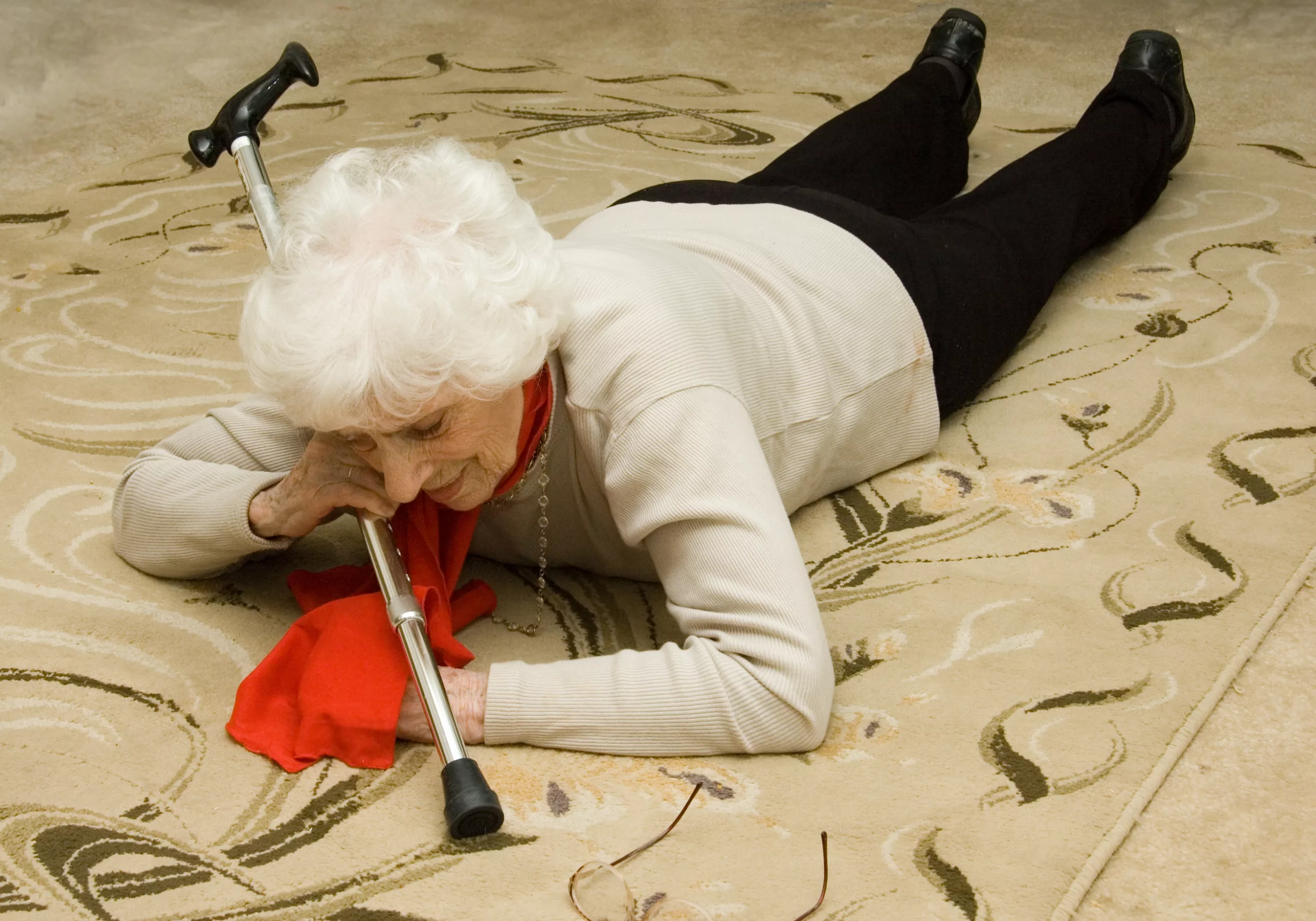
    If you are 65 years old or above, you are at an increased risk of falling and serious injury from falling (NICE, 2013; WHO, 2021). But falling isn’t just a part of getting older, it’s often due to a combination of factors – over 400, in fact (NICE, 2015) – some more serious than others.

    If you or the person you are watching this for has just fallen and the following factors apply, please CALL 999. If you or they fall again, and the following apply, please CALL US BACK, no matter what time it is. Finally, if you have been advised to attend a&e and have chosen not to, please make sure you have someone who can check in on you over the next 48 hours (NICE, 2014). You and they should look out for:

    • Breathing difficulties or chest pain
    • A change in your behaviour, for example if you feel more irritated or confused than normal.
    • Vomiting
    • Dizziness, or feeling faint when you stand up
    • Persistent headaches
    • Memory changes – are you forgetting events since, or before, you fell over?
    • Seizures
    • Losses of consciousness, including faints.
    • Any loss of sensation in your limbs or sudden new weaknesses, including signs of strokes.
    • Swollen, painful muscles
    • Or if you’re unable to mobilise, can’t get up from the floor, or develop any new pain

    *This is not an exhaustive list.

    Call 999.

    If you have had alcohol, this may be hiding symptoms, so you may be advised to attend a&e.

    Also, if you have fallen, hit your head, and you take blood thinners, or medications called anti-platelets, you need to be cautious.

    You must attend a&e to be monitored and receive a scan of your head, a CT scan. Even if you have not drawn blood, you are still at risk of bleeding internally, especially in the brain because these medications are designed to prevent blood clots.

    These medications might be called:

    • Warfarin
    • Rivaroxaban
    • Dabigatran
    • Apixaban
    • Edoxaban
    • Heparin (injection)

    Antiplatelet medications include clopidogrel, aspirin.

    • And others shown on the screen:

    Dipyridamole 

    Prasugrel

    Ticagrelor

    Cangrelor

    (BNF, n.d.)

    *These are more concerning when taken in combination, e.g. clopidogrel + aspirin

    You must maintain extreme caution if you are on these medications. For more information about blood thinners and antiplatelets, please scroll below the video.

    If none of this applies to you, but you are on the floor and you’re not hurt, don’t get up quickly.

    Roll onto your knees and use nearby stable furniture to push yourself up. Then, sit down until you feel able to continue with your day (NHS, 2021).

    Remember, if you’re not hurt but you still can’t get up, call for help. If you have one, you can press your personal alarm. You can call: family, friends, 999, or 111. In this circumstance, both 999 and 111 will lead to an ambulance arrival with a crew who can assess you and help you up. Both 999 and 111 result in the same ambulance service.

    While you wait, the NHS recommends changing your position ‘at least once every half hour or so,’ (NHS, 2021) if you are able to and it is not painful to do so. Keep yourself warm and let 999 know if anything gets worse.

    Be aware of what might have caused or contributed to your fall, and let the ambulance crew know when they arrive.

    Additional Information

    When to speak to your doctor:

    6 out of 10 falls happen at home (SAGA, CSP, PHE, 2015), so there are often contributing factors – and there are ways we can help prevent these from causing you to fall.

    If you are noticing an increase in your urine output, you should request a urine dip from your doctor in case you have a urine infection, which might make you confused (Alzheimer’s Society, 2021), or rush to the toilet (Soliman, Meyer, and Baum, 2016), often leading to falls.

    If you are falling more often,

    If your balance has worsened gradually,

    Or you’re noticing a gradual worsening in the way you walk,

    Or you’re feeling afraid of falling

    *If anything mentioned here happens suddenly, you must call 999.

    … You should ask for a falls assessment from your doctor. Health care professionals will look for factors contributing to your falls, which may range from problems with your eyes to problems with your bones, and looking at your medications to see if they are causing side effects (Saga, CSP, PHE, 2015).

    They may also look at your home environment and identify items that could cause you to trip, even if they never have before. Ambulance crews might also point these out if they are attending to you. They should also ask to refer you for this falls assessment. (NICE, 2013)

    Scroll beneath the video to find a link for information on how to get equipment, grants to pay for additional items, and personal alarms if you fall. If you have purchased your own keysafe, make sure you pass on the code to the ambulance service in case you cannot answer the door.

    Thank you.

    Links:

    For equipment such as hand and grab rails, commodes, raised toilet seats, slip mats for the shower, grants to pay for additional items, and personal alarms if you fall, please follow this link. You should be able to get financial support from your local council for some of these items.

    Other resources:

    Stay Active at Home – Strength and balance exercises for older adults

    Age UK also offer great advice and a ‘handyperson’ to help with small adaptations you might need.

    References

    Age UK. (2020). Avoiding a fall. Available at: https://www.ageuk.org.uk/information-advice/health-wellbeing/exercise/falls-prevention/ (Accessed 12/10/2021).

    Alter SM, Mazer BA, Solano JJet al. (2020). Antiplatelet therapy is associated with a high rate of intracranial hemorrhage in patients with head injuries. Trauma Surgery & Acute Care Open, 5(1), e000520

    Alzheimer’s Society. (2021). Urinary tract infections and dementia. Available at: https://www.alzheimers.org.uk/get-support/daily-living/urinary-tract-infections-utis-dementia (Accessed 18/10/2021)

    BNF. (N.D.). Antiplatelet drugs. Available at: https://bnf.nice.org.uk/treatment-summary/antiplatelet-drugs.html (Accessed 12/10/2021).

    CDC. (2017). Assessment. Timed Up and Go. Available at: www.cdc.gov/steadi/pdf/TUG_Test-print.pdf (Accessed 12/10/2021).

    The Chartered Society of Physiotherapy (CSP). (2015). Get up and go – a guide to staying steady. Available at: https://www.csp.org.uk/publications/get-go-guide-staying-steady-english-version (Accessed 12/10/2021).

    CSP. (2017). Stay active at home – Strength and balance exercises for older adults. Available at: Stay Active at Home – Strength and balance exercises for older adults (Accessed 12/10/2021).

    Dallas, M. (2015). The Need-to-Know Side Effect of Blood Thinners. Available at: https://www.everydayhealth.com/news/need-know-side-effect-blood-thinners/ (Accessed 18/10/2021).

    Knott, L. (2021). Rhabdomyolysis and Myoglobinuria. Available at: https://patient.info/doctor/rhabdomyolysis-and-other-causes-of-myoglobinuria (Accessed 12/10/2021).

    National Blood Clot Alliance. (n.d.). Living your best life while taking blood thinners. Available at: https://www.stoptheclot.org/living-your-best-life-while-taking-blood-thinners/ (Accessed 18/10/2021).

    NHSa. (2021). Falls. Available at: https://www.nhs.uk/conditions/falls/ (Accessed 12/10/2021).

    NHSb. (2021). Anticoagulant medications. Available at: https://www.nhs.uk/conditions/anticoagulants/ (Accessed 12/10/2021)

    NHSc. (N.D.). Care Services, Equipment and Care Homes. Available at: https://www.nhs.uk/conditions/social-care-and-support-guide/care-services-equipment-and-care-homes/ (Accessed 12/10/2021).

    NICEa. (2013). Falls in older people: assessing risk and prevention. Available at: https://www.nice.org.uk/guidance/cg161 (Accessed 12/10/2021).

    NICEb. (2015). Falls in older people. Available at: https://www.nice.org.uk/guidance/qs86/chapter/About-this-quality-standard (Accessed 12/10/2021).

    NICEc. (2019). Falls – risk assessment. Available at: https://cks.nice.org.uk/topics/falls-risk-assessment/ (Accessed 12/10/2021).

    NICEd. (2014). Head injury: assessment and early management (NICE Clinical Guideline 176). Available at:  https://www.nice.org.uk/guidance/cg176 (Accessed 16/06/2020).

    Nishijima, D. (2012). Immediate and delayed traumatic intracranial hemorrhage in patients with head trauma and preinjury warfarin or clopidogrel use. Annals of Emergency Medicine, 59(6), pp: 460-468.

    North American Thrombosis Forum. (2020). Falls and anticoagulation. Available at: https://natfonline.org/2020/08/falls-and-anticoagulation. (Accessed 18/10/2021).

    Probst, M. et al. (2020). ‘Prevalence of Intracranial Injury in Adult Patients With Blunt Head Trauma With and Without Anticoagulant or Antiplatelet Use’. Annals of Emergency Medicine, 75(3), pp: 354-364.

    Public Health England. (2017). Falls and fracture consensus statement – Supporting commission for prevention. Available at: https://assets.publishing.service.gov.uk/government/uploads/system/uploads/attachment_data/file/586382/falls_and_fractures_consensus_statement.pdf (Accessed 12/10/2021).

    Saga, CSP, and PHE. (2015). Get Up and Go: A Guide to Staying Steady. Available at: https://www.csp.org.uk/system/files/get_up_and_go_0.pdf (Accessed 12/10/2021).

    Soliman, Y., Meyer, R., And Baum, N. (2016). Falls in the Elderly Secondary to Urinary Symptoms. Reviews in Urology. 18(1), pp: 28-32.

    Stiell, I. et al. (2003). ‘The Canadian C-Spine Rule versus the NEXUS Low-Risk Criteria in Patients with Trauma’, The New England Journal of Medicine. 349. pp: 2510-2518.

    Skellet, S. et al (2021). Paediatric advanced life support Guidelines. Available at: https://www.resus.org.uk/library/2021-resuscitation-guidelines/paediatric-advanced-life-support-guidelines (Accessed 18/10/2021).

    WHO. (2021). Falls. Available at: https://www.who.int/news-room/fact-sheets/detail/falls (Accessed 18/10/2021).

    [tabby title=”Extra Info For HCPs”]

    Please feel free to share this video with your patients, but please attach this link with it so that all accompanying information is also shared.

    For more info about what Article 999 is, and why I am creating videos for patients, please see the ‘About Us’ page and click on the ‘About article 999 for patients’ tab.

    Feel free to add comments or feedback. Please let us know how well received this is.

    A history of falls in the past year is the single most important risk factor for falls and is a predictor of further falls.

    https://www.nice.org.uk/guidance/qs86/chapter/Quality-statement-1-Identifying-people-at-risk-of-falling>

    NICE (2019) recommends using the ‘Timed Up and Go’ test to assess a person’s risk of falling. Details on this can be found here: https://www.cdc.gov/steadi/pdf/TUG_Test-print.pdf

    ‘An older adult who takes ≥12 seconds to complete the TUG is at risk for falling’

    (CDC, 2017)

    A video on this is available from the CSP here.

    Thank you,

    Louise Sopher
    HCPC Registered Paramedic
    Article 999 Founder

    [tabbyending]

  • Free Template CPD Log for HCPC Paramedics and NQPs

    Free Template CPD Log for HCPC Paramedics and NQPs

    Free CPD Log Template – All you need is a free Airtable account. You can then copy and paste this ‘base’ into your own account, and make it your own.

    Update Jan 2023: Please head here for the most up-to-date information. The latest version of the templates is v1.5 (published in August 2022), and is also available via the links below.

    If you are using an older version of the templates and wish to update yours, please contact me for free support, attaching a screenshot of your version number (or the top-left corner of your template if there is no version number). Happy to help.

    This is a template log to help you meet your CPD and audit requirements. If you set up your own Airtable account, you can copy the ‘base’ (the whole thing) to your own account and then make it your own.

    NQPS – If you are an NQP, follow this link instead. The NQP CPD log contains a list of learning outcomes so that you can match your evidence to them. It also contains additional tips throughout the reflection fields to ensure you are meeting the requirements. Do check the learning outcomes are the same for your own Trust’s version of the NQP portfolio though. (For EEAST staff, this should meet your needs**).

    ​Both bases should meet the requirements for a free Airtable account, which means that unless Airtable change what we can do with free accounts, this should be free forever. More importantly, unlike with my alternative CPD log in MS Access, you can continue adding to your CPD log via an online form or the Airtable app.

    ​You will now see multiple tables on the left-hand side: detailed CPD log, short CPD log, reflections, and evidence list. The detailed one contains all fields and must be used in combination with the Page Designer on the right-hand side. The short CPD log contains minimal information but you can click on the table, then go to print view, and print this simple list of your CPD activities.

    ​You could then choose to use this short log in combination with the evidence log – which is effectively a contents page of the evidence you have attached, with their relevant page numbers. These page numbers should link to the order of your portfolio, and your evidence should be written about in your statement. The reflections show all entries that have reflective entries. Feel free to experiment with print views until you have found a way that works for you.

    Combine this with a template portfolio

    Don’t forget, there is also a template portfolio to help you meet all other aspects of the HCPC requirements – specifically the statements – follow this link for that.

    Why it’s useful:

    I’ve designed the ‘Add CPD’ form to allow all relevant info to be added in the same place. No one likes multiple different forms.

    Categories are colour coded. Fields are optional – add as much or as little info as you want
    The optional reflection fields expand if you enter something in ‘Reflection – What’
    Tick the HCPC Standards that your CPD entries need to meet.

    Many other CPD templates insist on asking us to tick all five standards for every entry we submit. I don’t see the need for this. Here are the summarised HCPC standards and my reasoning for adding (or not adding) them to this form:
    1. Maintain an up-to-date log of activities – we do this every time we fill in the form, and we’ll refer to it in the statement that accompanies the log. There is no need to tick a box about it every time we submit an entry.
    2. Complete a mixture of learning activities related to our practice – This should be discussed in the statement that accompanies our CPD log. It should also be demonstrated when we select a variety of categories in our entries
    3. Ensure CPD contributes to quality of practice and service delivery – This one is a good reminder for each CPD entry, so is included in the form above.
    4. Ensure CPD benefits the service user – Likewise here.
    5. Present a written profile – Met by completing the profile that accompanies the log. More guidance here.

    Reference: HCPC Standards


    Need more reasons? Keep Scrolling:

    You can add additional information such as a page number that refers to your portfolio of evidence, a reference, and your own development goals. These may help you to focus your CPD on key areas and to find related information at a later date. It’s also important to categorise your CPD so that the HCPC can see you are varying your learning. Update Jan 2023: The latest version of the templates (Aug 2022 – v1.5) looks a little different to this but should print better. Check it out and let me know what you think.

    The print options are also versatile. You can choose to print one CPD entry per page, with all accompanying information present. Alternatively, you could print a list of any CPD that has accompanying evidence (above)… Update Jan 2023: Printing is now a little different in v1.5 (Aug 2022) and there is guidance on this within the template. I recommend printing a summarised CPD log, followed by an evidence list (including thumbnails of attachments), reflection log, and any additional pages such as your development goals.
    … and a basic list of your CPD activities…
    ...and all the entries that are accompanied by reflections…
    ….and all of the above can be filtered according to a date range so that you only export/print recent activities. Remember, in Microsoft you can change your printer to ‘print to PDF’ if you only need an electronic export of these files.

    Most importantly, the template is free for as long as Airtable allow us to have free accounts. Update Jan 2023: Airtable say they do not envisage this disappearing. Yay!

    Here’s the link again:

    https://www.airtable.com/universe/exp2DOSoUM4b5fiOC/free-template-cpd-log-for-hcpc-paramedics

    Let me know what you think!


    Not sure, or want newer content to read? Have a look at this:

    10 Reasons Paramedics and NQPs Should Use Article 999's CPD Templates
    Post: 10 Reasons Paramedics and NQPs should use Article 999’s CPD Templates

    *Article 999/Louise Sopher is not endorsed by Airtable and merely uses the free account to make awesome tools like these.

    **We are not endorsed by any ambulance Trust and are not paid to create or promote this material.

  • On-Water Rescue Breaths for Divers – Worth it?

    On-Water Rescue Breaths for Divers – Worth it?

    For clarity, the term ‘in-water rescue breaths’ has been replaced with ‘on-water rescue breaths’ as these are given on the water surface.

    Drowning Vs Diving

    When we talk about the diving casualty, we don’t just mean a drowned patient. Any drowned patient may have some other medical cause to explain why they drowned in the first place – a cardiac or neurological cause, for example – and the same is true for the diving patient. But in diving, we may not mean drowned at all, not in the traditional sense. If a patient has managed to keep their regulator in for the entire ascent, and that regulator is working properly, have they drowned? Or is the bigger issue the subsequent decompression illness from not breathing on ascent, and immersion pulmonary oedema?

    Let’s have a look at the guidelines for the management of a drowned casualty.

    UK Guidelines and First Aid

    Most first-aiders will know the drowning protocol:

    • 5 initial rescue breaths
    • 30:2 CPR

    In the 2021 UK Resus Council guidelines, this hasn’t changed, but there is a bullet point that reads:

    Start resuscitation as soon as safe and practical to do so. If trained and able this might include initiating ventilations whilst still in the water or providing ventilations and chest compressions on a boat.

    Start resuscitation by giving 5 rescue breaths / ventilations using 100% inspired oxygen if available.

    Deakin et al (2021)

    European Guidelines

    What’s interesting is when you then look at the European Resus Council Guidelines 2021. Here, you’ll find much more detail under the drowning section, including the background research that has informed the guidelines. Of note, there is ‘limited evidence […] to inform the treatment of the drowning victim’ (Lott et al, 2021: 197). Despite this, a table of research includes evidence on in-water resuscitation. Four main points are raised:

    • Rescue breaths ‘by highly trained rescue teams with water rescue equipment is feasible’
    • These breaths should be given for ‘up to 1 min’ (emphasis added) (10 breaths) ‘before attempting transfer to land’
    • No further rescue breaths should be given before landing the patient on land or on the boat
    • If a rescuer is alone and has no rescue equipment, they should not begin rescue breaths and should instead tow ‘directly to the shore’ or boat (emphasis added).

    (Lott et al, 2021: 199).

    Why 10 breaths? This should equate to one every 6 seconds, which is exactly what we would do during continuous CPR with an advanced airway, or during ventilation-only CPR in respiratory arrest (Newell, Grier, & Soar, 2018). (However, this paper highlights the potential for increased survival after 30:2 versus continuous CPR).

    Note the difference in wording between the 2015 guidelines (below) and the 2021 guidelines (above):

    If a rescuer, in general a surf-lifeguard, finds a non-responding drowning victim in deep open water, the rescuer may start ventilation when trained to do so before moving the victim to dry land or rescue craft. Some victims may respond to this. 

    Truhlář et al. (2015).

    The 2015 guidelines leaned more towards in-water ventilations than the 2021 guidelines do. The wording was perhaps vague, and left the decision up to the rescuer for when to start ventilations and how long to perform them for, unless the patient was not responding to initial ventilations. In this case, the guidelines emphasised towing the patient to the boat or shore – if it was near – without further ventilations.

    The 2021 guidelines, though clearer, do not detail what defines water rescue equipment, or what defines highly trained. Do rescue divers, who are trained at BLS level, constitute ‘highly trained’? Do lifeguards, who frequently practice water rescue, count as highly trained? Or is this term reserved for only ALS-trained healthcare professionals who are also trained in water rescue, or at minimum ILS-trained rescue divers? When we talk about rescue equipment do we mean use of bag-valve-masks and airway adjuncts? Does water rescue equipment include a BCD that is inflated? Translating this advice into diving medical advice is not easy.

    British Sub-Aqua Club Guidelines – What Might Change?

    BSAC provide dive rescue courses and teach on-water rescue breaths (Cumming, 2011: 56-57), however this information has yet to be updated to the 2021 Resus Council guidelines, and it will be interesting to see what changes when it is updated. The referenced book recommends ventilations while towing, which was not a feature of the 2015 ERC guidelines and makes this book less reliable as a source of information. On the contrary, their Sports Diver student guide (BSAC, 2020: 47), has been updated to stop the practice of giving rescue breaths while towing. Perhaps the biggest change in the next issue will be that a lone rescuer may not be advised to start ventilations in the water, unless help is coming to them and BCDs are considered rescue equipment. Rescuers should also be reminded that the Resus Council advise up to one minute of rescue breaths (Lott et al, 2021: 199). One other change that would be good to see would be a friendly reminder to not perform rescue breaths if this would cause a delay in transport and treatment of the patient – an exemption for some treatments that HCPs should be well versed in. An example of where this might apply would be where the time it takes to give rescue breaths is longer than the time it would take to evacuate this patient to the shore or a nearby boat.

    UKDMC – Are Times Changing?

    This statement from the UKDMC (Edge and Wilmshurst, n.d.) states that there is a higher chance of neurological damage, despite an apparent improvement in survival rates, when on-water resuscitation is performed. Remind anyone of the trial results from something else we do in resus? They also note that even when lifeguards are performing in-water ventilations, the patient aspirates, and the rescuer tires. And this was in a pool… Now imagine waves of salty water lapping over both patient and rescuer. Multiple other issues arise – ventilation may be restricted by diving equipment that covers the chest, rescuers will be unable to assess chest rise and fall due to this equipment, and even those of us who are HCPs won’t have regular practice, especially in the special circumstances of resus of diving patients.

    This doesn’t even consider that in the absence of pulse checks (due to wet/dry suits covering the neck), the rescuer is unable to assess respiratory versus cardiac arrest, and may be at risk of confirmation bias – that casualty who was in cardiac arrest when they surfaced, they have a pulse on the boat so we must have got them back, right? Or, that unconscious patient who wasn’t breathing is breathing now, so we saved them – or were they just breathing so shallow that, in amongst the noise of the boats and the waves, and with all that equipment on them, we could not look, or listen, or feel. Realistically, this may be one reason there is limited evidence. It will be interesting to see how diving organisations respond in the future and whether their guidelines continue to change.

    References

    British Sub-Aqua Club, 2020. Sports Diver: Student Guide. BSAC.

    Cumming, B. 2011. Safety and Rescue for Divers, BSAC: Cheshire.

    Deakin, C.D. et al (2021) Special Circumstances Guidelines. Available at: https://www.resus.org.uk/library/2021-resuscitation-guidelines/special-circumstances-guidelines (Accessed 11/12/2021).

    Edge, C. And Wilmshurst, P. n.d. The Rescue of a Diving Casualty – A Discussion Paper. Available at: https://www.ukdmc.org/wp-content/uploads/2017/04/PW-and-CJE-position-paper-on-diver-rescue.pdf (Accessed 11/12/2021).

    Lott, C. et al (2021) ‘European Resuscitation Council Guidelines 2021: Cardiac arrest in special circumstances’, Resuscitation, 161, pp: 152-219. Available at: https://cprguidelines.eu/assets/guidelines/European-Resuscitation-Council-Guidelines-2021-Ca.pdf (Accessed 11/12/2021)

    Newell, C. Grier, S. And Soar, J. (2018) ‘Airway and ventilation management during cardiopulmonary resuscitation and after successful resuscitation’, Critical Care, 22(190). doi: https://doi.org/10.1186/s13054-018-2121-y

    Truhlář, A. et al (2021) European Resuscitation Council Guidelines for Resuscitation 2015: Section 4. Cardiac arrest in special circumstances. Available at: https://ercguidelines.elsevierresource.com/european-resuscitation-council-guidelines-resuscitation-2015-section-4-cardiac-arrest-special#BSPECIALENVIRONMENTS (Accessed 11/12/2021)

  • HCPC CPD Portfolio Help Folder and Template

    HCPC CPD Portfolio Help Folder and Template

    If you’re a UK Paramedic looking for a template to use for your CPD portfolio, here’s a link to one I’ve made. You can download and copy this template into your OneNote or other note application. Simply fill in the blanks, create your own dated list of CPD activities*, and then delete the help info. Keep your completed portfolio available for any HCPC audits, and save the help folder for any questions. The portfolio is referenced and contains direct links with screenshots from useful sources.

    *I now also have a free template available for you to use to add your own CPD. Please follow this link for more information. (Feb 2022; link updated Jan 2023)

    Let me know what you think.

  • What Does NICE Say About Epilepsy? The Video

    What Does NICE Say About Epilepsy? The Video

    The guidelines, summarised, and made relevant for Paramedics (anything irrelevant is not included):

    The full guidelines:

    https://www.nice.org.uk/guidance/cg137/resources/epilepsies-diagnosis-and-management-pdf-35109515407813

    (full reference in video)

    *update 28/02/22 – music volume reduced to ensure voiceover is clearer

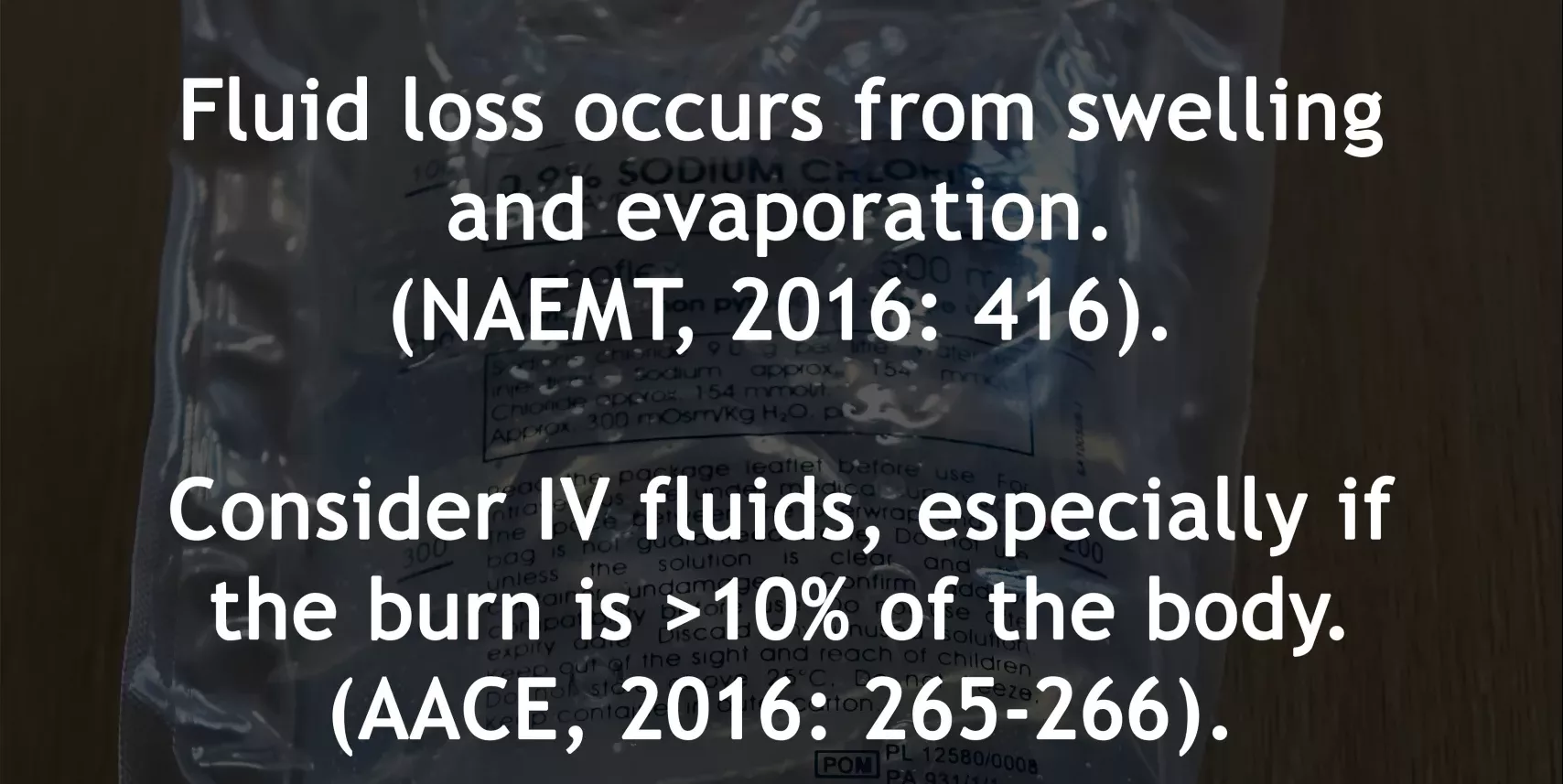
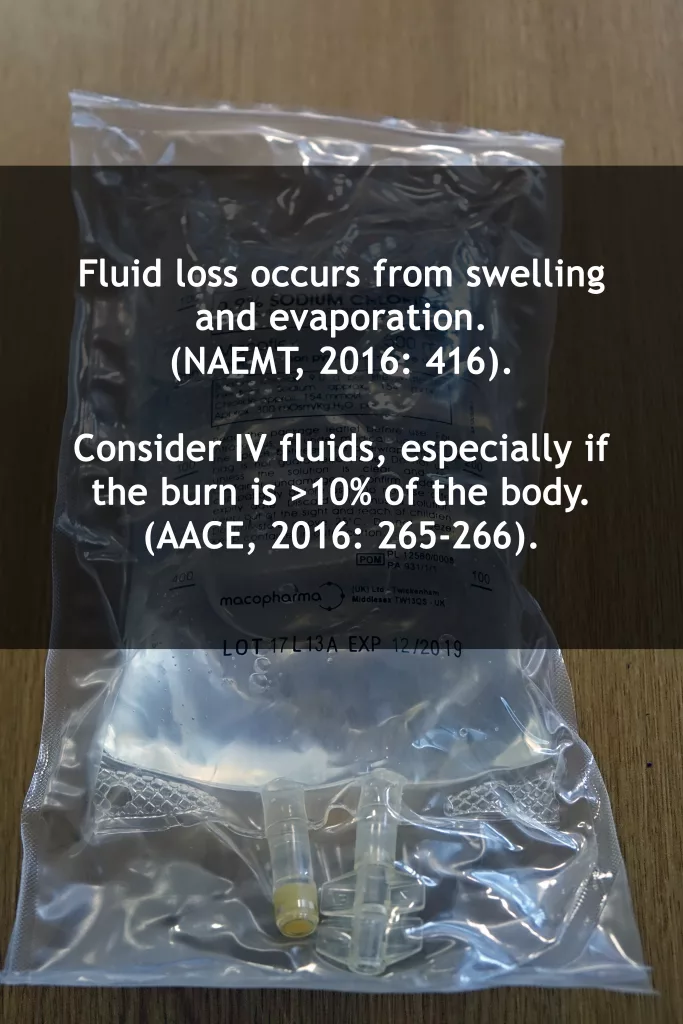
  • When Treating Burns, Consider IV Fluid

    When Treating Burns, Consider IV Fluid

    This is a fast fact based on this post. Full reference available there.