Category: Patients
-

Useful Resource for Those who Don’t Work in Healthcare
Here’s another resource we have added to our database:
‘The Expert Patients Programme (EPP) is a six-week course for anyone living with one or more long term health conditions such as asthma, chronic fatigue, COPD, depression, diabetes, heart disease, MS, Parkinson’s disease, HIV, ME, on-going back pain etc.
The course is designed to help you cope with your health condition, find solutions to common problems & feel more in control.’
Attend weekly face-to-face sessions for free. Refer yourself or be referred by a health care professional. Provided by North East London NHS Foundation Trust.
Quote from – https://www.nelft.nhs.uk/epp/
Full details we have added – https://article999.co.uk/new-resource-for-patients-find-support-and-befriending-services-information-tools-equipment-food-banks-and-more/
Date last updated 30/12/2022
Article 999 is not affiliated with the Trust or the project. Sharing for information purposes only.
-

Patients: Charity Link
Featured in our database is the Think Ahead Stroke charity. The charity provides:
– mentorship to stroke sufferers
– a 6 week wellbeing course ‘designed to help stroke survivors and their carers understand their state of mind, and give them the tools they need to cope emotionally and move forward.’
– a 7 week ‘step-by-step stroke information and recovery programme.’
– a support group for working age men
– accepts referrals from health care professionals – https://www.think-ahead.org.uk/mentoring-programme
This information was added on 22/02/2023 and may be useful to you.
To access the information we have listed, click here: https://article999.co.uk/new-resource-for-patients-find-support-and-befriending-services-information-tools-equipment-food-banks-and-more/
Article 999 is not affiliated with this charity and share this for information purposes.
-
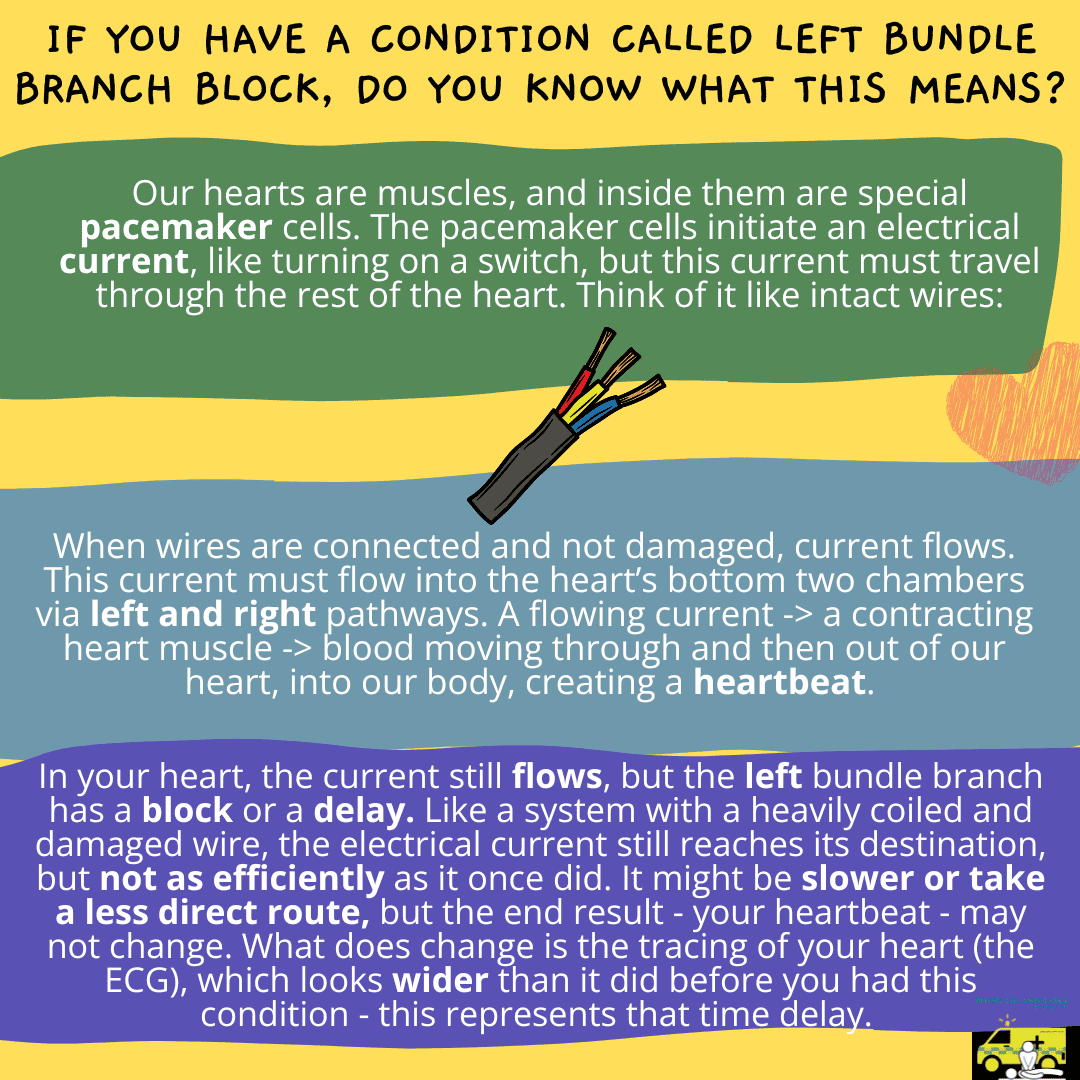
For Those Who Don’t Work in Healthcare: If You Have a Condition Called Left Bundle Branch Block, Do You Know What this Means?
Is it serious?
‘You are more likely to have symptoms if you have other problems in addition to your left bundle branch block.’ – https://www.cedars-sinai.org/health-library/diseases-and-conditions/l/left-bundle-branch-block.html
Because of the risk of this, if this is new we are likely to advise you to attend hospital. We may advise you to attend a specialist cardiac hospital, depending on your symptoms and other signs of illness that you might have called us for. If you already know you have the condition, it is worth noting it down and keeping a copy of your ECG trace for any future queries.
If you are a healthcare professional and you are reading this, please let us know what you think by commenting or getting in touch. Would you use this to explain the condition to your patients?
Links:
https://www.bhf.org.uk/informationsupport/conditions/arrhythmias/heart-block
https://www.cedars-sinai.org/health-library/diseases-and-conditions/l/left-bundle-branch-block.html
https://litfl.com/left-bundle-branch-block-lbbb-ecg-library/
https://teachmeanatomy.info/thorax/organs/heart/conducting-system
This post has been peer reviewed by at least one other Paramedic.
-

Join Us as a Patient Voice on Our Mission to Improve Health Literacy for Patients
Why, you ask? Because health literacy levels in this country are shockingly low – seriously, check out this map. Adults in the UK struggle to understand and interpret health information.
Read about Article 999’s mission to improve this (once there, click on the ‘about Article 999 for patients’ tab).
Article 999 is posting ‘what to do when’ style posts, tips and useful resources, and we are collating our own collection of resources including charities that offer mentoring. This collection is for you to search and learn and for clinicians to know what is out there to signpost you to. We have also had patient voices, including Alexandra Adams, posting about their health conditions to help others and to inform us from their own voice.
But we can’t do this alone. Article 999 is in need of patient voices – people who want to write about their experience of their health conditions and when they find they need to call emergency services, and what type of support they wish existed. We also need healthcare professionals including paramedics and physios who are keen to improve health literacy by providing carefully curated content that educates and improves understanding in our patients. Are you interested in these voluntary roles? If so, get in touch by emailing us at article999uk[at]gmail[dot]com. If you are an HCPC registered healthcare professional, remember that contributing to this project will help you achieve your updated HCPC standards of proficiency in relation to health promotion (standard 15.1). If you find it easier to have a certificate to upload as evidence of your contributions, we can provide one for you.
-

If you use an inhaler infrequently…
Woman holding asthma inhaler on color background, top view. Space for text -
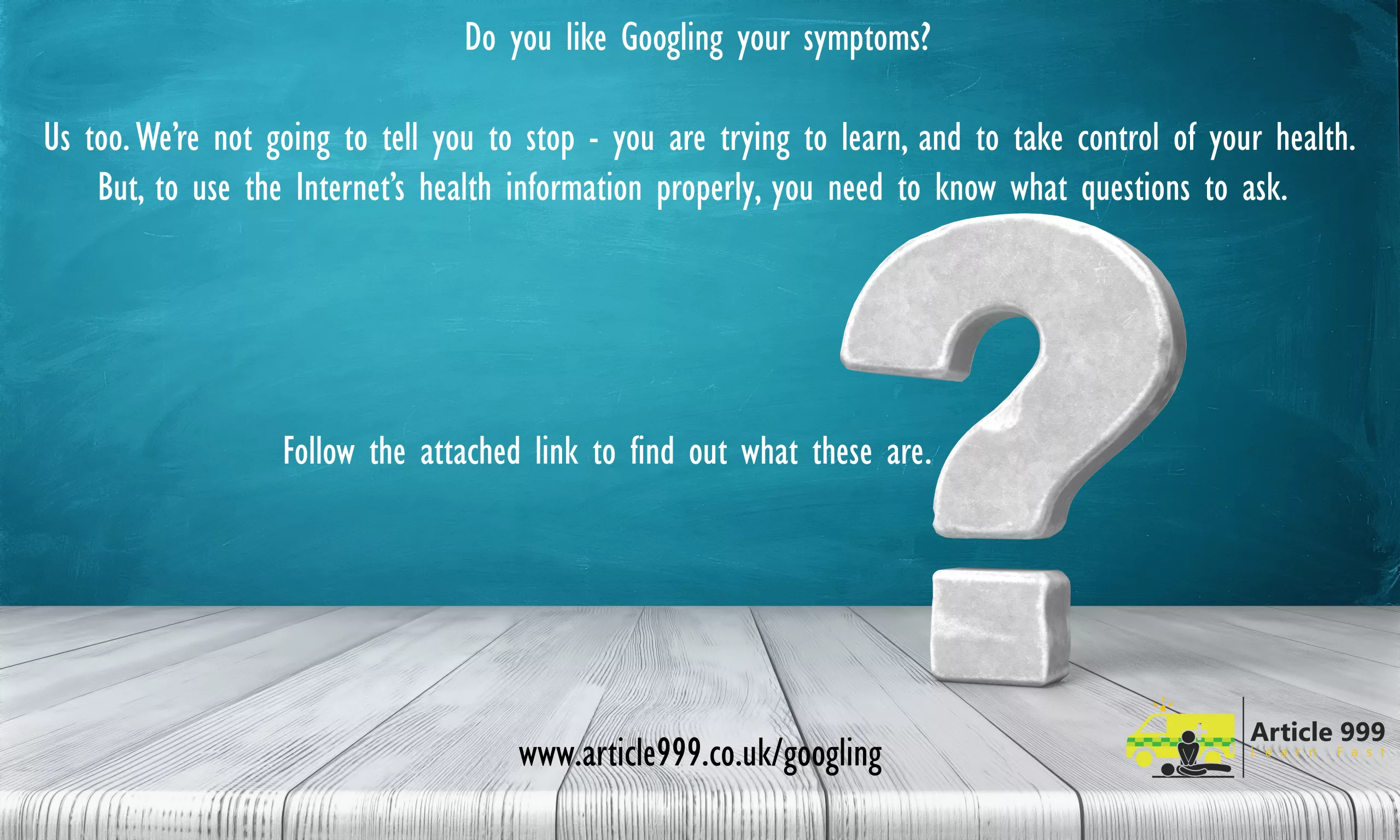
Googling Symptoms – What to Ask

- Ask, who runs the site? Is it clear?
- Ask, who pays for the site? Does that affect its content, or the way its content makes you think?
- Ask, does the site have a specific aim? Does this affect its content, or the way its content makes you think?
- Ask, where is the information from? Is it referenced? Is it health-specific, or a generic news website or opinion blog? Is it recent?
- Ask, who has written the information? Can you trust them?
- Ask, can you compare this information with a page from a health site in your country, e.g. an NHS England site? Is it telling you the same thing?
- Ask, have you already been advised by a health-care professional to follow-up with your doctor or other professional? If yes, ensure you book this appointment sooner rather than later.
- Health information is often generic, to cover a wide range of circumstances, risk factors and eventualities. My risk of having a specific condition is not the same as yours. So, ask about your personal circumstances. This one symptom may mean you have X, but how likely is it for you age, health history (the conditions you and your family have), and other circumstances? Is what you have today a life-threatening emergency?
If you are unsure, always ask your doctor.
Based on advice provided here.
-
Tip for Patients who Have a DNAR
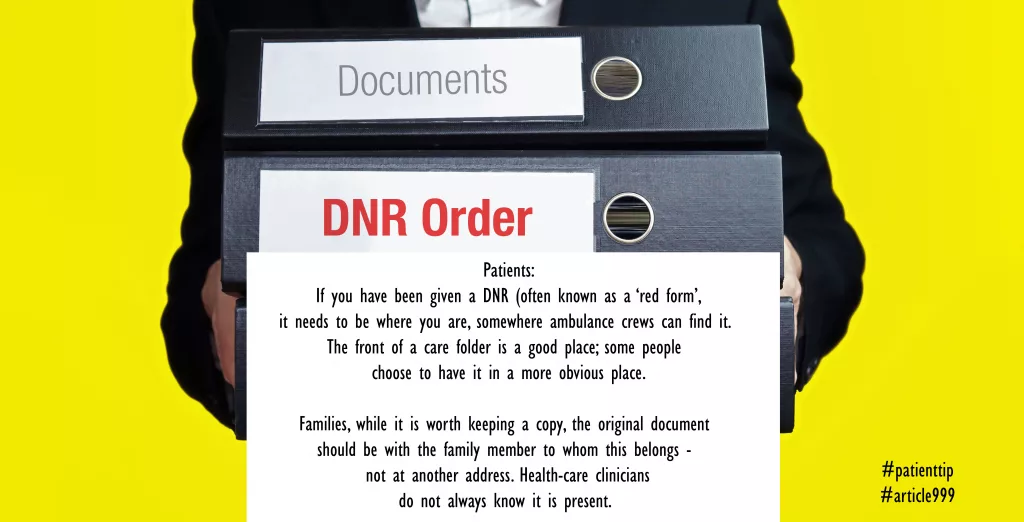
For more information on DNARs, have a look at the information page on the NHS website here.