This is a fast fact based on the full post: Burns: The Practical Stuff. Full reference available there.
This is a fast fact based on the full post: Burns: The Practical Stuff. Full reference available there.
This is a fast fact based on the full post – Burns: The Practical Stuff. Full reference available there.
This is a fast fact based on this post. Full reference available there.

FAST FACT – This is based on the Burns: The Practical Stuff video and post.
Full reference available in full post.

FAST FACT – This is based on the Burns: The Practical Stuff video and post.
Full reference available in full post.
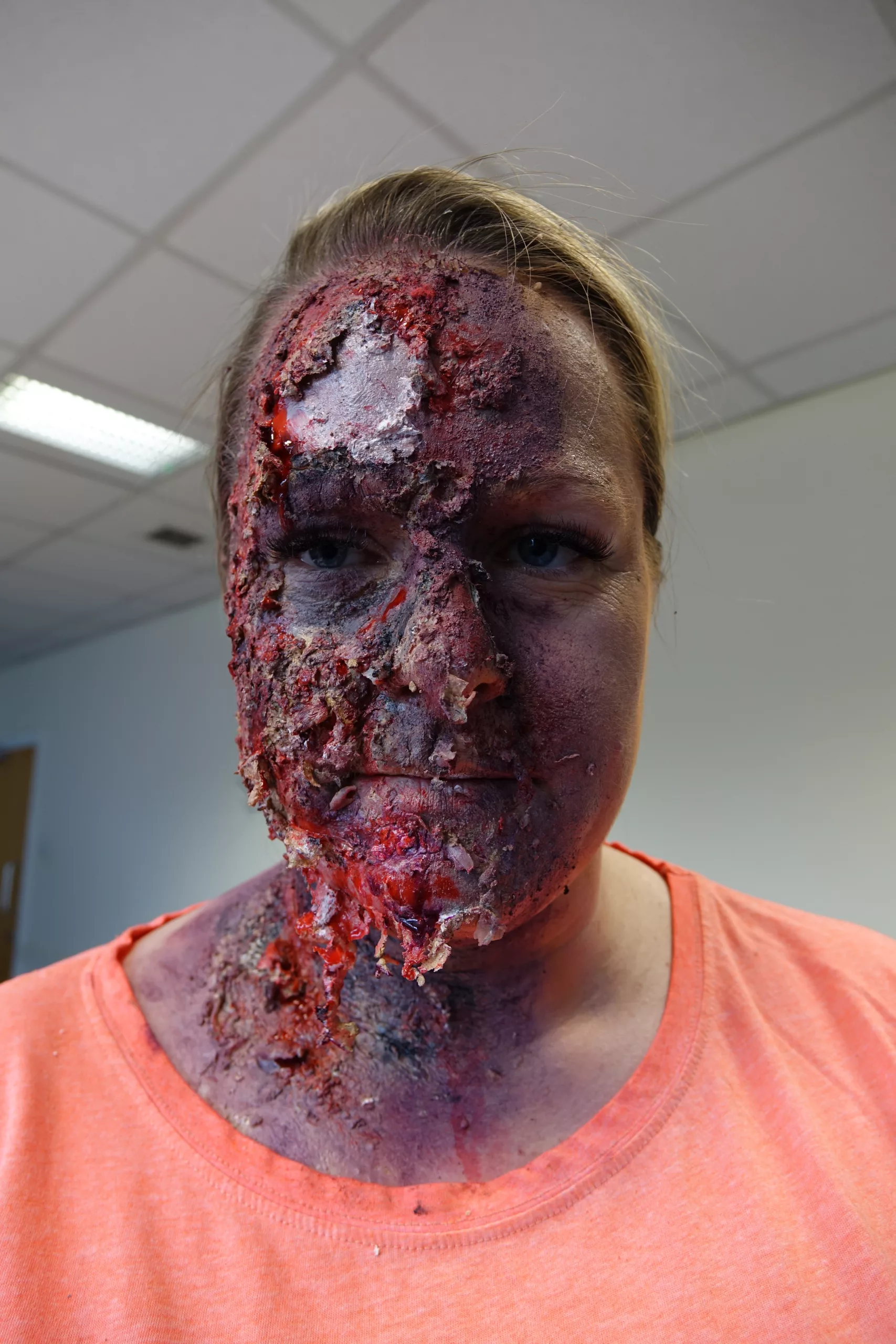
Content warning: This video may contain sensitive content.
This video demonstrates the assessment and management of burns, using equipment that is recommended within the locality at the time of production. Remember to check your local, current guidelines before putting anything into practice. Produced by HCPs and students.
This video demonstrates use of burn gel wraps, which may no longer be used in your ambulance Trust. Please check your local guidelines regarding this. According to the British Burn Association:
Burn gel wraps may be used to provide analgesia, but only after adequate cooling has
Varley et al (2014)
occurred as they do not actively remove heat from the wound
Remember to follow good IPC in real life.
The transcript below has been slightly edited, with titles added, to make it easier to read.
Further recommended reading: The British Burn Association First Aid Clinical Practice Guidelines
You must read the full disclaimer at www.article999.co.uk/disclaimer and check your local guidelines before putting into practice any of our content.
BURNS: The practical stuff
This video contains content some might find sensitive.
With all assessments and interventions, use an aseptic technique, especially because ‘burns are prone to infection’
Purcell, 2003: 217

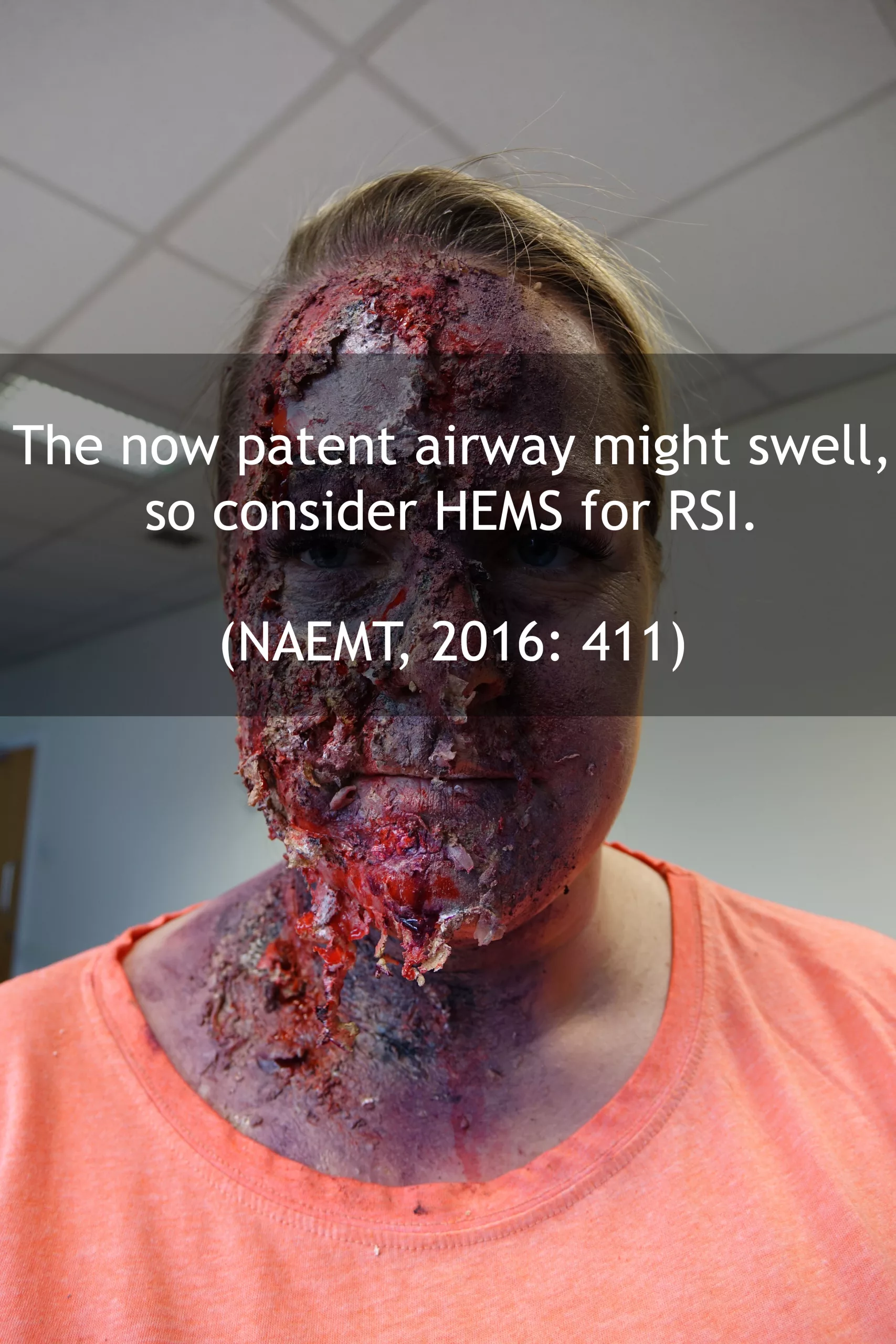
The patient’s airway might worsen. Here’s why:
‘A burned patient may have a patent airway on the initial evaluation. […] In the time that follows, the face, as well as the airway, will likely swell.’
NAEMT, 2016: 411
… So, consider HEMS for RSI.
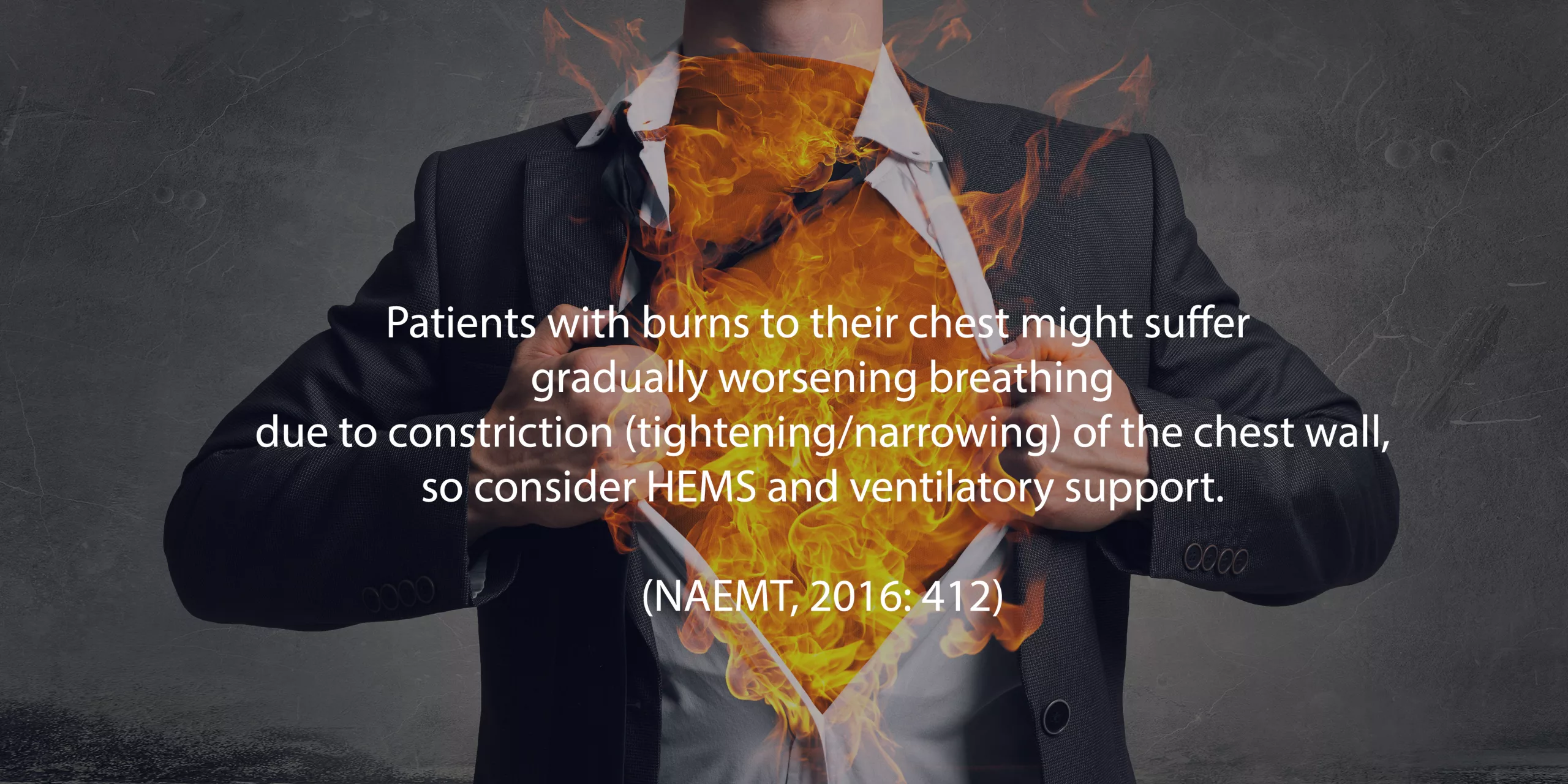
The patient’s breathing might worsen. Here’s why:

Is there a chest wall burn?
‘Burns constrict the chest wall similarly to having several leather belts progressively tightening around the patient’s chest. As time progresses, the patient cannot move the chest wall to breathe.’
NAEMT, 2016: 412
So, consider HEMS and ventilatory support where needed.
Other considerations:
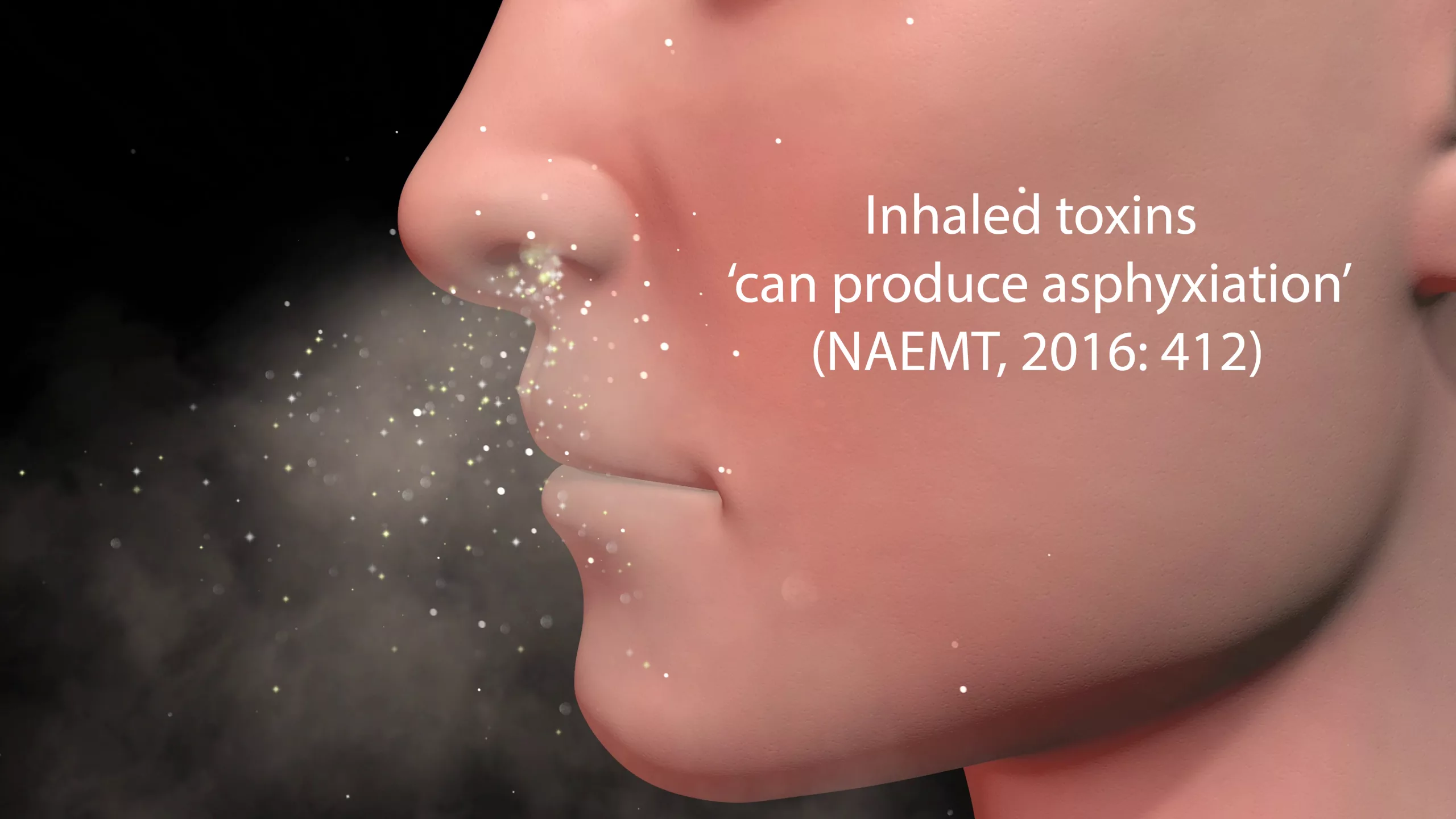
Inhaled toxins ‘can produce asphyxiation’
NAEMT, 2016: 412
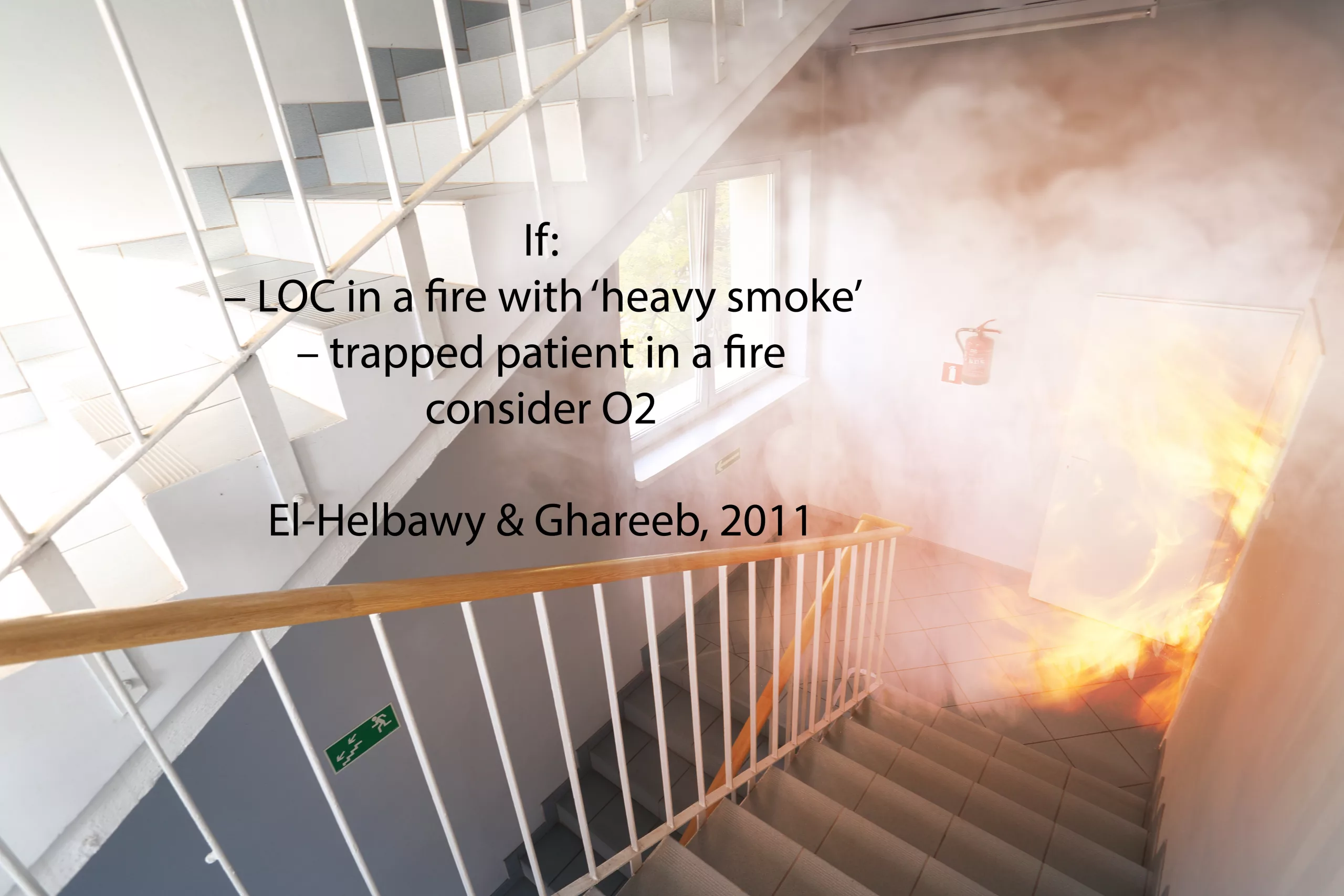
If:
El-Helbawy & Ghareeb, 2011
– LOC in a fire with ‘heavy smoke’
– trapped patient in a fire
consider O2

Swelling might get worse. Here’s what to do about it:
‘Distal limb perfusion may be critically reduced’; ‘Burned extremities should be elevated during transport to reduce the degree of swelling in the affected limb’
NAEMT, 2016: 412
A complication of swelling:
Fluid loss occurs from swelling and evaporation
NAEMT, 2016: 416
Giving Fluids – Pros and Cons
Consider IV fluids, especially if the burn is >10% of the body (AACE, 2016: 265-266). Keep watching for info on how to determine this.
Give fluids with caution. Too much -> ‘cardiac failure, […] infectious complications, acute respiratory distress syndrome, and even death’.
Too little -> ‘hypovolemic shock, organ failure’
(NICE, 2016)
Judicious fluid management of children with severe burn injury can improve the respiratory outcome measures of these children
Duran and Sheridan, 2016
Cannulating – Essentials
When cannulating, ‘placement through the burn is appropriate [only] if no alternative sites are available’
NAEMT, 2016: 412
What about heat?
Patients with burns are not able to maintain their own body heat
NAEMT, 2016: 413
…So, give blankets

ECGs
ECGs are required for electrical burns (AACE, 2016: 265) but consider them for all burns as ‘cardiac dysrhythmias’ result from the release of ‘muscle potassium’ (NAEMT, 2016: 418) and studies have shown disturbances in the cardiac functions of in-hospital burn patients (Jeschke et al, 2008).
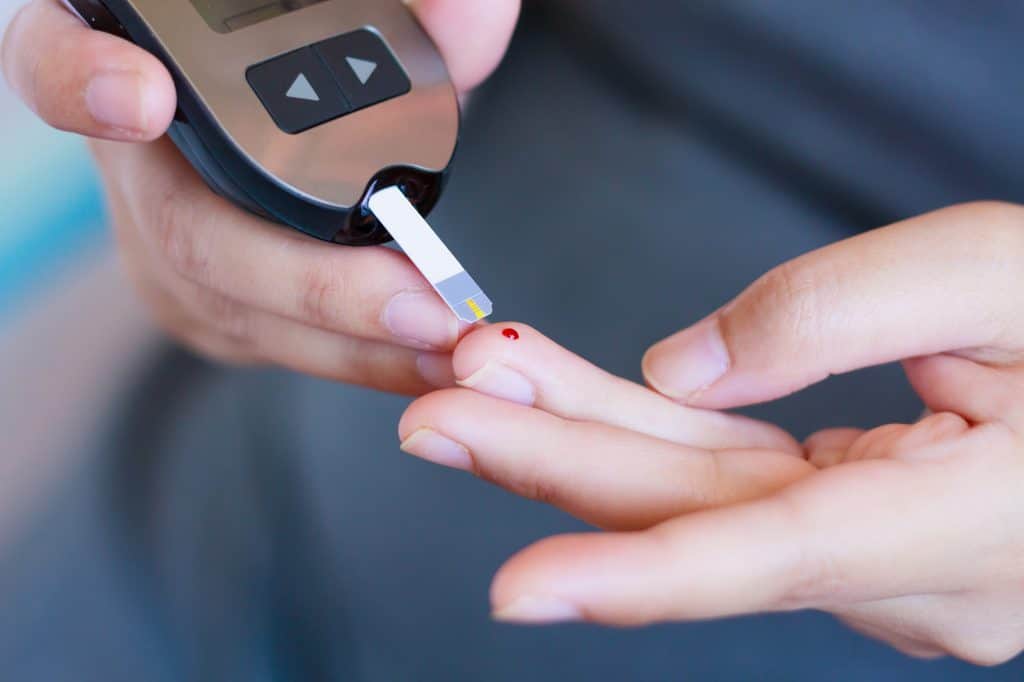
Do your BMs
Hyperglycemia may occur in burns patients and has a higher risk of ‘morbidity and mortality in critically ill patients’ (Wolfe et al, 1979; Mecott et al, 2010).
Pain management in children
In children, ‘a multi-modal approach to pain and sedation can improve the neurological status of severely burned children’
Duran and Sheridan, 2016
Cooling the burn:
Cool with a wet compress
Purcell, 2003: 217
‘Cooling gels such as Burnshield are often used by paramedics. These are useful in cooling the burn and relieving pain in the initial stages.’ *
Be aware of the risk of ‘heat loss’
Hudspith and Rayatt, 2004
*This guidance is changing. Check your local guidance first, and consider the use of cling-film after running water.
Documentation during examination:
Assess and document:
‘Burn depth & features’ (Purcell, 2003: 217)
Other considerations:
Anticipate Swelling. Take off jewelry. Be aware that these and clothing ‘retain residual heat’ (NAEMT, 2016: 413).
Cooling – more details
Irrigate early to cool and prevent further burning.
Chemical burns: 15 mins min (AACE, 2016: 265)
All burns: Max 20 mins (AACE, 2016: 266)
This is most effective ‘within 20 minutes of the injury’ (Hudspith and Rayatt, 2004).
Don’t use ice cold water as ‘intense vasoconstriction can cause burn progression’ (Hudspith and Rayatt, 2004).
When using cling film
Discard ‘the first few centimetres’ to be aseptic
‘lay this on the wound rather than wrapping the burn’ to anticipate swelling
(Hudspith and Rayatt, 2004)
Consider using wet dressings instead in chemical burns (Allison and Porter, 2004)
Estimating total burns
Consider the use of tools to estimate the total body percentage of the burns (NICE, 2016; Mersey Burns, 2013).
Using those tools [such as Mersey Burns] will help determine the right treatment centre for the patient and the treatment priority.
Time critical features:
(AACE, 2016: 266)
Association of Chief Ambulance Executives (AACE), 2016. UK Ambulance Services Clinical Practice Guidelines. Bridgwater: Class Professional Publishing
Allison, K. and Porter, K. 2004. Consensus on the prehospital approach to pain management. Emergency Medicine Journal. 21 (1), pp. 112-114
Duran, C. and Sheridan, R.L. 2016. Current Concepts in the Medical Management of the Pediatric Burn Patient. Current Trauma Reports. 2 (4), pp. 202-209
El-Helbawy, R.H. and Ghareeb, F.M. 2011. Inhalation injury as a prognostic factor for mortality in burns patients. Annals of Burns and Fire Disasters. 24 (2), pp.82-88
Hudspith, J. and Rayatt, S. 2004. First aid and treatment of minor burns. BMJ. 328 (7454), pp. 1487-1489
Jeschke, M.G. et al. 2008. Pathophysiologic response to severe burn injury. Anals of surgery. 126, pp. 37-51
National Association of Emergency Medical Technicians (NAEMT). 2016. PHTLS. Prehospital Trauma Life Support, 8th Edition. Burlington: Jones and Bartlett Learning.
NICE, 2016. Mersey Burns for calculating fluid resuscitation volume when managing burns. Available at: https://www.nice.org.uk/advice/mib58/chapter/summary (Accessed 06/04/19)
Purcell, D. 2003. Minor Injuries. A Clinical Guide. Edinburgh. Elsevier.
St Helens and Knowsley Teaching Hospitals NHS Trust, 2013. Mersey Burns. Available at: https://merseyburns.com (Accessed 06/04/19)
*Stiles, K. and Goodwin, N. 2018. British Burn Association: First Aid Clinical Practice Guidelines. Available Online: https://www.britishburnassociation.org/wp-content/uploads/2017/06/BBA-First-Aid-Guideline-24.9.18.pdf (Accessed 29/03/21)
*Varley, A. et al. 2014. British Burn Association: First Aid Position Statement. Available Online: https://www.nbt.nhs.uk/sites/default/files/attachments/British%20Burn%20Association%20First%20Aid%20Position%20Statement.pdf (Accessed 29/03/21)
Wolfe, R.R. et al. 1979. Glucose metabolism in severely burned patients. Metabolism. 28 (10), pp. 1031-1039
*Added to post 29/03/21
Introduction
Questions
Additional Information
References
This video has been created by Paramedics in response to the number of patients we are coming across who are unsure what to do when they have a high temperature or don’t know that the signs and symptoms they are experiencing may mean that they have a high temperature.
If this sounds like you, don’t worry, you’re not alone:
42% of working-age adults are unable to understand and make use of everyday health information, rising to 61% when numeracy skills are also required for comprehension
Public Health England (2015)
As Paramedics, we are frequently advising patients to take paracetamol if they are in pain – unless they have been specifically told not to. We are also advising patients to take off excess layers when they have high temperatures, even if they feel cold. I hope the video is helpful and informative. If there are any concerns, please let me know in the comment box below.

Questions
How do I know I can trust this information?
Are you a company? Who funds you?
Nope, just a website run by a Paramedic, without funding or sponsorship. If this changes, I’ll update this answer.
Can I share the video?
Yes, please do – but any shares must be accompanied by this link:
What to do when you have a high temperature or feel unusually cold – for adults. by Louise Sopher is licensed under Attribution-NoDerivatives 4.0 International


This license requires that reusers give credit to the creator. It allows reusers to copy and distribute the material in any medium or format in unadapted form only, even for commercial purposes.
I am a patient/member of the public. Can I contact you for medical advice?
Sadly, due to a whole combination of grey area legalities, I’m unable to offer direct medical advice, and these requests will not be responded to.
I am an HCP and I have a question or suggestion.
No worries, go ahead and contact me.
Is there anything else I should be aware of?
Yes. Please read our disclaimer and the accompanying information below.

Additional Information
When do I need to call 999 or attend A&E for a high temperature alone?
How do I take my temperature?
The NHS has some useful information about this here.
Do I need to have an ear thermometer?
This is a question of much debate. In the link above, the NHS advises not using forehead strip thermometers due to lack of accuracy. Patient.info advises a blanket avoidance of forehead thermometers. Elsewhere on NHS sites, you’re advised that you don’t need a thermometer to work out if you have a temperature – you’ll likely feel hot to touch.
Is a temperature 37.8 or 38?
This is also a subject of much debate. In the NHS, here says 38C. As does here – in adults. NHS Scotland says 37.8. I have chosen the lower threshold.

Derry, C.J. et al, 2014. Caffeine as an analgesic adjuvant for acute pain in adults. [online] Available at: https://www.cochrane.org/CD009281/SYMPT_caffeine-analgesic-adjuvant-acute-pain-adults (Accessed 21/01/21)
EMC, 2017. Paracetamol & Caffeine 500/65 mg Effervescent Tablets. [online] Available at: https://www.medicines.org.uk/emc/product/7416/smpc#gref (Accessed 21/01/21)
Jensen, M.M. & Brabrand, M. 2015. ‘The relationship between body temperature, heart rate and respiratory rate in acute patients at admission to a medical care unit’ in Scandinavian Journal of Trauma, Resuscitation and Emergency Medicine, 23: A12.
Knott, L. 2018. Fever. [online] Available at: https://patient.info/signs-symptoms/fever (Accessed 25/01/21)
NHS, 2021. When to self-isolate and what to do. [online] Available at: https://www.nhs.uk/conditions/coronavirus-covid-19/self-isolation-and-treatment/when-to-self-isolate-and-what-to-do/ (Accessed 25/01/21)
NHSb, 2020. High temperature (fever) in adults. [online] Available at: https://www.nhs.uk/conditions/fever-in-adults/#:~:text=A%20high%20temperature%20is%20usually,your%20body%20fighting%20an%20infection.
NHS Inform, 2020. Fever in adults. [online] Available at: https://www.nhsinform.scot/illnesses-and-conditions/infections-and-poisoning/fever-in-adults (Accessed 25/01/21)
NPS MedicineWise, 2010. Paracetamol with caffeine (Panadol Extra) available over the counter from pharmacies. [online] Available at: https://www.nps.org.au/radar/articles/paracetamol-with-caffeine-panadol-extra-available-over-the-counter-from-pharmacies (Accessed 21/01/21)
Public Health England, 2015. Local action on health inequalities: Improving health literacy to reduce health inequalities [online] Available at: https://assets.publishing.service.gov.uk/government/uploads/system/uploads/attachment_data/file/460710/4b_Health_Literacy-Briefing.pdf (Accessed 25/01/21).
Sorensen, K. et al, 2015. Health Literacy in Europe: Comparative results of the European Health Literacy Survey (HLS-EU), The European Journal of Public Health, 25: 6.
By Louise Sopher, HCPC registered Paramedic.
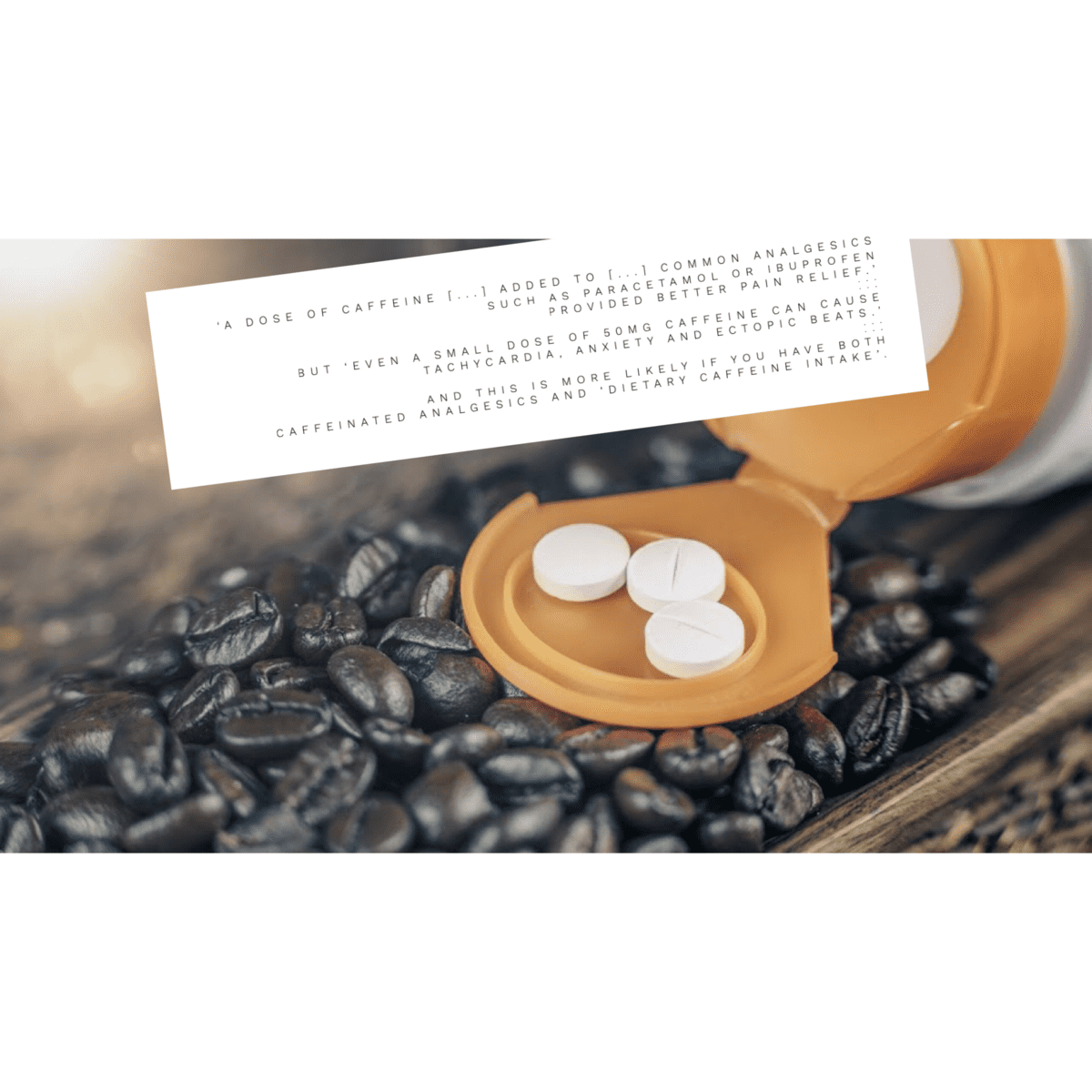
Many of our patients have high temperatures, especially during COVID outbreaks. Some of them are taking over the counter pain relief as required. This is of course recommended, however many of our patients are also tachycardic due at least in part to their high temperatures. When they complain of palpitations, do they need to be aware of the effects of caffeine-paracetamol combinations? Should they be taking this combination at all, or should they simply ease off dietary sources of caffeine while taking analgesics? Here are a few quotes on the subject for discussion. Full references are below. For a fast fact summary, have a look at the featured image below:

A dose of caffeine equivalent to a mug of coffee added to a standard dose of common analgesics such as paracetamol or ibuprofen provided better pain relief. Analgesic plus caffeine increased the number of people who had a good level of pain relief by 5% to 10% compared with analgesic alone
Derry et al, 2014.
When the recommended paracetamol-caffeine dosing regimen is combined with dietary caffeine intake, the resulting higher dose of caffeine may increase the potential for caffeine-related adverse effects such as insomnia, restlessness, anxiety, irritability, headaches, gastrointestinal disturbances and palpitations.
EMC, 2017
Even a small dose of 50 mg caffeine can cause tachycardia, anxiety and ectopic beats. Toxicity is normally seen at doses > 500 mg, but this depends on tolerance.
Take into account dietary and other medicinal sources of caffeine: people may not be aware from the brand name that a particular preparation contains caffeine. Consider whether paracetamol with caffeine is necessary: it cannot be assumed that it will be tolerated in the same way as paracetamol alone.
NPS MedicineWise, 2010
Derry, C.J. et al, 2014. Caffeine as an analgesic adjuvant for acute pain in adults. [online] Available at: https://www.cochrane.org/CD009281/SYMPT_caffeine-analgesic-adjuvant-acute-pain-adults (Accessed 21/01/21)
EMC, 2017. Paracetamol & Caffeine 500/65 mg Effervescent Tablets. [online] Available at: https://www.medicines.org.uk/emc/product/7416/smpc#gref (Accessed 21/01/21)
NPS MedicineWise, 2010. Paracetamol with caffeine (Panadol Extra) available over the counter from pharmacies. [online] Available at: https://www.nps.org.au/radar/articles/paracetamol-with-caffeine-panadol-extra-available-over-the-counter-from-pharmacies (Accessed 21/01/21)
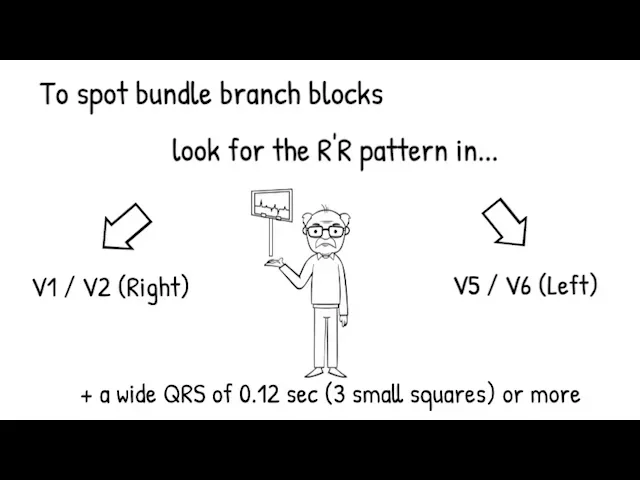

Easily remembered as: In English we read from left to right, but the ECG prints a view of the heart from right (V1-V2) to left (V5-V6).
Reference
Dubin, D. (2000) Rapid Interpretation of EKG’s. 6th edition. Florida: COVER Publishing Company.
Like it? Hate it? Spot a mistake? Let me know in the comments below ->

Check out the video summary below.
For more information, have a look at the related Article 999 post here.
Other posts that may interest you:
Fast Fact: Head Injury is the commonest cause of death
Reference: National Institute for Health and Care Excellence. (2014). Head injury: assessment and early management (NICE Clinical Guideline 176). Retrieved from https://www.nice.org.uk/guidance/cg176
This has not yet been peer reviewed. Comment and review below 🙂