Posts written or produced by patients. These are ‘opinion’ posts i.e. not referenced, and the opinions of the authors alone unless otherwise indicated.
Why, you ask? Because health literacy levels in this country are shockingly low – seriously, check out this map. Adults in the UK struggle to understand and interpret health information.
Read about Article 999’s mission to improve this (once there, click on the ‘about Article 999 for patients’ tab).
Article 999 is posting ‘what to do when’ style posts, tips and useful resources, and we are collating our own collection of resources including charities that offer mentoring. This collection is for you to search and learn and for clinicians to know what is out there to signpost you to. We have also had patient voices, including Alexandra Adams, posting about their health conditions to help others and to inform us from their own voice.
But we can’t do this alone. Article 999 is in need of patient voices – people who want to write about their experience of their health conditions and when they find they need to call emergency services, and what type of support they wish existed. We also need healthcare professionals including paramedics and physios who are keen to improve health literacy by providing carefully curated content that educates and improves understanding in our patients. Are you interested in these voluntary roles? If so, get in touch by emailing us at article999uk[at]gmail[dot]com. If you are an HCPC registered healthcare professional, remember that contributing to this project will help you achieve your updated HCPC standards of proficiency in relation to health promotion (standard 15.1). If you find it easier to have a certificate to upload as evidence of your contributions, we can provide one for you.
I did indeed have plans for far more constructive content coming up; the chronological and informative kind, but as we all know too well, life doesn’t always work out that way, when you’re a patient with chronic illnesses.
Instead, I have found myself tied down with all things medical school – returning to clinical placement after 2.5 years out has been overwhelming, but overwhelmingly good, exciting, and on the whole, positive. But I also became tied down by the very inevitable recently – another dreaded hospital admission.
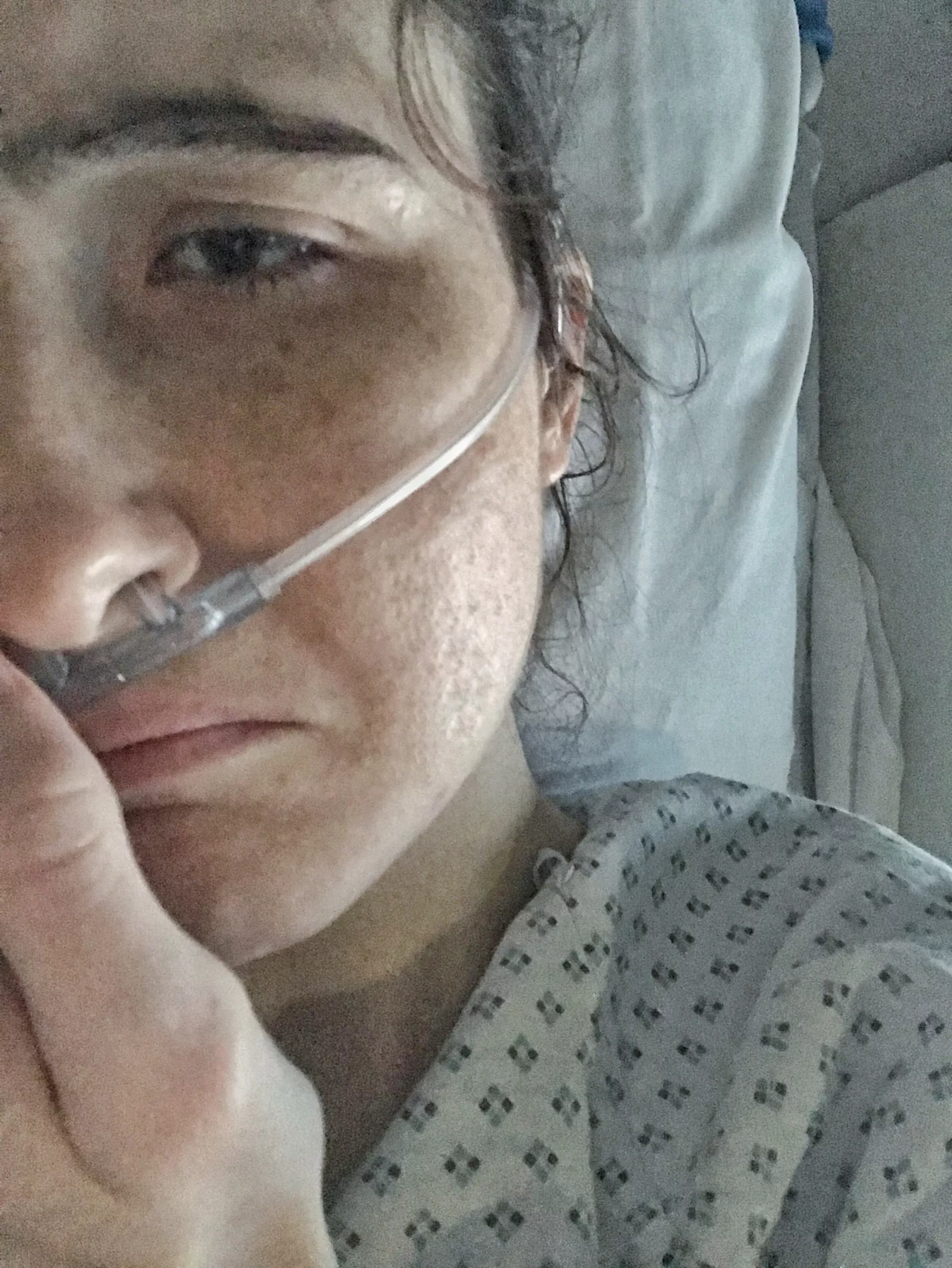
I had run myself a deep, soothing bubble bath, after what had been another incredibly long day on the wards. I felt accomplished, satisfied, and in good spirits, despite the niggle of pain I had been trying to ignore for many weeks, if not, months. After all, what good would it have been in addressing this? My past experiences of being a rare disease patient had taught me that, if nobody cared about me, why should I bother caring about myself? Stood there, I looked down to see my stoma stie bleeding profusely, the gauze beneath it saturated and red, blood spurting out, though unclear from where or what direction. Very much on my own, I stood there, in the nude, the bath math soaking in a blemished wine-like stain, trying to process what to do next. I didn’t want to call any of my friends, not that I had very many to call. I lived alone but still hated being ‘the burden’ or ‘hypochondriac’ if I called them (who, by this point, were all qualified doctors themselves). Nor did I want to call my family, whom, 200 miles away, would only worry more by the fact that they could do very little from such a distance. And the last dilemma – I absolutely, most definitely, categorically, was NOT going anywhere near a hospital. 17 months bedridden in hospital, only to spend much of it being gaslit and disbelieved, traumatised, and now neglected, by having no network of support or overseeing consultant or care, it was the last place that would offer any sort of respite or safety. Instead, I continued standing there, shivering slightly, upon the bloodied bathmat, muttering to myself in annoyance:
“Well stuff this. Stupid body”.
Eventually, I ‘gave in’, and fumbled into the darkness of my bedroom, now very late at night, for my phone. NHS 111. Maybe I’ll reluctantly get a GP appointment in a few weeks. If I hadn’t bled dry by then. Ultimately, what followed, was an urgent doctor’s visit out to my house at 2am, which I was very grateful for. Leading the doctor up to my living room where I lay on the couch to show him my bleeding stoma, I left trails of blood drip-dripping along the carpet.
“Where are your other housemates? Shouldn’t they be up making sure you’re okay?” I told him that I lived alone, and in all honesty, felt very distant from anybody else. In fact, I hadn’t seen any of my classmates for months, years. Maybe I was a nobody.
I went up to the hospital. I was a mess, and in pain, but I laughed it off. I had been conditioned into thinking this was all very normal, and nothing to raise a voice about. That lost, silenced voice of a non-textboook patient.
“Who are you under?” they’d ask. “Which doctor is overseeing your care?” The answer? Nobody. Between the two separate systems of NHS Wales and NHS England, I had become completely lost from both, and now had nobody to go to, no point of contact, despite having a multitude of debilitating symptoms and conditions, and a completely non-functioning, infected piece of plastic protruding from my stomach. Turns out, nobody could do anything unless I could track down the surgeon who did my initial operation – a surgeon who neither saw me before or after my procedure, and never came across again. To him, his work was done, but it was unfinished, and unaccounted for.
“Well why don’t you get referred to Dr. X?” they’d ask – the very same consultant who had spent the entirety of my long admission gaslighting me and brainwashing me into believing I had “made (myself) come in”, that I “wanted to be here”.
“Absolutely not”, I said, through shudders of flashback and trauma. So they just shrugged.
“We can’t help you”. We were all lost.
Meanwhile, the patient in the cubicle next to me had just seen his doctor. From what I had gathered, through a nosiness of interest through the thin thread of the curtain, he too had a long-standing condition which had flared up and caused him to come in. But his consultant was kind, and the banter was upbeat.
“Great to see you again!” they conversed. A plan was put into place and the consultant promised his patient that he’d be on the case and make him comfortable. It was like a reunion of old friends almost.
I lay there, thinking to myself, ‘Wow. If only every Doctor was like that. If only every patient had access to that kind of support, and follow-up’. Perhaps it was because he was a middle-aged man, and not a young, female patient, whose symptoms are almost always attributed to hormones. Or maybe it was because his diagnosis was in the textbook, something we all get taught on in medical school and hence are familiar with how to treat it, hence it mustn’t be “in the head”.
The bleeding from my stoma site had now staggered and slowed down slightly, though the skin surrounding the area had become burnt, blistered, and sore. The attending doctor was sorry he could not help me any further, of which I was grateful for, at least by his kindness and acknowledgement. I, of course, already knew that’d be the answer. After all, I was a lost patient, very much lost in the system.
As a financially struggling student, I had no choice but to walk it home, tired eyes black, sluggish, and sleep-walking. When I got in, barely able to bend over from the pain, I noticed my fridge was empty and kettle dry. Upstairs, clothes were strewn across the floor where I had frantically tried to get ready for the doctor’s visit the night before. And my deep, soothing bubble bath was still full, and waiting. Yet stone-cold. Of course, these were all things I could easily rectify myself. I could re-run the bubble bath, order some food in, fill up the kettle and pour myself a hot cup of tea. But I was tired. So incredibly tired. And I realised then what the difference between being alone, and lonely, meant. And lost. It would’ve been nice to be picked up and taken home. It would’ve been nice to just be able to crash into bed whilst someone else brought up that hot cup of tea. It would’ve been nice not to have to worry about what others would think about you if you presented to the hospital in the time of need. But, too often, patients like myself who live with chronic illness, and more so, the rarer kinds of chronic illness, we are often left feeling even more deflated, by the very fact that we can’t be helped, we can’t be followed up, and we can’t be treated in the same way as the middle-aged man in the cubicle next-door. Because we are not textbook patients, and the system was never built for people like us. Hence, we are lost from the pages, lost of all support, lost from the system when we get ‘too complex’ or passed on from healthcare professional to healthcare professional. Surely then, it’s about time we are found, and concreted in the cracks of this outdated, stigmatised support system. Don’t you agree?
What lies in between the black and white is a pun in its every sense; what’s even more convenient, is that, over these past few years, a period of life that saw my life dramatically change, I’ve learnt that Medicine and healthcare is still very much a ‘grey area’.
Alexandra Adams
Alexandra, wearing her medical student scrubs and stethoscope, whilst carrying her white cane and oxygen backpack.
My name is Alexandra Adams, and I am the UK’s first deafblind person training to be a Doctor. I am also a sufferer of the conditions Ehlers Danlos Syndrome (EDS), MCAS, PoTS, Gastroparesis, and respiratory muscle weakness, to name just a few. I am what you could call, a crossbreed of ‘medic’ and ‘zebra’.
Whilst in hospital, wearing all the zebra accessories; zebra tape, zebra hot water bottle, zebra drainage bag cover and tube pad, zebra bracelet, and cuddly toy zebra!
As a 4th year medical student, very much at a standstill up until now, My ‘EDS and co’ diagnoses came very late in my journey. Despite experiencing worsening symptoms over many years, a dramatic change in my body and in my identity, no thanks to illness, and 23 admissions to the Intensive Care Unit throughout the course of my medical studies, I remained very much in that grey area of support until very recently. And the kind of responses I received from other healthcare professionals, my colleagues, surprised me. What followed was a 17-month hospital admission, in which I was bedbound, malnourished, unable to eat, move, or walk, taken prisoner by multiple surgeries, 7 bouts of sepsis, and catching COVID-19 too. Still, I couldn’t really tell you when I realised that life had really changed forever.
After a very turbulent time, I announced to those following my story, just this past week, that I was finally returning to medical school to complete my Doctor dream, after the longest hiatus, of 2 years and 2 months, in my health journey. It has meant going back 2 years in my degree, when I could’ve already qualified with the rest of my original cohort at the height of the pandemic, but I am just grateful, thankful, and ever so relieved, that I have been given this second chance to pursue my goals and passions, despite everything – all things Medicine. I guess it comes with the very obvious message of ‘not giving up’, persevering, and believing in yourself and in your worth and capabilities, even through the very hardest of times. Without doubt, there were countless times when I really thought I was nearing the end, that I couldn’t ever get back to what I once was and once did, that I would have to give up Medicine altogether, and that eventually I would succumb to my ill health when things really were, with the multiple peri-arrests and ICU admissions, ‘touch and go’.
But what kept me going? It wasn’t just the self-belief and the selfish want to continue my own journey – it was also everything that I learnt as a patient whilst in that hospital bed that made me realise, I can’t leave healthcare the way it is, when it’s in this state for other patients’. I was learning more about becoming a Doctor, by being a patient, than any medical lecture or textbook had taught me. I had been misdiagnosed, gaslit, neglected, and on the receiving end of poor patient care – all because I had a rare genetic condition that (still) isn’t in the textbook, or taught in Medical School.
Of course, that’s not to say that I didn’t also have wonderful care from others. It was the conversations I had with these healthcare professionals; the ones who listened and understood somewhat, that I realised, if there could be any outcome I’d wish from all of this, it would be that the education and awareness of conditions such as EDS, is broadcasted and developed as a standard measure for all those in the healthcare profession. Because I cannot bear to hear of another patient, like myself, being let down in the same way that I was.
Being both a medical student training to be a Doctor, and a patient, who has experienced every end of the spectrum from the hospital bed, I am passionate in not only sharing my story, and journey, but also my ideas and perspectives in how we can strengthen these lesser-known areas of healthcare. Hence, it is my aim, as a soon-to-be regular contributor of ‘Article999’, to explore a variety of topics concerning the above, that perhaps many of us have otherwise not considered before.
Alongside my commitments and hobbies in blogging, patient advocacy, and healthcare leadership, I also enjoy my roles as a public speaker (including a TED talk for TEDxNHS in 2019), social media influencer (account handles at the bottom of this article), amateur cook and houseplant Mum, piano-player, and ex-GB athlete. I hope that, through my future articles and blog-posts, you’ll be able to learn even more about me, and that I can network with many of you, too.
Alexandra speaking at TEDxNHS 2019
This is just a short one for now, but I’m very excited to come on board ‘Article999’ to share my story, journey, and experiences, and I look forward to welcoming you to this page, where I hope it can help educate you, support you, and provide you with the resources to help implement changes to improve health, and care.
Alexandra Adams Instagram: @alexandraelaineadams Twitter: @alexandra_DBmed TikTok: @alexandraelaineadams