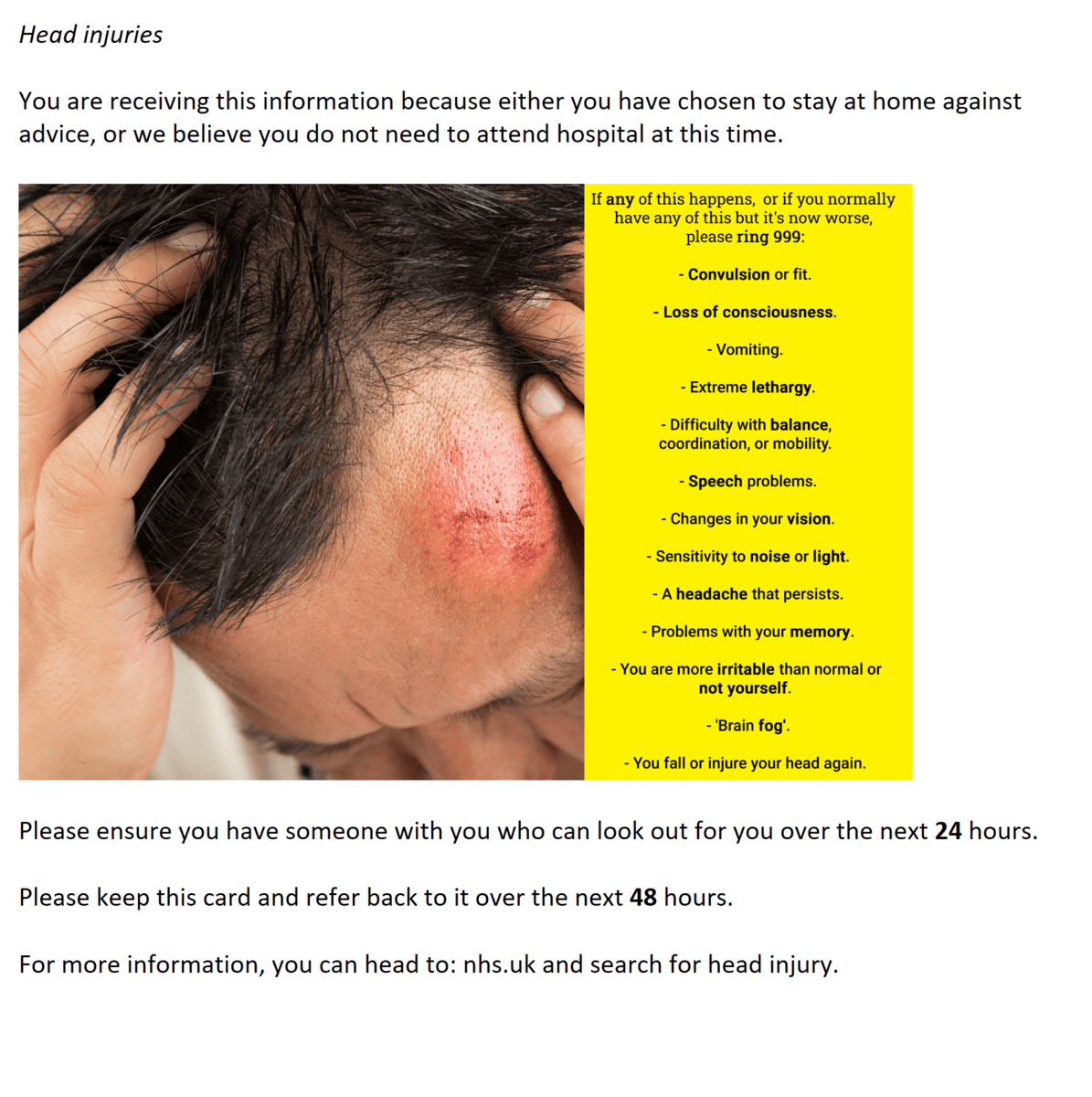
The below is an information card designed for patients to receive should ambulance crews need to non-convey. This information is based on the NICE guidelines – https://www.nice.org.uk/guidance/ng232 (2023). This card has not yet been peer reviewed – please add your feedback on the content and presentation below. If you are not a medic, please add your feedback on presentation below.
What to Do If You Fall (Adults Under 65) – When to Call for Help
What to do if you fall (adults under 65) and you are not hurt.
More
Adults under 65 who fall regularly may be interested in watching Article 999’s video about when to let your Doctor know about your falls. This is available on the over-65s page but please don’t be offended – the reasons to let your Doctor know will still be applicable.
[tabby title=”For Patients”]
Transcript
*Full references at end of page
If you have fallen over and you’re not sure what to do, or would like some additional information, please keep watching. If an ambulance crew have seen you and you have not attended hospital, this video is also for you.
If you or the person you are watching this for has just fallen and the following apply, please call 999.
If you or they fall again, and the following applies, please call us back:
SYMPTOMS:
You are having difficulty breathing, or have chest pain
You’re unable to move your arms or legs, or they’re numb
You have sudden, new weaknesses
You are dizzy and feel faint when you stand up
You lost consciousness, or have had a seizure, which is not normal for you.
You can’t remember what happened since, or before, you fell over
You have continuous vomiting, or headaches, which is not normal for you.
Your behaviour is different – you feel more confused, or more irritated
call 999
PAIN –
You have neck or back pain
You are unable to get up from the floor
You have another injury that PREVENTS YOU FROM WALKING or causes EXTREME PAIN, for example, you think you might have broken your leg.
call 999
HOW IT HAPPENED –
You have fallen from height – more than 1m
You have landed on your head
call 999
If you have had alcohol, this may be hiding symptoms, making it more difficult for us to assess you. If you are intoxicated, you may be advised to attend a&e to rule out serious complications that are masked by the alcohol.
If you have been advised to attend a&e and have chosen not to, please make sure you have someone who can check in on you over the next 48 hours (NICE, 2014), and ask them to look out for these symptoms.
Also, if you take any medications to thin your blood, AND you have hit your head, you must attend a&e to be monitored and receive a scan of your head, a CT scan. Even if you have not drawn blood, you are still at risk of bleeding internally, especially in the brain because these medications are designed to prevent blood clots.
These medications might be called:
Warfarin
Rivaroxaban
Dabigatran
Apixaban
Edoxaban
Heparin (injection)
You might also be taking any of these antiplatelet medications:
Clopidogrel, aspirin, and others shown on the screen:
Dipyridamole
Prasugrel
Ticagrelor
Cangrelor
(BNF, n.d.)
*These are more concerning when taken in combination, e.g. clopidogrel + aspirin
You should also attend a&e when taking these, or at minimum maintain extreme caution for the same reason. For more information about blood thinners and antiplatelets, please scroll below the video.
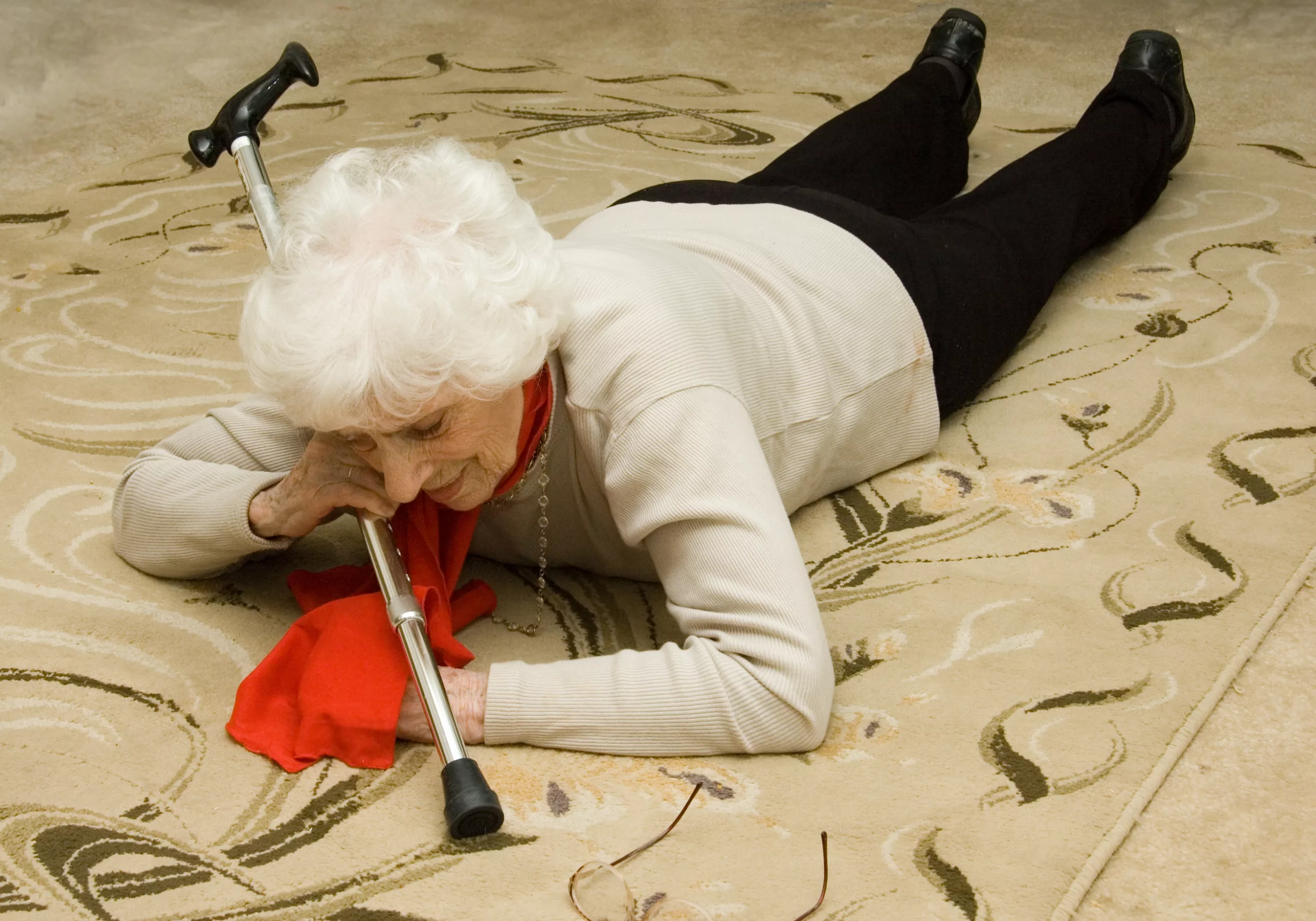
What to do if you are on the floor because of a fall, and you’re not hurt
Don’t get up quickly. Roll onto your knees and use nearby stable furniture to push yourself up. Then, sit down until you feel able to continue with your day (NHS, 2021). If you are disabled, ensure use your mobility aids today to prevent yourself from falling again.
Remember, if you have hurt yourself, or you can’t get up, call for help. If you have one, you can press your personal alarm. You can call: family, friends, 999, or 111. Both 999 and 111 will lead to an ambulance arrival with a crew who can assess you and help you up. Both 999 and 111 result in the same ambulance service.
While you wait, the NHS recommends changing your position ‘at least once every half hour or so,’ (NHS, 2021) if you are able to and it is not painful to do so.
Keep yourself warm and let 999 know if anything gets worse.
PREVENTION –
To prevent yourself falling again, remove any objects that might have caused you to fall, avoid drinking too much alcohol, and ensure you wear appropriate safety equipment when performing sports, such as helmets when cycling.
Alter SM, Mazer BA, Solano JJ, et al. (2020). Antiplatelet therapy is associated with a high rate of intracranial hemorrhage in patients with head injuries. Trauma Surgery & Acute Care Open, 5(1), e000520
NICEd. (2014). Head injury: assessment and early management (NICE Clinical Guideline 176). Available at: https://www.nice.org.uk/guidance/cg176 (Accessed 16/06/2020).
Nishijima, D. (2012). Immediate and delayed traumatic intracranial hemorrhage in patients with head trauma and preinjury warfarin or clopidogrel use. Annals of Emergency Medicine, 59(6), pp: 460-468.
North American Thrombosis Forum. (2020). Falls and anticoagulation. Available at: https://natfonline.org/2020/08/falls-and-anticoagulation. (Accessed 18/10/2021).
Probst, M. et al. (2020). ‘Prevalence of Intracranial Injury in Adult Patients With Blunt Head Trauma With and Without Anticoagulant or Antiplatelet Use’. Annals of Emergency Medicine, 75(3), pp: 354-364.
Soliman, Y., Meyer, R., And Baum, N. (2016). Falls in the Elderly Secondary to Urinary Symptoms. Reviews in Urology. 18(1), pp: 28-32.
Stiell, I. et al. (2003). ‘The Canadian C-Spine Rule versus the NEXUS Low-Risk Criteria in Patients with Trauma’, The New England Journal of Medicine. 349. pp: 2510-2518.
Please feel free to share this video with your patients, but please attach this link with it so that all accompanying information is also shared.
For more info about what Article 999 is, and why I am creating videos for patients, please see the ‘About Us’ page and click on the ‘About article 999 for patients’ tab.
Feel free to add comments or feedback. Please let us know how well received this is.
Thank you,
Louise Sopher HCPC Registered Paramedic Article 999 Founder
If you are 65 years old or above, you are at an increased risk of falling and serious injury from falling (NICE, 2013; WHO, 2021). But falling isn’t just a part of getting older, it’s often due to a combination of factors – over 400, in fact (NICE, 2015) – some more serious than others.
If you or the person you are watching this for has just fallen and the following factors apply, please CALL 999. If you or they fall again, and the following apply, please CALL US BACK, no matter what time it is. Finally, if you have been advised to attend a&e and have chosen not to, please make sure you have someone who can check in on you over the next 48 hours (NICE, 2014). You and they should look out for:
Breathing difficulties or chest pain
A change in your behaviour, for example if you feel more irritated or confused than normal.
Vomiting
Dizziness, or feeling faint when you stand up
Persistent headaches
Memory changes – are you forgetting events since, or before, you fell over?
Seizures
Losses of consciousness, including faints.
Any loss of sensation in your limbs or sudden new weaknesses, including signs of strokes.
Swollen, painful muscles
Or if you’re unable to mobilise, can’t get up from the floor, or develop any new pain
*This is not an exhaustive list.
Call 999.
If you have had alcohol, this may be hiding symptoms, so you may be advised to attend a&e.
Also, if you have fallen, hit your head, and you take blood thinners, or medications called anti-platelets, you need to be cautious.
You must attend a&e to be monitored and receive a scan of your head, a CT scan. Even if you have not drawn blood, you are still at risk of bleeding internally, especially in the brain because these medications are designed to prevent blood clots.
These medications might be called:
Warfarin
Rivaroxaban
Dabigatran
Apixaban
Edoxaban
Heparin (injection)
Antiplatelet medications include clopidogrel, aspirin.
And others shown on the screen:
Dipyridamole
Prasugrel
Ticagrelor
Cangrelor
(BNF, n.d.)
*These are more concerning when taken in combination, e.g. clopidogrel + aspirin
You must maintain extreme caution if you are on these medications. For more information about blood thinners and antiplatelets, please scroll below the video.
If none of this applies to you, but you are on the floor and you’re not hurt, don’t get up quickly.
Roll onto your knees and use nearby stable furniture to push yourself up. Then, sit down until you feel able to continue with your day (NHS, 2021).
Remember, if you’re not hurt but you still can’t get up, call for help. If you have one, you can press your personal alarm. You can call: family, friends, 999, or 111. In this circumstance, both 999 and 111 will lead to an ambulance arrival with a crew who can assess you and help you up. Both 999 and 111 result in the same ambulance service.
While you wait, the NHS recommends changing your position ‘at least once every half hour or so,’ (NHS, 2021) if you are able to and it is not painful to do so. Keep yourself warm and let 999 know if anything gets worse.
Be aware of what might have caused or contributed to your fall, and let the ambulance crew know when they arrive.
Additional Information
When to speak to your doctor:
6 out of 10 falls happen at home (SAGA, CSP, PHE, 2015), so there are often contributing factors – and there are ways we can help prevent these from causing you to fall.
If you are noticing an increase in your urine output, you should request a urine dip from your doctor in case you have a urine infection, which might make you confused (Alzheimer’s Society, 2021), or rush to the toilet (Soliman, Meyer, and Baum, 2016), often leading to falls.
If you are falling more often,
If your balance has worsened gradually,
Or you’re noticing a gradual worsening in the way you walk,
Or you’re feeling afraid of falling
*If anything mentioned here happens suddenly, you must call 999.
… You should ask for a falls assessment from your doctor. Health care professionals will look for factors contributing to your falls, which may range from problems with your eyes to problems with your bones, and looking at your medications to see if they are causing side effects (Saga, CSP, PHE, 2015).
They may also look at your home environment and identify items that could cause you to trip, even if they never have before. Ambulance crews might also point these out if they are attending to you. They should also ask to refer you for this falls assessment. (NICE, 2013)
Scroll beneath the video to find a link for information on how to get equipment, grants to pay for additional items, and personal alarms if you fall.If you have purchased your own keysafe, make sure you pass on the code to the ambulance service in case you cannot answer the door.
Thank you.
Links:
For equipment such as hand and grab rails, commodes, raised toilet seats, slip mats for the shower, grants to pay for additional items, and personal alarms if you fall, please follow this link. You should be able to get financial support from your local council for some of these items.
Alter SM, Mazer BA, Solano JJ, et al. (2020). Antiplatelet therapy is associated with a high rate of intracranial hemorrhage in patients with head injuries. Trauma Surgery & Acute Care Open, 5(1), e000520
NICEd. (2014). Head injury: assessment and early management (NICE Clinical Guideline 176). Available at: https://www.nice.org.uk/guidance/cg176 (Accessed 16/06/2020).
Nishijima, D. (2012). Immediate and delayed traumatic intracranial hemorrhage in patients with head trauma and preinjury warfarin or clopidogrel use. Annals of Emergency Medicine, 59(6), pp: 460-468.
North American Thrombosis Forum. (2020). Falls and anticoagulation. Available at: https://natfonline.org/2020/08/falls-and-anticoagulation. (Accessed 18/10/2021).
Probst, M. et al. (2020). ‘Prevalence of Intracranial Injury in Adult Patients With Blunt Head Trauma With and Without Anticoagulant or Antiplatelet Use’. Annals of Emergency Medicine, 75(3), pp: 354-364.
Soliman, Y., Meyer, R., And Baum, N. (2016). Falls in the Elderly Secondary to Urinary Symptoms. Reviews in Urology. 18(1), pp: 28-32.
Stiell, I. et al. (2003). ‘The Canadian C-Spine Rule versus the NEXUS Low-Risk Criteria in Patients with Trauma’, The New England Journal of Medicine. 349. pp: 2510-2518.
Please feel free to share this video with your patients, but please attach this link with it so that all accompanying information is also shared.
For more info about what Article 999 is, and why I am creating videos for patients, please see the ‘About Us’ page and click on the ‘About article 999 for patients’ tab.
Feel free to add comments or feedback. Please let us know how well received this is.
A history of falls in the past year is the single most important risk factor for falls and is a predictor of further falls.
Reference: National Institute for Health and Care Excellence. (2014). Head injury: assessment and early management (NICE Clinical Guideline 176). Retrieved from https://www.nice.org.uk/guidance/cg176
This has not yet been peer reviewed. Comment and review below 🙂
National Institute for Health and Care Excellence. (2014). Head injury: assessment and early management (NICE Clinical Guideline 176). Retrieved from https://www.nice.org.uk/guidance/cg176
This post is based on the NICE Clinical Guidelines, 2014. One part of their guidelines was in turn updated in 2019.
This post shows the key points and quotes as they relate to frontline ambulance staff; anything not relevant has not been included, but you may read more by following the link to the guidelines here.
Remember to read our disclaimer before putting into practice anything you see, hear, or read here. Also remember to check your local guidelines and the scope of practice for your role before putting any of this into practice.
Article 999: Simplifying the Long Stuff; Presenting the Relevant Stuff; Refreshingyou on the Important Stuff.
www.article999.co.uk
Definition of Head Injuries
‘any trauma to the head other than superficial injuries to the face.’ p6
National Institute for Health and Care Excellence [NICE], 2014: 6
Statistics
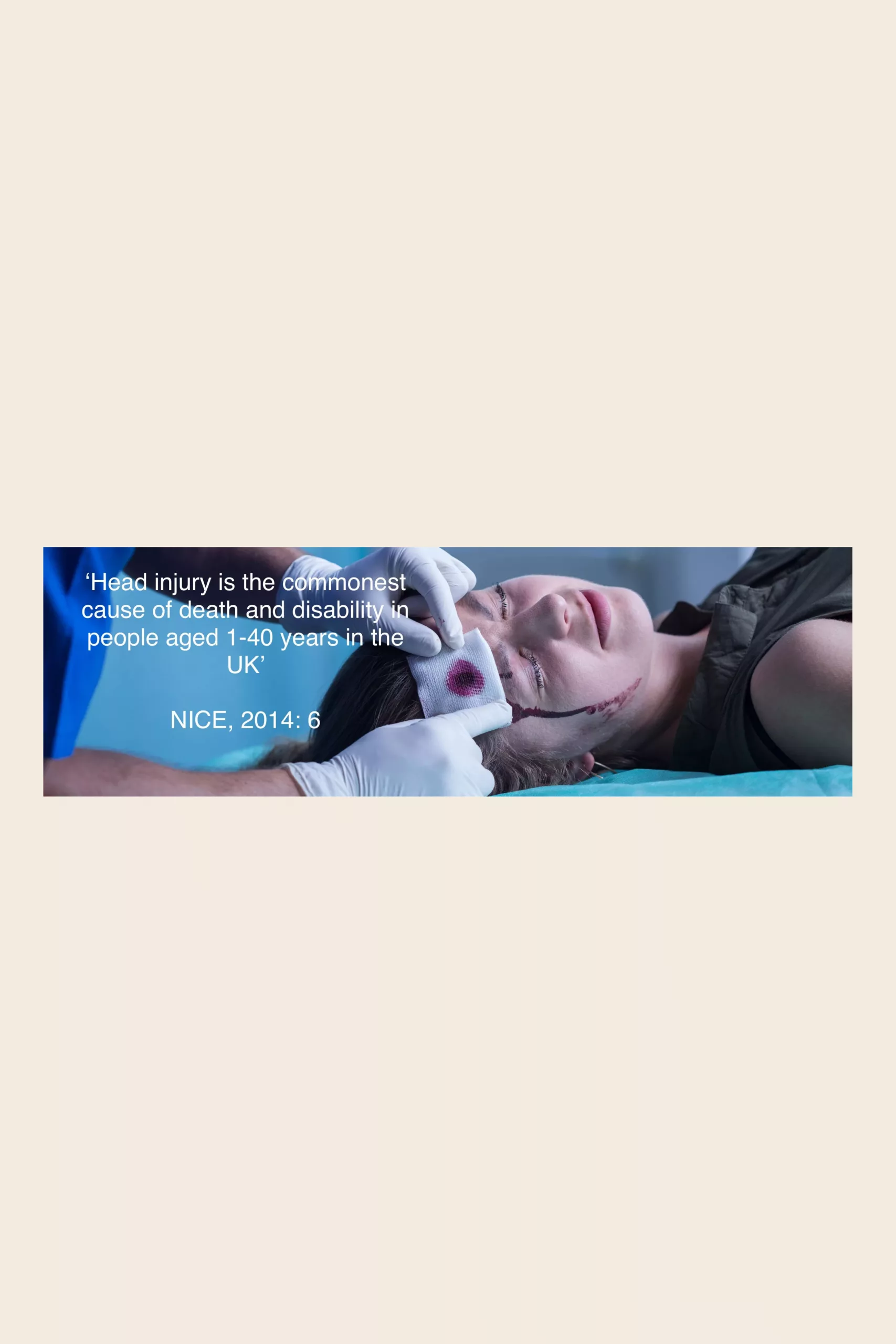
‘Head injury is the commonest cause of death and disability in people aged 1-40 years in the UK.’
NICE, 2014: 6
‘The incidence of death from head injury is low, with as few as 0.2% of all patients attending emergency departments with a head injury dying as a result of this injury.’
NICE, 2014: 6
‘the majority of fatal outcomes are in the moderate (GCS 9-12) or severe (GCS 8 or less) head injury groups’
NICE, 2014: 6
When might adults need to attend A&E for a CT head scan following a head injury?
‘For adults who have sustained a head injury and have any of the following risk factors’
Reduced GCS, ‘less than 13’ initially, or ‘less than 15 at 2 hours after the injury on assessment in the emergency department’*
suspected skull fracture of any type
‘post-traumatic seizure’
Neurological deficit
‘More than 1 episode of vomiting’
–> This should happen within one hour of identifying the situation.
(NICE, 2014: 10)
*Consider ‘the pre-injury baseline GCS may be less than 15. Establish this where possible’ (NICE, 2014: 19).
If the patient is on anticoagulants and has none of the above, they should have a CT head ‘within 8 hours of the injury’. (NICE, 2014: 12)
When might adults need to attend A&E for a CTcervical spinefollowing a head injury?
‘The patient has been intubated’
‘The patient is having other body areas scanned for head injury
‘…there is clinical suspicion of cervical spine injury and any of the following apply:
=> 65
‘dangerous mechanism of injury’
neuro deficit
‘paraesthesia in the upper or lower limbs’
(NICE, 2014: 13)
When might children need to attend hospital for a CT head scanfollowing a head injury?
Any of:
‘Suspicion of non-accidental injury’
‘Post-traumatic seizure but no history of epilepsy’
Reduced GCS <14 initially, <15 2 hours later
For under 1 year olds, Reduced GCS <15 on the paediatric scale
Suspected skull fracture of any type
Neuro deficit
For under 1 year olds, ‘presence of bruise, swelling or laceration of more than 5 cm on the head’
(NICE, 2014: 11)
If a child has ‘more than one’ of these, he/she should have a CT scan within an hour:
‘Loss of consciousness lasting more than 5 minutes (witnessed)’
‘Abnormal drowsiness’
Vomiting x3 or more episodes
‘Dangerous mechanism of injury (high-speed road traffic accident either as pedestrian, cyclist or vehicle occupant, fall from a height of greater than 3 metres, high-speed injury from a projectile or other object)’
‘Amnesia […] lasting more than 5 minutes’
(NICE, 2014: 11)
Note: If the child has just one of these, he/she ‘should be observed for a minimum of 4 hours after the head injury’ and if he/she then develops more of the above, a CT is warranted. (NICE, 2014: 12)
The rules regarding CT cervical spine scans are different in children, compared to adults, due to the risk of radiation to their thyroid.
‘Consider or suspect abuse as a contributory factor to or cause of head injury in children’ (NICE, 2014: 7)
For what other reasons should an adult or child with a head injury attend A&E?
loss of consciousness
‘Amnesia for events before or after the injury’
‘Persistent headache since the injury’
‘Any vomiting episodes since the injury’ – but NICE advise considering the causes of single vomiting episodes in those under 12
‘Any seizure since the injury’
‘Any previous brain surgery’
‘A high-energy head injury’
‘Any history of bleeding and clotting disorders’
Anticoagulants
‘Current drug or alcohol intoxication’
Safeguarding issues
‘Continuing concern by the professional about the diagnosis’ (NICE, 2014: 17-18)
And:
Patients who, 48 hours later, have ‘any persistent complaint relating to the initial head injury’ (NICE, 2014: 23)
Also, ‘depending on judgement of severity:’
‘irritability or altered behaviour’
Other ‘Visible trauma to the head […] of concern to the professional’
‘No one is able to observe the injured person at home’
‘Continuing concern by the injured person or their family or carer about the diagnosis’ (NICE, 2014: 18)
What else should I consider in my assessment and treatment of a patient with a head injury?
For adults, NICE recommends ‘managing their care according to clear principles and standard practice’ as in the ATLS and PHTLS courses, and the JRCALC for adults, and the APLS and PHPLS courses for children. There are others referenced, but Article 999 has included the most relevant here. (NICE, 2014: 19-20)
‘Manage pain effectively because it can lead to a rise in intracranial pressure’ (NICE, 2014: 21)
‘Ascribe depressed conscious level to intoxication only after a significant brain injury has been excluded’ (NICE, 2014: 21-22)
Pre-alert patients with a reduced GCS, especially of <8. They will most likely need anesthetist or critical care involvement (NICE, 2014: 21-22)
What’s worth bearing in mind during hospital-neuroscience unit transfers of patients with head injuries?
Patients who have a GCS of less than 8 should be intubated
Before transporting, make sure to stabilise the patient and ensure monitoring is attached
A patient ‘with persistent hypotension’ should not be transported until they are ‘stabilised’ (NICE, 2014: 32-33)
During these transfers, patients ‘should be accompanied by a doctor with appropriate training and experience in the transfer of patients with acute brain injury. […] Patients requiring non-emergency transfer should be accompanied by appropriate clinical staff.’
NICE, 2014: 32-33
Reference
National Institute for Health and Care Excellence. (2014). Head injury: assessment and early management (NICE Clinical Guideline 176). Retrieved from https://www.nice.org.uk/guidance/cg176