Tag: negative pressure

  • Ventilators: How?

    Ventilators: How?

    A shorter version of Ventilators: Why, What, How, When? featuring how-to use the ventilator demonstrations only. Made by UK Paramedics, this demonstrates how to use the PneuPac ParaPac ventilator.

    Read more:

    Ventilators: Why, What, How, When?

    How do I get the ventilator off the racks?

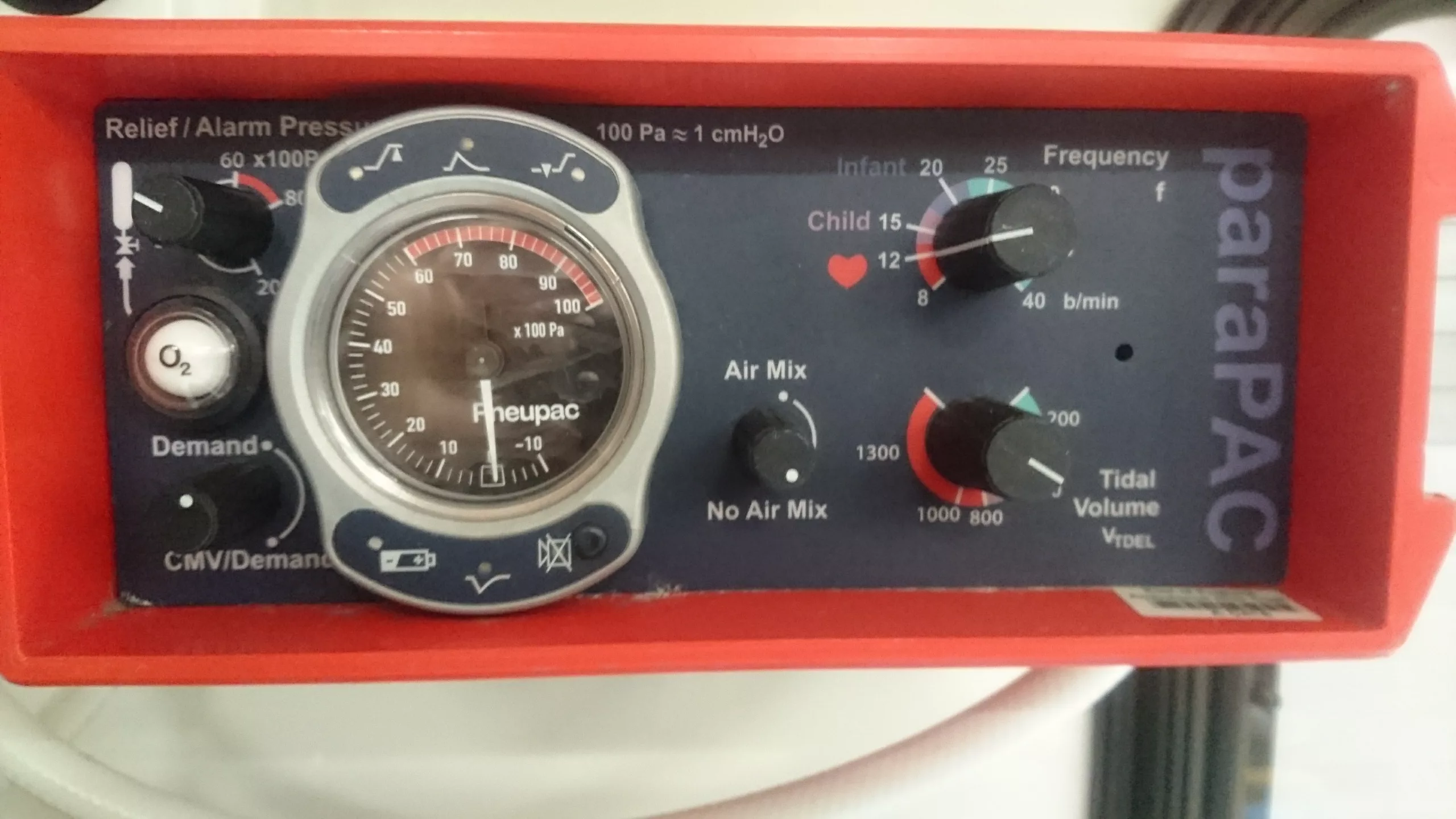
    What is the relief pressure dial on the ventilator?

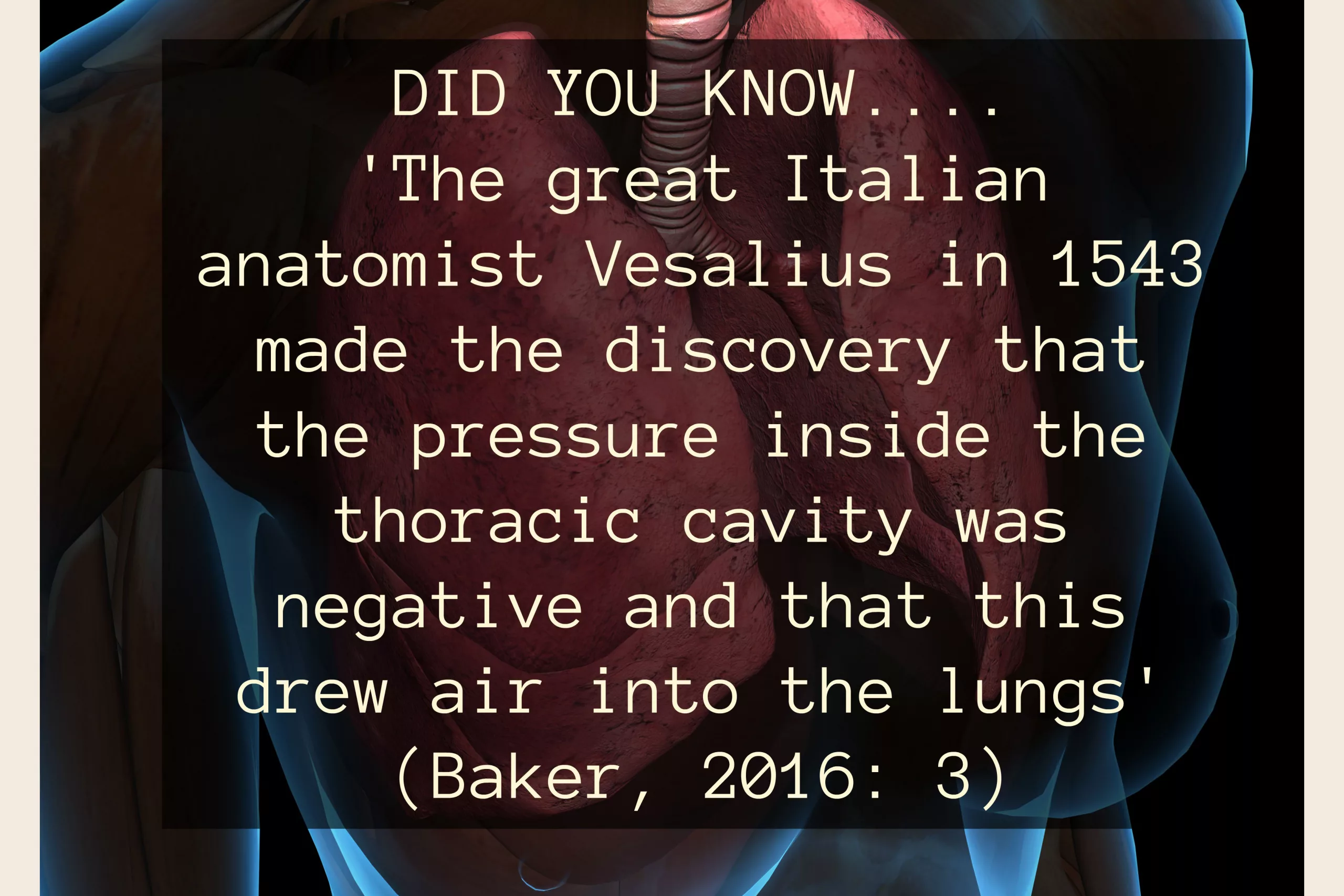
    The Discovery of Negative and Positive Pressure Ventilation – Fast Fact

    What is positive pressure breathing?

    What is Negative Pressure Breathing?

    Disclaimer

    You must read the full disclaimer at www.article999.co.uk/about/ (disclaimer tab) before putting into place anything you see here. Useful information is available in the text on this video, so if you only listen to the narration you will miss important facts. The ventilation settings mentioned in this video are what is recommended by Smiths Medical, current guidelines and some articles – however, as with all topics, there is always varying information available online & alternative expert advice, and no video can cater for all of that. Similarly, this video is intended to demonstrate how to use equipment & to introduce or remind you to the Why, What and When of ventilators – not to tell you that you should or shouldn’t be using it. That is dependent on local guidelines, your research & your choice as a clinician. This video merely highlights the varying advice regarding tidal volume settings, and in the text points out the potential problems with some of the figures. No specific volume is recommended.


    Transcript

    Article 999. Ventilators: Why, What, How, When?

    This video has been made by UK Paramedics following guidelines. It is not endorsed by any author, organisation or Ambulance Trust. You must read the full disclaimer at www.article999.co.uk/about/ and refer to your local guidelines before putting into place anything you see here. This video is intended to demonstrate how to use the ventilator according to use guides and guidelines – not to tell you that you should or shouldn’t use it. That decision is up to you and should be dependent on local guidelines and your own research. This is what the textbooks, the manufacturer and a few articles say & is not intended to represent the expert opinions or experience of others within healthcare.

    Remember hand hygiene, bare below the elbows and gloves in real life.


    How?

    1. To remove the ventilator from the racks, pull the flap to the side and push the ventilator up. To put it back in, simply push it down and pull the flap to the side again.
    2. To connect to the gas supply, push the hose into the socket and twist. It’s the same when connecting to a portable oxygen cylinder.
    3. When you turn it on, the ventilator should complete a self check. The alarm lights should flash in sequence, there should be one burst of the high pressure audible alarm, and the orange indicator should flash for 60 seconds.
    4. Next, check the indicator shows white for O2.
    5. Connect the patient circuit [shown in video].
    6. Next on the list, adjust the ventilation parameters. Set the air mix control to no air mix for respiratory arrest or CPR. Set the relief pressure control to 40. Set the respiratory rate to 12. As for the tidal volume, it varies massively as you can see on the screen. It depends on whether you opt for an average value or base it on the patient’s weight. Smiths Medical (2017) advise 800-900ml on their training video, [but this may not be advisable] but don’t worry too much about the slight differences in tidal volume because the PneuPac features a high pressure alarm that we’ll discuss shortly. The alarm will help you identify if the tidal volume is too high for your patient.

    (Gregory & Mursell, 2010: 44; Pilbery & Lethbridge, 2016: 189; Baker, 2012; Smiths Medical, 2017)

    The following demonstrate the variance in researched texts and guidelines – not necessarily the advised settings:

    400-600ml Baskett, 1996
    500-600ml Perkins et al, 2015
    600ml Baker, 2016
    800-900ml Smiths Medical, 2017 – may not be advisable due to risks of barotrauma. See below
    6-8ml/kg Bocklage & Balk, 2017; Frakes, 2007
    10ml/kg or 5-8ml/kg Baker, 2012 – depending on the extent of the risk of barotrauma

    7. Next, temporarily occlude the patient connection. The relief pressure monitor should go to the maximum setting – i.e. 40cmh20.

    (Gregory & Mursell, 2010: 44; Pilbery & Lethbridge, 2016: 189; Baker, 2012; Smiths Medical, 2017)


    What do the audible warnings mean?

    • Top left is the high pressure alarm
    • Top right is low pressure
    • Bottom left is the battery indicator
    • The middle one tells you when breathing is detected by the ventilator

    (Smiths Medical, 2017)

    High pressure = excessive tidal volume, incorrect airway position, kinked ET tube, or incorrect ventilation settings.
    If the pressure is reaching it’s max, there may be something wrong with the circuit.

    If you’ve checked the above and the alarm is still sounding, Smiths Medical (2017) advise that your tidal volume setting might simply be too high.

    Low pressure = leakage or insufficient tidal volume/settings, faulty valve in the patient’s circuit
    This alarm tends to occur when pressure drops below 10cmh20

    Earlier, I pointed out the alarm in the middle, at the bottom. This is SMMV. It’s an indicator that will flash green if the patient is breathing for themselves. The ventilator will assist if the patient breathes with less than 150ml of tidal volume. Between 150-400ml the ventilator will extent the exhalation time to allow the patient to complete their own breath, and above 400ml the ventilator will allow the patient to breathe and will not assist, but may still assist on the next breath if required (Smiths Medical, 2017; Baker, 2012).


    Extra facts:

    McCarty et al (2012) found that ‘ventilation rates and tidal volumes commonly exceeded Guideline recommendations. This resulted in […] excessive mean airway pressure’

    Smiths Medical (2017) advise that peak inflation pressure should be below 20cmh20 when using a mask to ventilate due to the issues of too high pressure

    Inspiration to Expiration should be 1:2 (Smiths Medical, 2017; Baker, 2012)

    References

    Baker, D. 2012. Emergency and Transport Ventilation, an introductory guide, Smiths Medical International Limited: Luton

    Baker, D.J. 2016. Artificial Ventilation: A Basic Clinical Guide. Springer International: Switzerland

    Baskett, P. et al. 1996. ‘Tidal volumes which are perceived to be adequate for resuscitation’, Resuscitation, 31 (3), pp. 231-4

    Bocklage, T. & Balk, R.A. 2017. Setting the Tidal Volume In Adults Receiving Mechanical Ventilation: Lessons

    Learned From Recent Investigations, Available Online: https://www.nbrc.org/wp-content/uploads/2017/07/Setting-the-Tidal-Volume.pdf (Accessed 17/12/17)

    Frakes, M. 2007. Ventilation Modes and Monitoring, Available Online: http://www.rtmagazine.com/2007/02/ventilation-modes-and-monitoring/ (Accessed 17/12/17)

    Gregory, P. and Mursell, I. 2010. Manual of Clinical Paramedic Procedures, West Sussex: John Wiley & Sons

    McCarty, K. et al, 2012. Ventilation rates and tidal volume during emergency department cardiac resuscitation, Resuscitation, 83: 4, p45

    Owen, R. and Castle, M. 2006. ‘EtCO2: the key to effective prehospital ventilation’, Emergency Medical Journal, 23 (7), pp. 578-579

    Perkins, G.D. 2015. European Resuscitation Council Guidelines for Resuscitation 2015: Section 2. Adult basic life support and automated external defibrillation, Available Online: https://ercguidelines.elsevierresource.com/european-resuscitation-council-guidelines-resuscitation-2015-section-2-adult-basic-life-support-and/fulltext#back-bib0760 (Accessed 17/12/17)

    Pilbery, R. & Lethbridge, K. 2016. Ambulance Care Practice, Bridgwater: Class Professional Publishing

    Smiths Medical, 2017. ‘Pneupac – ParaPAC’, Pneupac Transport Ventilators – Breathe Easy, Available Online: https://www.smiths-medical.com/resources/pneupac-transport–ventilators—breathe-easy (Accessed 27/10/17)

    With thanks to Smiths Medical for their correspondence and information

    Music:
    Dobroide, 2010. 20091229.ambulance.siren.wav. Available Online: https://freesound.org/people/dobroide/sounds/8713/ (Accessed 21/08/17)

    Productiontrax.com

    Images:

    Article 999’s own or licenses purchased via Adobe Stock & Dreamstime


    Feedback is welcome & responded to. Stay tuned for more content!
     

    Displayed on one of our ‘Fast Facts’ pages. Click on the image for the link & reference!


  • Ventilators: Why, What, How, When?

    Ventilators: Why, What, How, When?

    Made by UK Paramedics, this video demonstrates how to use the PneuPac ParaPac ventilator.

    Read more:

    How do I get the ventilator off the racks?

    What is the relief pressure dial on the ventilator?

    What is positive pressure breathing?

    What is Negative Pressure Breathing?

    The Discovery of Negative and Positive Pressure Ventilation – Fast Fact

    Disclaimer

    You must read the full disclaimer at www.article999.co.uk/about/ (disclaimer tab) before putting into place anything you see here. Useful information is available in the text on this video, so if you only listen to the narration you will miss important facts. The ventilation settings mentioned in this video are what is recommended by Smiths Medical, current guidelines and some articles – however, as with all topics, there is always varying information available online & alternative expert advice, and no video can cater for all of that. Similarly, this video is intended to demonstrate how to use equipment & to introduce or remind you to the Why, What and When of ventilators – not to tell you that you should or shouldn’t be using it. That is dependent on local guidelines, your research & your choice as a clinician. This video merely highlights the varying advice regarding tidal volume settings, and in the text points out the potential problems with some of the figures. No specific volume is recommended.


    Transcript

    Article 999. Ventilators: Why, What, How, When?

    This video has been made by UK Paramedics following guidelines. It is not endorsed by any author, organisation or Ambulance Trust. You must read the full disclaimer at www.article999.co.uk/about/ and refer to your local guidelines before putting into place anything you see here. This video is intended to demonstrate how to use the ventilator according to use guides and guidelines – not to tell you that you should or shouldn’t use it. That decision is up to you and should be dependent on local guidelines and your own research. This is what the textbooks, the manufacturer and a few articles say & is not intended to represent the expert opinions or experience of others within healthcare.

    Remember hand hygiene, bare below the elbows and gloves in real life.

    Why use the ventilator?

    Research suggests that mechanical ventilators can reduce the variability of breath timings & as a result, capnography readings. They can also increase the likelihood of ‘effective ventilation’ (Owen and Castle, 2006)

    To quote from Gregory & Mursell (2010: 47) ‘A high flow rate over a short inflation time inevitably produces a high peak airway pressure in an unprotected airway [as with BVM technique]. High peak airway pressure overcomes the pressure of the lower oesophageal sphincter and causes gastric inflation. […] Use of […] mechanical ventilation may help to overcome the high pressures involved. […] In an intubated patient or a patient with an LMA in situ, use of a mechanical ventilator has been shown to allow paramedics to accomplish extra tasks, document better, and provide better patient care’ (Gregory & Mursell, 2010: 47)

    What?

    This is a time-cycled, volume preset flow generator (Baker, 2012). In other words, the pressure can vary, volume is always the same, and the air must be delivered within a preset time, which helps to control the tidal volume.

    There are many different types. One of the most common ones in UK ambulances at this time (Gregory & Mursell, 2010: 44) is the Pneupac paraPAC (Smiths Medical, 2017) but the ParaPac Plus may soon replace it.

    Here are the useful parts:

    The supply gas failure alarm
    The inlet connection
    The relief pressure control
    The ‘main pneumatic switch’
    Air mix control
    Inflation pressure monitor
    Frequency control
    Tidal volume control
    (Pilbery and Lethbridge, 2016: 189)

    How?

    1. To remove the ventilator from the racks, pull the flap to the side and push the ventilator up. To put it back in, simply push it down and pull the flap to the side again.
    2. To connect to the gas supply, push the hose into the socket and twist. It’s the same when connecting to a portable oxygen cylinder.
    3. When you turn it on, the ventilator should complete a self check. The alarm lights should flash in sequence, there should be one burst of the high pressure audible alarm, and the orange indicator should flash for 60 seconds.
    4. Next, check the indicator shows white for O2.
    5. Connect the patient circuit [shown in video].
    6. Next on the list, adjust the ventilation parameters. Set the air mix control to no air mix for respiratory arrest or CPR. Set the relief pressure control to 40. Set the respiratory rate to 12. As for the tidal volume, it varies massively as you can see on the screen. It depends on whether you opt for an average value or base it on the patient’s weight. Smiths Medical (2017) advise 800-900ml on their training video, [but this may not be advisable] but don’t worry too much about the slight differences in tidal volume because the PneuPac features a high pressure alarm that we’ll discuss shortly. The alarm will help you identify if the tidal volume is too high for your patient.

    (Gregory & Mursell, 2010: 44; Pilbery & Lethbridge, 2016: 189; Baker, 2012; Smiths Medical, 2017)

    The following demonstrate the variance in researched texts and guidelines – not necessarily the advised settings:

    400-600ml Baskett, 1996
    500-600ml Perkins et al, 2015
    600ml Baker, 2016
    800-900ml Smiths Medical, 2017 – may not be advisable due to risks of barotrauma. See below
    6-8ml/kg Bocklage & Balk, 2017; Frakes, 2007
    10ml/kg or 5-8ml/kg Baker, 2012 – depending on the extent of the risk of barotrauma

    7. Next, temporarily occlude the patient connection. The relief pressure monitor should go to the maximum setting – i.e. 40cmh20.

    (Gregory & Mursell, 2010: 44; Pilbery & Lethbridge, 2016: 189; Baker, 2012; Smiths Medical, 2017)


    What do the audible warnings mean?

    • Top left is the high pressure alarm
    • Top right is low pressure
    • Bottom left is the battery indicator
    • The middle one tells you when breathing is detected by the ventilator

    (Smiths Medical, 2017)

    High pressure = excessive tidal volume, incorrect airway position, kinked ET tube, or incorrect ventilation settings.
    If the pressure is reaching it’s max, there may be something wrong with the circuit.

    If you’ve checked the above and the alarm is still sounding, Smiths Medical (2017) advise that your tidal volume setting might simply be too high.

    Low pressure = leakage or insufficient tidal volume/settings, faulty valve in the patient’s circuit
    This alarm tends to occur when pressure drops below 10cmh20

    Earlier, I pointed out the alarm in the middle, at the bottom. This is SMMV. It’s an indicator that will flash green if the patient is breathing for themselves. The ventilator will assist if the patient breathes with less than 150ml of tidal volume. Between 150-400ml the ventilator will extent the exhalation time to allow the patient to complete their own breath, and above 400ml the ventilator will allow the patient to breathe and will not assist, but may still assist on the next breath if required (Smiths Medical, 2017; Baker, 2012).

    When?

    – AACE (2016) recommend considering ventilation if a ptn’s o2 sats <90 on high con o2,
    if the RR is <10 or >30 bpm or if there is ‘inadequate chest expansion’ (p42) but the mechanical ventilator is to be used …
    – for ’emergency and transport ventilation’ in 5kg + patients (Smiths Medical, 2017)

    Extra facts:

    McCarty et al (2012) found that ‘ventilation rates and tidal volumes commonly exceeded Guideline recommendations. This resulted in […] excessive mean airway pressure’

    Smiths Medical (2017) advise that peak inflation pressure should be below 20cmh20 when using a mask to ventilate due to the issues of too high pressure

    Inspiration to Expiration should be 1:2 (Smiths Medical, 2017; Baker, 2012)


    References

    Baker, D. 2012. Emergency and Transport Ventilation, an introductory guide, Smiths Medical International Limited: Luton

    Baker, D.J. 2016. Artificial Ventilation: A Basic Clinical Guide. Springer International: Switzerland

    Baskett, P. et al. 1996. ‘Tidal volumes which are perceived to be adequate for resuscitation’, Resuscitation, 31 (3), pp. 231-4

    Bocklage, T. & Balk, R.A. 2017. Setting the Tidal Volume In Adults Receiving Mechanical Ventilation: Lessons

    Learned From Recent Investigations, Available Online: https://www.nbrc.org/wp-content/uploads/2017/07/Setting-the-Tidal-Volume.pdf (Accessed 17/12/17)

    Frakes, M. 2007. Ventilation Modes and Monitoring, Available Online: http://www.rtmagazine.com/2007/02/ventilation-modes-and-monitoring/ (Accessed 17/12/17)

    Gregory, P. and Mursell, I. 2010. Manual of Clinical Paramedic Procedures, West Sussex: John Wiley & Sons

    McCarty, K. et al, 2012. Ventilation rates and tidal volume during emergency department cardiac resuscitation, Resuscitation, 83: 4, p45

    Owen, R. and Castle, M. 2006. ‘EtCO2: the key to effective prehospital ventilation’, Emergency Medical Journal, 23 (7), pp. 578-579

    Perkins, G.D. 2015. European Resuscitation Council Guidelines for Resuscitation 2015: Section 2. Adult basic life support and automated external defibrillation, Available Online: https://ercguidelines.elsevierresource.com/european-resuscitation-council-guidelines-resuscitation-2015-section-2-adult-basic-life-support-and/fulltext#back-bib0760 (Accessed 17/12/17)

    Pilbery, R. & Lethbridge, K. 2016. Ambulance Care Practice, Bridgwater: Class Professional Publishing

    Smiths Medical, 2017. ‘Pneupac – ParaPAC’, Pneupac Transport Ventilators – Breathe Easy, Available Online: https://www.smiths-medical.com/resources/pneupac-transport–ventilators—breathe-easy (Accessed 27/10/17)

    With thanks to Smiths Medical for their correspondence and information

    Music:
    Dobroide, 2010. 20091229.ambulance.siren.wav. Available Online: https://freesound.org/people/dobroide/sounds/8713/ (Accessed 21/08/17)

    Productiontrax.com

    Images:

    Article 999’s own or licenses purchased via Adobe Stock & Dreamstime


    Feedback is welcome & responded to. Stay tuned for more content!
     

    Displayed on one of our ‘Fast Facts’ pages. Click on the image for the link & reference!
  • The Discovery of Negative and Positive Pressure Ventilation – Fast Fact

    The Discovery of Negative and Positive Pressure Ventilation – Fast Fact


    ‘He opened the chest of a live animal and noted that air rushed in and the lungs collapsed, following which the heart stopped’ (Baker, 2016: 3).

    His experiment was actually repeated in 1667 by one Robert Hooke. He used positive pressure ventilation to keep a dog, whose chest had been opened, alive. This was ‘the first demonstration that it was the gas entering and leaving the lungs which supported life and not the movement of the lungs themselves’ (Baker, 2016: 3-4).

    This was one of many discoveries that birthed the idea of positive pressure ventilation, the understanding of negative pressure ventilation and the various forms of artificial ventilation that followed.


    Reference

    Baker, D. J. 2016. Artificial Ventilation: A Basic Clinical Guide, Springer International: Switzerland.

  • What is Negative Pressure Breathing?

    What is Negative Pressure Breathing?

    Negative pressure breathing is how we breathe normally, without the aid of bag-valve-masks or mechanical ventilators.

    Inspiration – Normally

    Breathing in is produced by ‘contraction and downward motion of the diaphragm [which] causes a negative pressure in the chest’ —–> inspiration. (Goldberg, 2014: 51, emphasis added)

    Inspiration is therefore a muscular process (the diaphragm is a muscle) which is normally mainly reliant on the diaphragm. However, accessory muscles including the ‘pectoralis major and minor’ may also be used and are ‘vital to survive in certain pulmonary conditions’ (Goldberg, 2014: 51).

    Let’s explain this by breaking it down:

    Why does a contracting diaphragm cause negative chest pressure?

    Because the volume has increased. This process is represented in Boyle’s Law (Rice University, 2016). Put simply, more space = more volume. When there’s more space in the chest, as with the contracting diaphragm, there is more room for air particles to move. They’re not crammed in any more, so there’s not much pressure.

    On the other hand, when those air particles are tightly squeezed in a smaller space, there is less pressure.

    To summarise:

    • more space = more volume
    • less space = less volume
    • more volume = less pressure
    • less volume = more pressure
    • Tightly squeezed particles in little volume cause a lot of pressure
    • Free moving particles in a lot of volume cause less pressure

    Why does negative pressure cause inspiration?

    This has to do with the laws of thermodynamics. ‘For anything to happen, energy has to move or flow or change’ and ‘energy has an absolute unfailing tendency to go from “more concentrated” to “less concentrated”‘ (Watson, 2014).

    So, it’s not so much because there is a negative pressure that we inhale. It’s because there is a change in pressure. When the diaphragm contracts, the pressure changes from high to low. Now there is no equilibrium. One of the laws of the universe (which is called a law because it’s been observed over and over again in different ways) occurs as a result: energy attempts to shift toward equilibrium. And the way it does that is by moving from an area of high pressure (outside the body) to one of low pressure (inside us).

    Watson, 2014 has written a great explanation of this here: http://www.ftexploring.com/energy/2nd_Law.html>

    Also, this is a great video which demonstrates the process: https://www.youtube.com/watch?v=q6-oyxnkZC0

    Expiration – Normally

    pexels-photo-321576

    This is ‘largely passive’, frequently happening ‘without any muscle action’ when relaxed. The contracted diaphragm simply ‘springs back into shape’ (Goldberg, 2014: 51). However, using the ‘external and internal intercostal muscles’ amongst others, you can ‘voluntarily exhale forcefully’ (Goldberg, 2014: 51).

    Either way, this process creates more pressure because there is now less volume (less space) for air particles to move around. Following the laws described above, air moves from an area of high pressure (the lungs) to an area of low pressure (outside) (Collison et al, 2002: 57; Watson, 2014).

    It’s intuitive that this change in pressure and lack of equilibrium (Watson, 2014) will ensure that the process repeats itself. Each time the diaphragm contracts, the volume changes so the pressure changes. Air flows inside. Then there’s too much pressure and less volume as the diaphragm is returning to shape (Goldberg, 2014). So air flows out. Then the diaphragm contracts again…

    References

    Baker, D. n.d. Emergency and Transport Ventilation: an introductory guide, Smiths Medical International Limited: Bedfordshire

    Collison, P. et al, 2002. Nelson Modular Science: 2, Nelson Thornes Ltd: Cheltenham.

    Goldberg, S. 2014. Clinical Physiology made ridiculously simple, MedMaster: Miami.

    Rice University, 2016. The Process of Breathing, Available Online: https://opentextbc.ca/anatomyandphysiology/chapter/22-3-the-process-of-breathing/ (Accessed 01/11/2017)

    Watson, D. 2010. The Second Law of Thermodynamics, Available Online: http://www.ftexploring.com/energy/2nd_Law.html (Accessed 01/11/2017)


    This article has not been endorsed by any company.

    With thanks to Smiths Medical for providing information.


    review time Business Concept , time for review , Business team hands at work with financial reports and a laptop
    This post is yet to be peer reviewed. Please get in touch if you have any comments.