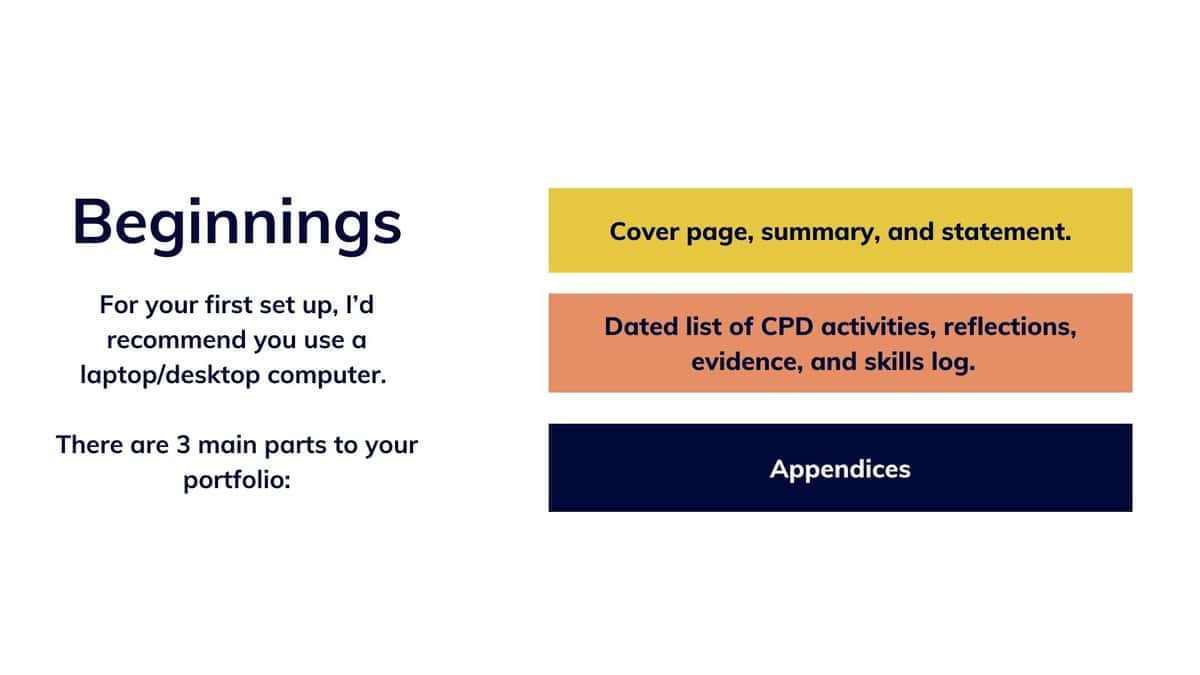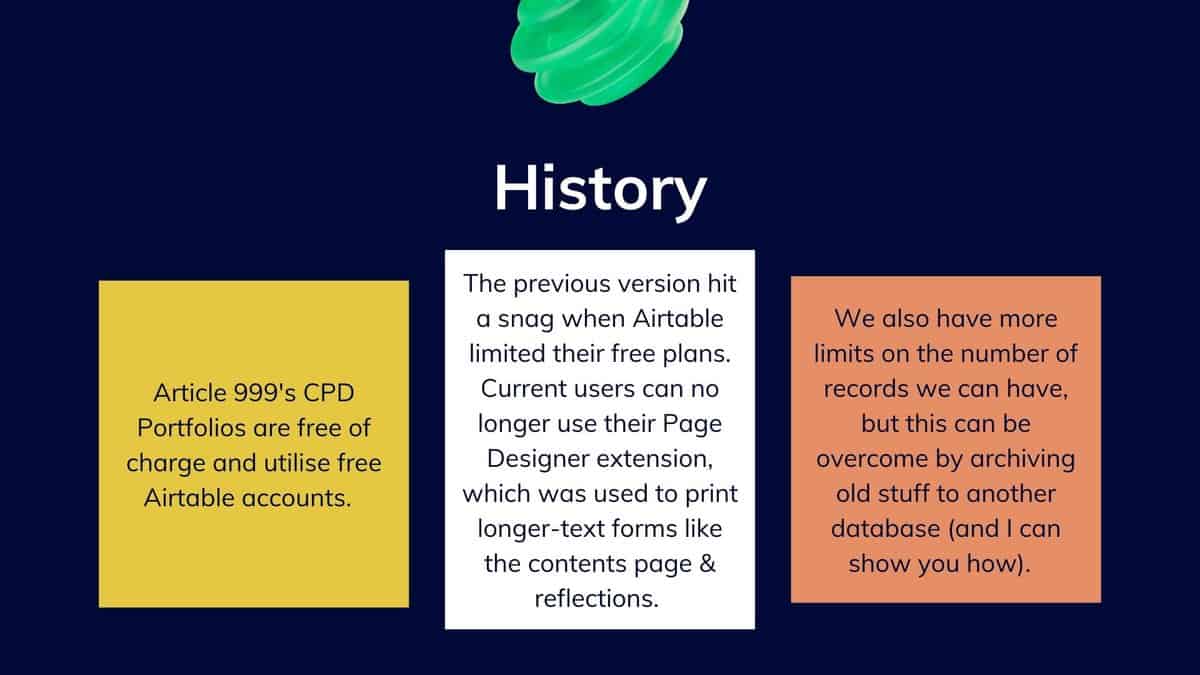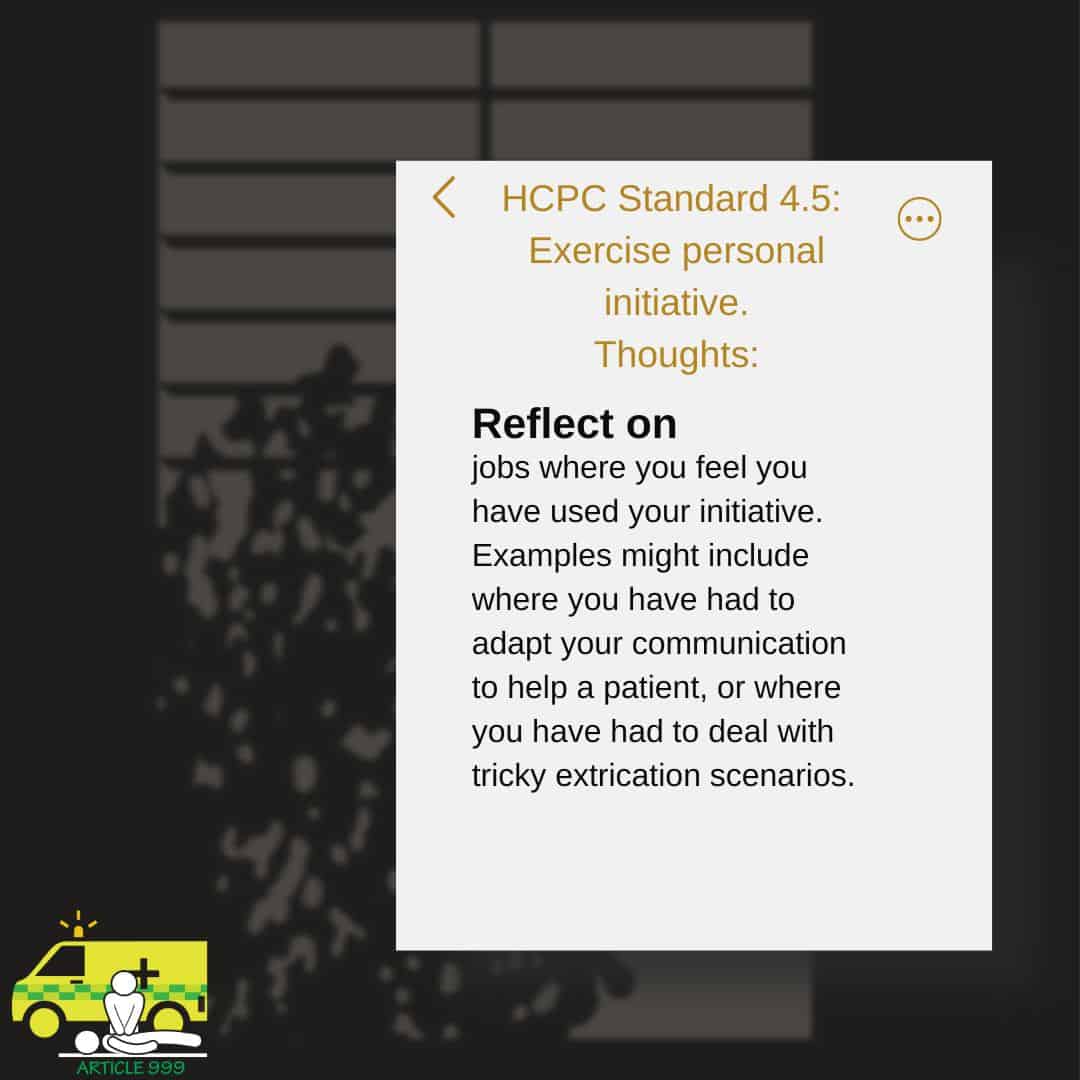
All previous HCPC reflective prompt posts were published on our social media pages – X, Facebook, Instagram.
All previous HCPC reflective prompt posts were published on our social media pages – X, Facebook, Instagram.
These are the same with the exception of an additional section for NQPs to tick off their learning outcomes, and additional guidance when completing reflections. The learning outcomes are based on EEAST’s portfolio and are agreed nationally, so they should be the same for every Trust. However, please check your own Trust’s portfolio for certainty. If you don’t think the portfolio meets your Trust’s requirements, please get in touch for adaptations.
For Paramedics and NQPs, this contains all elements mentioned in the posters on the page you just visited – enter all of your CPD here. For non-HCPC staff, the template contains all necessary components: the ability to log reflections, skills, development goals, collect feedback, and log general CPD from a simple form, along with calendar views and more.
Thank you, and let me know what you think!
[tabby title=”Intro to the Help Folder”]
This help folder is a guide to help you create a CPD portfolio that is ready to submit to the HCPC. Pair this with Article 999’s CPD templates for everyone from first aiders/FREC-qualified staff/EMTs through to NQPs and post-NQPs. These are available from this link.
You will need to set up your own free Airtable account. Then, click ‘copy base’ to add the entire template to your own account. You can then click on the tables and add or edit it as you desire.
Those of you following Article 999 in recent months will be aware of the developments in the CPD templates, which are now for everyone from first aiders/FREC/EMT-level staff through to NQPs and post-NQPs.
Previously at v1.5, new updates have just been launched to move these templates on to v1.6. Here is a summary of the key changes.
Previously, you were asked to have a look at a OneNote ‘help file’ (originally called the portfolio). The latest updates to the Airtable templates mean the file in its previous format is no longer needed, so I have copied the majority of the information here for ease. Simply use this for reference to ensure you understand the process, and to check you have everything you need before you submit.
In this help folder, each tab contains referenced guidance on what is required.
There are 4 numbered sections that each contain advice for you to read: 500 word summary of practice, dated list of CPD activities, 1,500 word supporting statement, and supporting evidence.
These sections form a template that you are encouraged to copy to meet the HCPC audits. You could copy the layout into your own (empty) folder and fill in the pages if you’d like to customise it all, or fill out the sections in your Airtable portfolio.
The second-last tab contains links to the above documents. Use them to review your folder and check that you meet the criteria.
When you are ready to submit, print/export directly from Airtable (choose the ‘save to pdf’ printer option if you don’t need a paper copy), then use Adobe’s free online merger tool.
That’s absolutely fine. Further information, video guides, and an appointment booker is available from the Article 999 website here: https://article999.co.uk/cpd-templates-for-paramedics-and-nqps/
Please get in touch with a screenshot of your CPD template number or the date you first started using it. I’ll personally update your version to the latest one.
This help folder has been produced with reference to the following:
https://library.myebook.com/MyeBookEM/college-of-paramedics-1/2984/
[tabby title=”1. 500 Word Summary of Practice History”]
The above is summarised from: https://www.hcpc-uk.org/globalassets/resources/cpd/how-to-complete-your-cpd-profile.pdf?v=637366426050000000
[tabby title=”2. Dated List of CPD Activities”]
Please follow the information on our CPD template page here. You will need to set up your own free Airtable account. Then, click ‘copy base’ to add the entire template to your own account. It is now yours and you can start logging CPD.
All of your activities should meet standard 2 – they should be relevant to your current or future practice, and they should be a mix of different types.
No gaps of more than 3 months without an explanation
If you want clarification/reassurance about what should be in your portfolio, here is some info on how it should look:
How should I display the dated list of CPD activities?
What content should be in it?
[tabby title=”3. 1,500 word supporting statement – How I Have Met the Standards”]
Up to 1, 500 words.
The below is summarised from Clarke, 2020 & HCPC, 2017 (references below).
This is a supporting statement that should explain how you have met standards 3 + 4 by completing your CPD activities. Focus on what you have gained from your CPD activities, and on what the service & patients gain from your learning. Focus on 4-5 CPD activities and ensure these are different types. It’s best to use activities that you also have evidence and/or reflections for, then reference or quote from these. Link in your personal development goals as long as they don’t distract from the bold bits above.
Standards 1 and 2 should be mentioned but are met by completing your CPD portfolio properly, as requested by the HCPC.
The statement should also explain how you have met your development goals. These goals should include your ‘learning needs’ (HCPC, 2017). By discussing how you have met these goals (i.e. how have your CPD activities been relevant to your current and future work), you’ll be adding further evidence to Standard 2.
Standard 1 – Maintain a continuous, up-to-date and accurate record of my CPD activities
Standard 2 – Demonstrate that my CPD activities are a mixture of learning activities relevant to current or future practice
Standard 3 – Seek to ensure that my CPD has contributed to the quality of my practice and service and delivery
Standard 4 – Seek to ensure that my CPD benefits the service user.
Standard 5 – Complete and submit a CPD profile, and evidence of your CPD, when asked
The Article 999 templates are based on advice gained from Vince Clarke’s (2020) guide to a CPD portfolio. Here’s the link: https://library.myebook.com/MyeBookEM/college-of-paramedics-1/2984/.
They are also based on the HCPC’s guidance to creating a CPD profile (2017). Here’s the link: https://www.hcpc-uk.org/globalassets/resources/cpd/how-to-complete-your-cpd-profile.pdf?v=637366426050000000
[tabby title=”4. Supporting Evidence”]
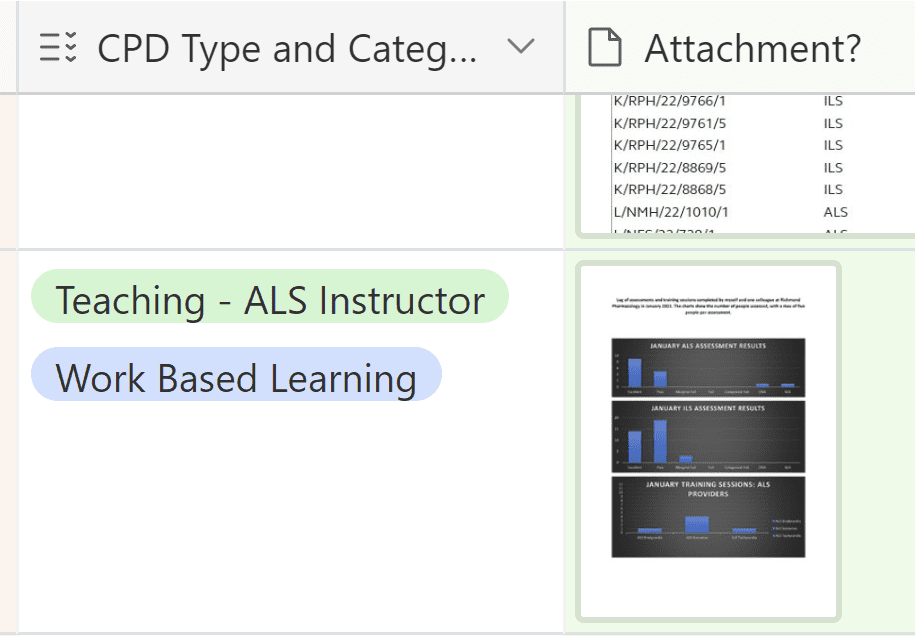
The notes here are summarised from:
More details can be found there, including an appendix of a variety of evidence types if you are looking for ideas.
[tabby title=”Detailed Reflections”]
Detailed reflections may be used as evidence – Within the Airtable database, Rolfe et al’s (2001) reflective model is used. But the HCPC don’t prescribe any specific model. You could use any you prefer, including Gibbs or John’s (below).
John’s model:
Here’s a good pocket book for finding reflective models that might be lesser known but more useful to you:
[tabby title=”Review CPD Prior to Submission”]
Those familiar with the OneNote version of this help file will know that file printouts of 2/3 of the below are available there. In this version, I have added the three references as links. I’ll always recommend reading these before submitting your portfolio as evidence to ensure you understand the process and have been thorough in your preparation.
https://library.myebook.com/MyeBookEM/college-of-paramedics-1/2984/
[tabby title=”Using the templates”]
Here is the full video on how to use v1.6 of the CPD templates:
Don’t forget, there is a calendar in the templates as well, which are available for you to check you haven’t left gaps of 3 or more consecutive months without an explanation. The skills calendar is available so that you can check how often you are completing skills.
For more information about the templates, and to book a 1:1 Teams appointment for additional support, please see this page.
If you are just looking for a printing/exporting guide, please click on the next tab.
[tabby title=”Printing/exporting guide”]
Printing/Exporting
Here’s a basic list of the order to print and export your CPD portfolio in:
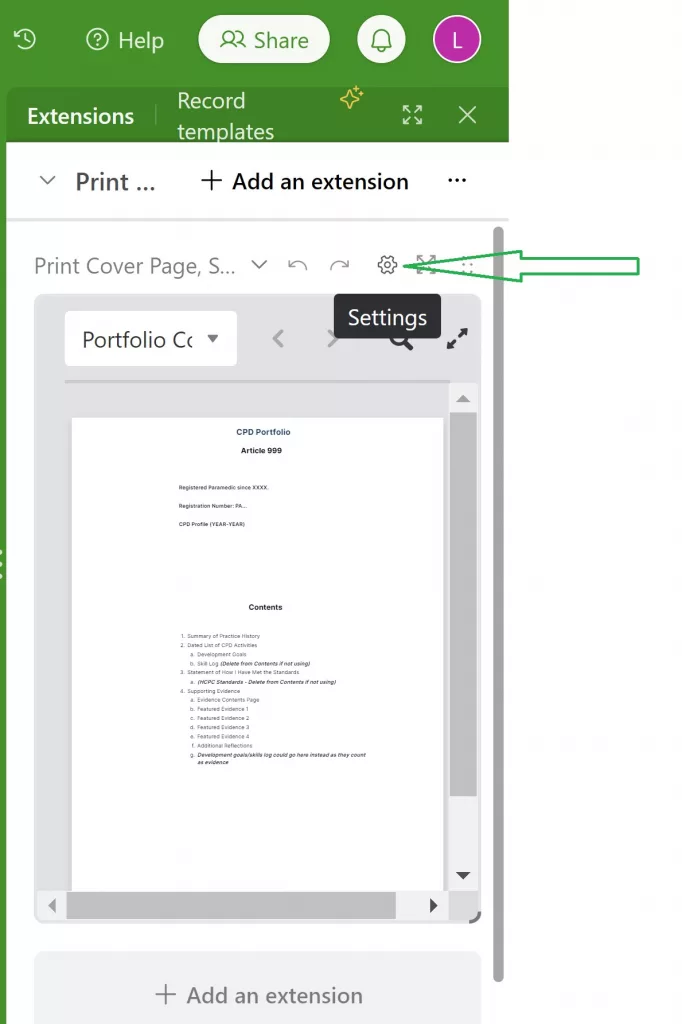
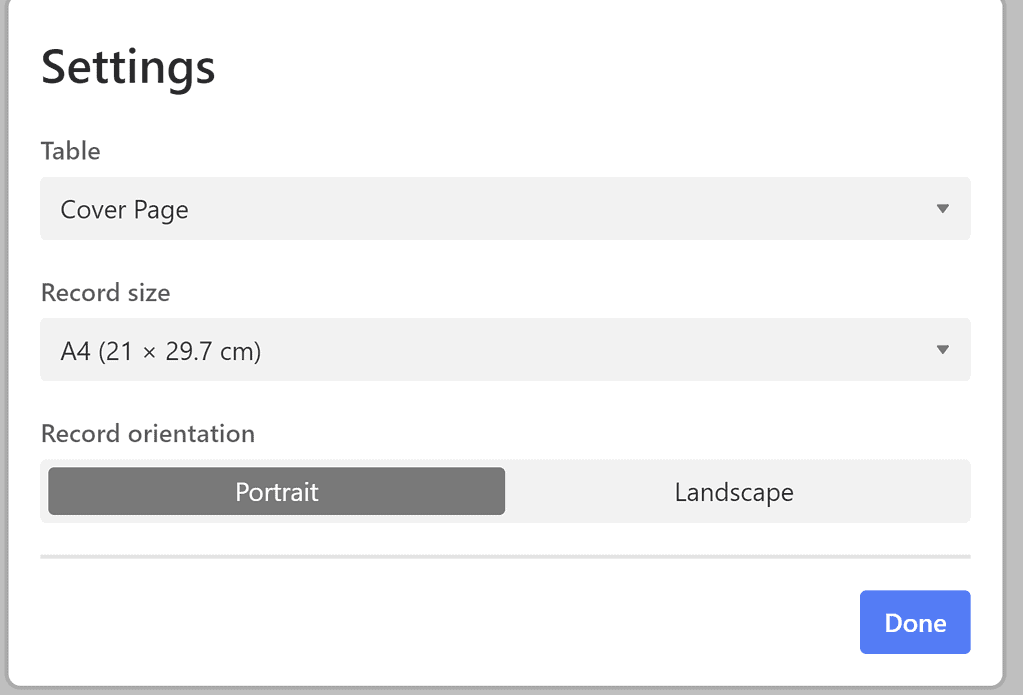
Click done, then print, then print again. Set your destination as your chosen printer, or print to pdf. Click save, and save this file in a folder on your computer.
2. The Summary of Practice History
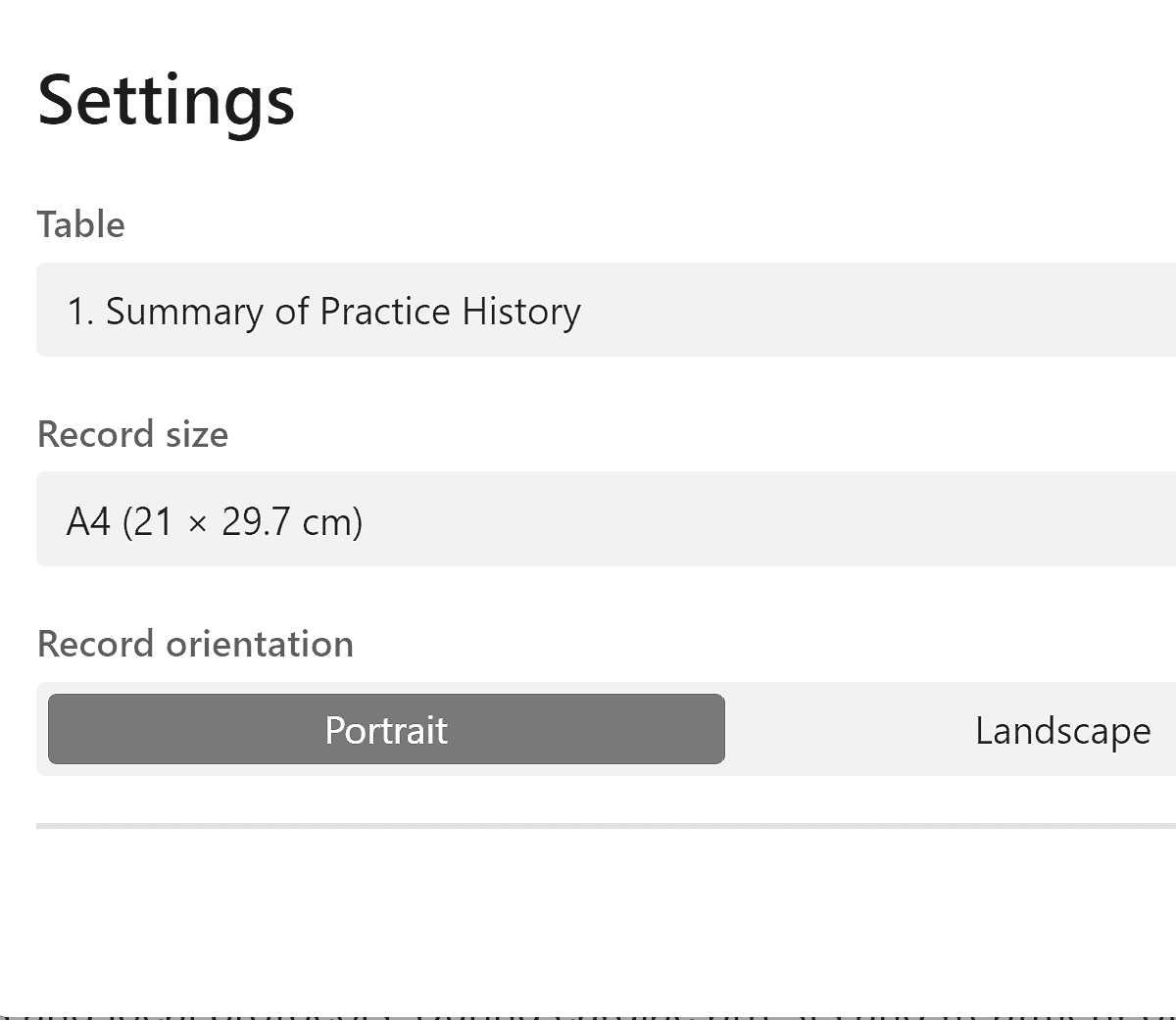
This should be printed using the same tool, above. Select from the settings the correct table (1. Summary of Practice History). Repeat the instructions above.
3. The Dated List of CPD Activities
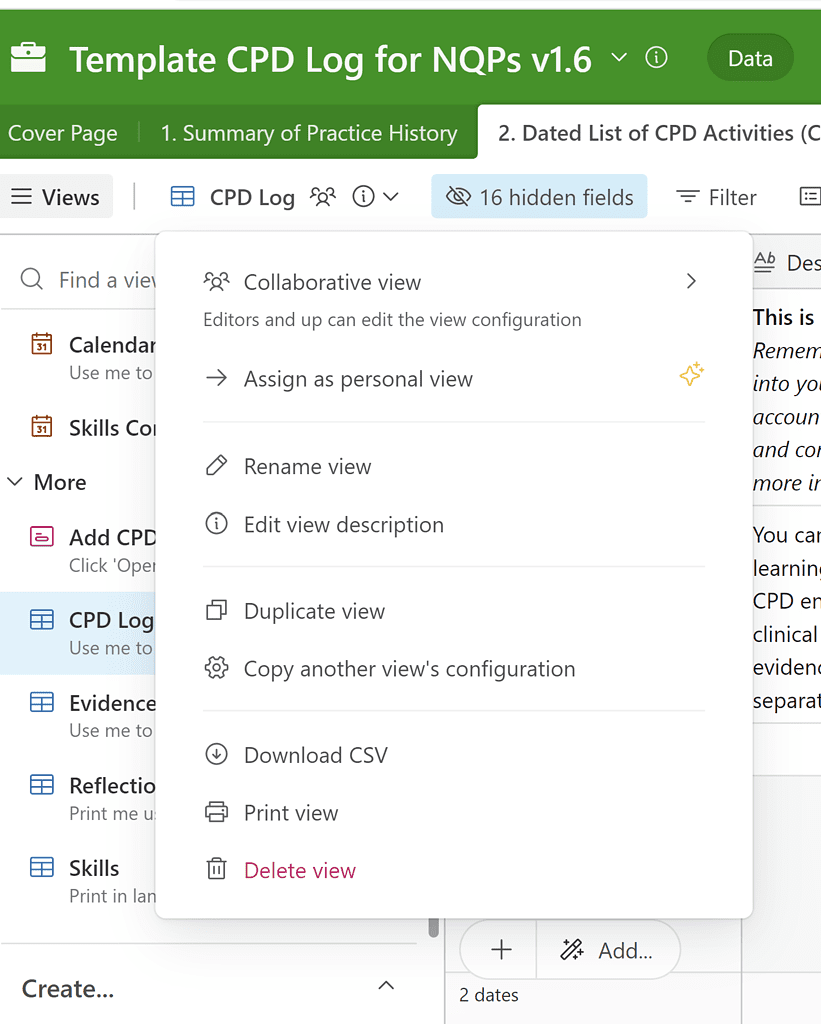
Check the settings show: landscape, actual size, small, and that all other options are turned on. Select print. Choose your printer option – or save to pdf – and print/save. Ensure the ‘headers and footers’ option is turned off in your browser printing settings.
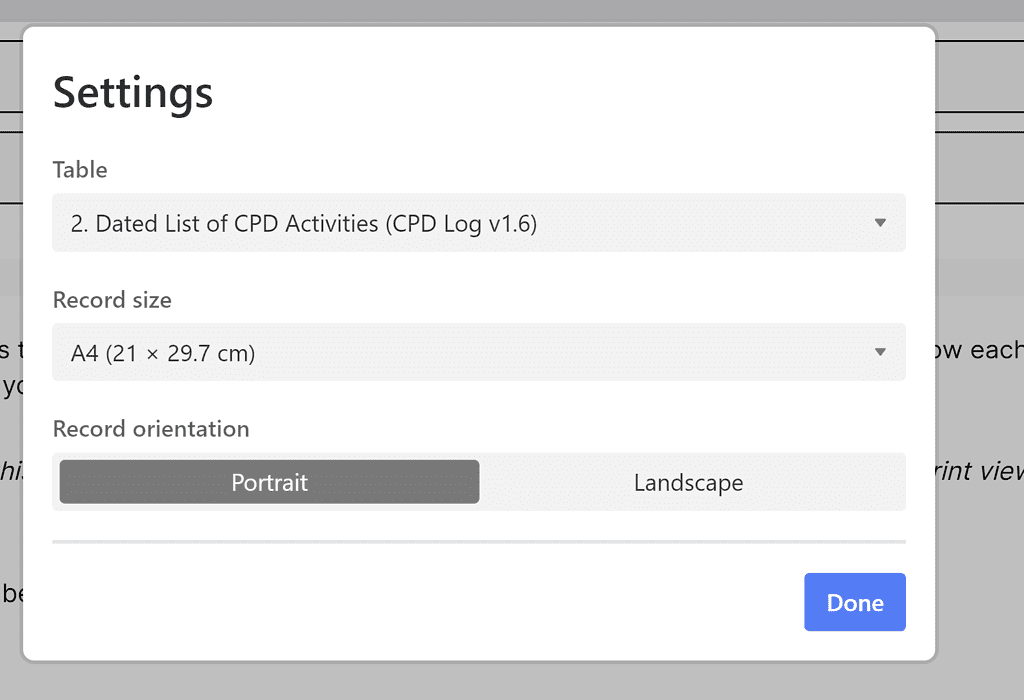
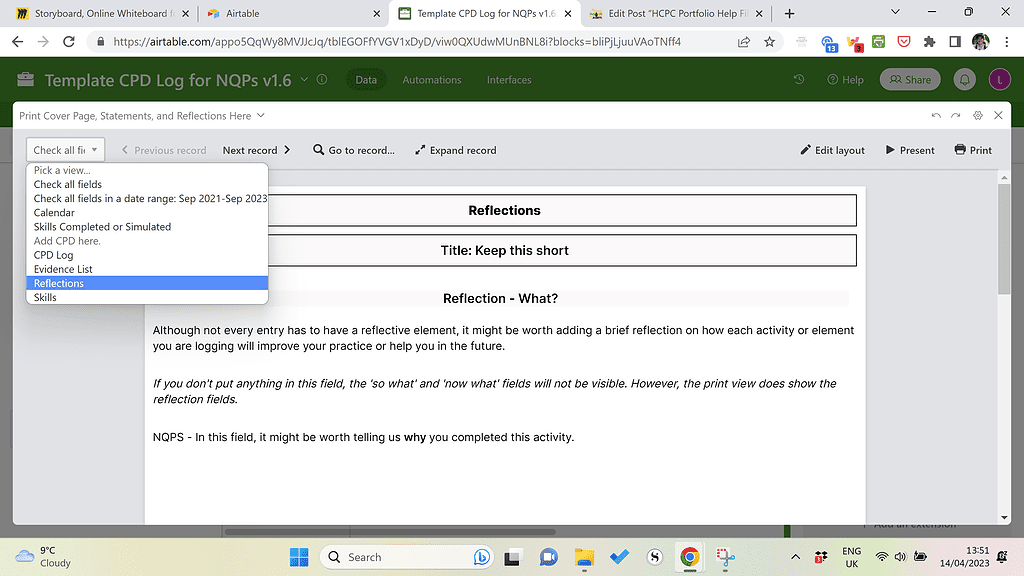
4. Development Goals, NQP Learning Outcomes, and HCPC Standards of Proficiency print the same way the CPD log, evidence list, and skills do. Repeat those instructions above to print these.
5. The Statement of How I Have Met the Standards prints the same way the reflections, cover page, and Summary of Practice History does. Repeat those instructions to print this, ensuring the correct table is selected in the extensions tab.
To summarise, you should end up with 10 PDFs or printed documents if you are printing/exporting every option available. These should consist of:
Merging the PDFs
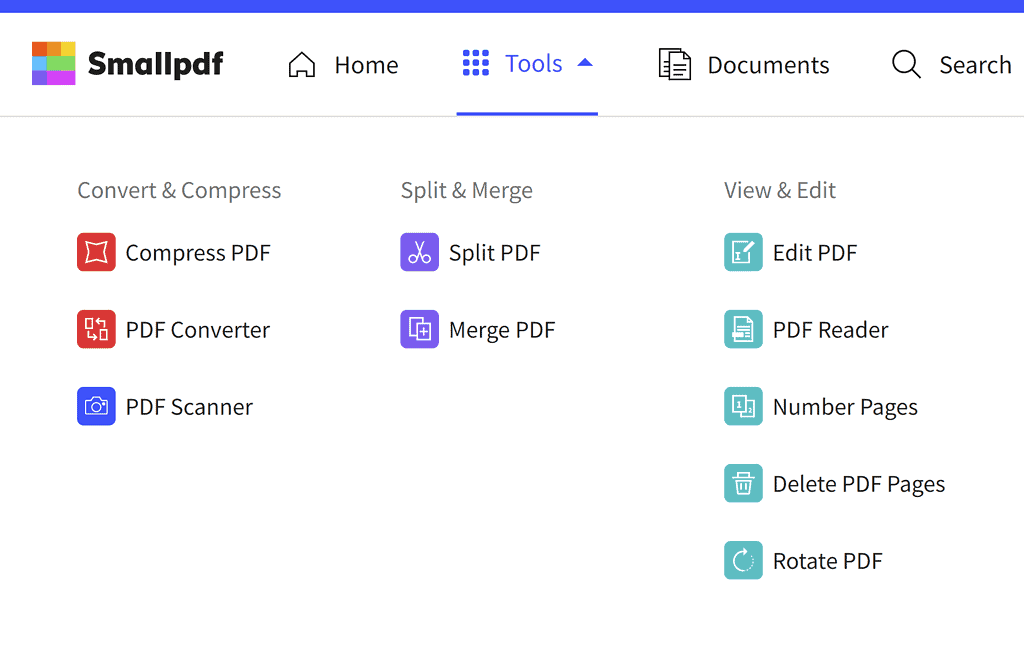
To merge your files, please use your favourite merger tool or https://smallpdf.com/, which is a free website/app for Windows and Mac users. Ignore anything on this site that says you need to sign up for this trial. Press the x to get out of any pop-up that insists on this. Please do the following:
Electronic Signatures?
Prefer to Watch This? Here’s a Video:
[tabby title=”Preview the final portfolio”]
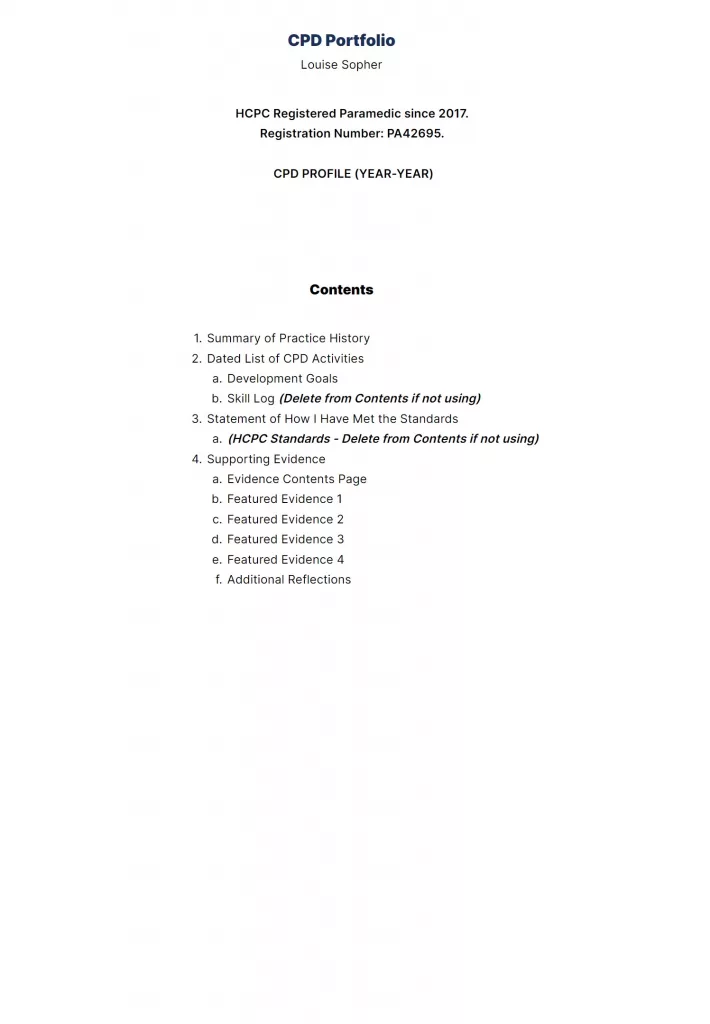
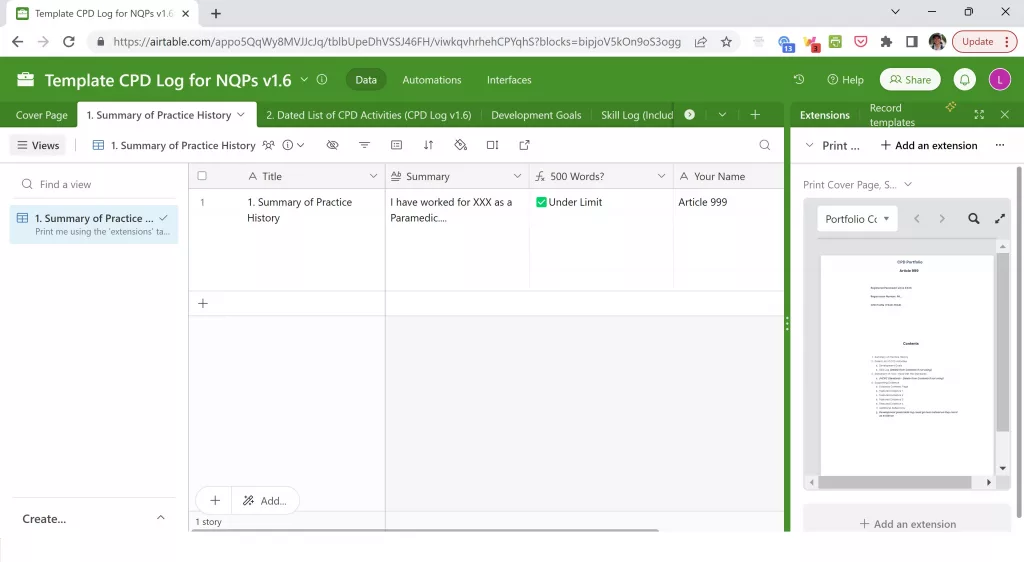
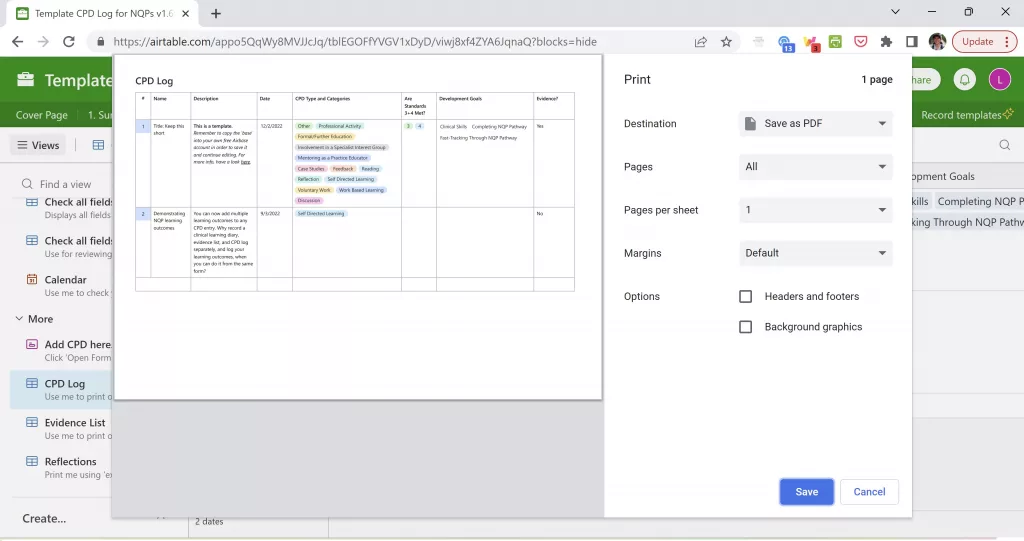
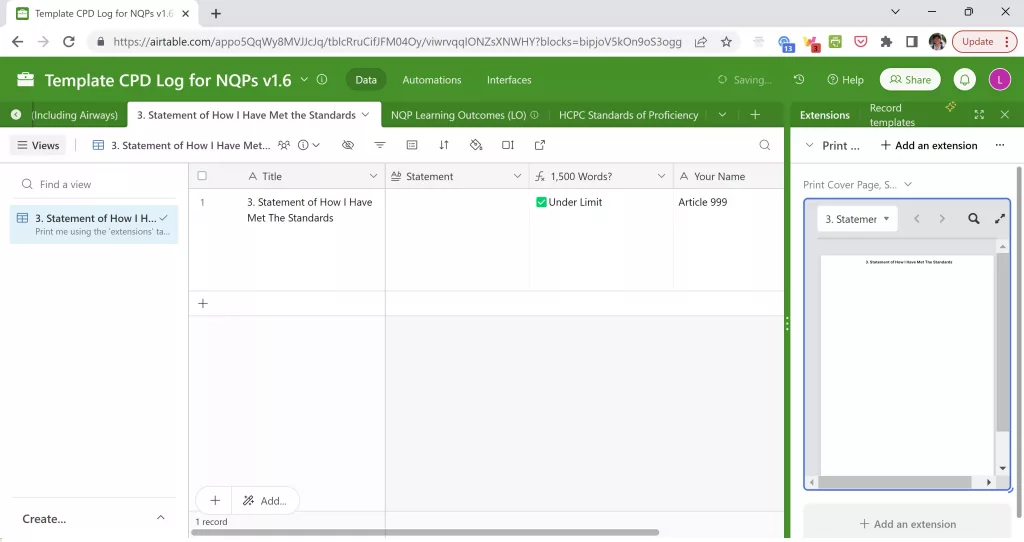
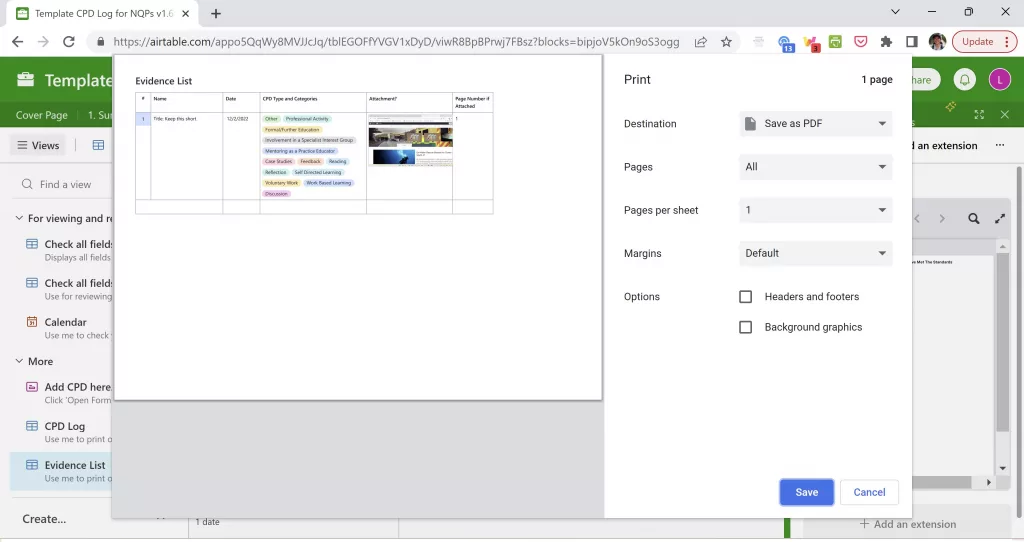
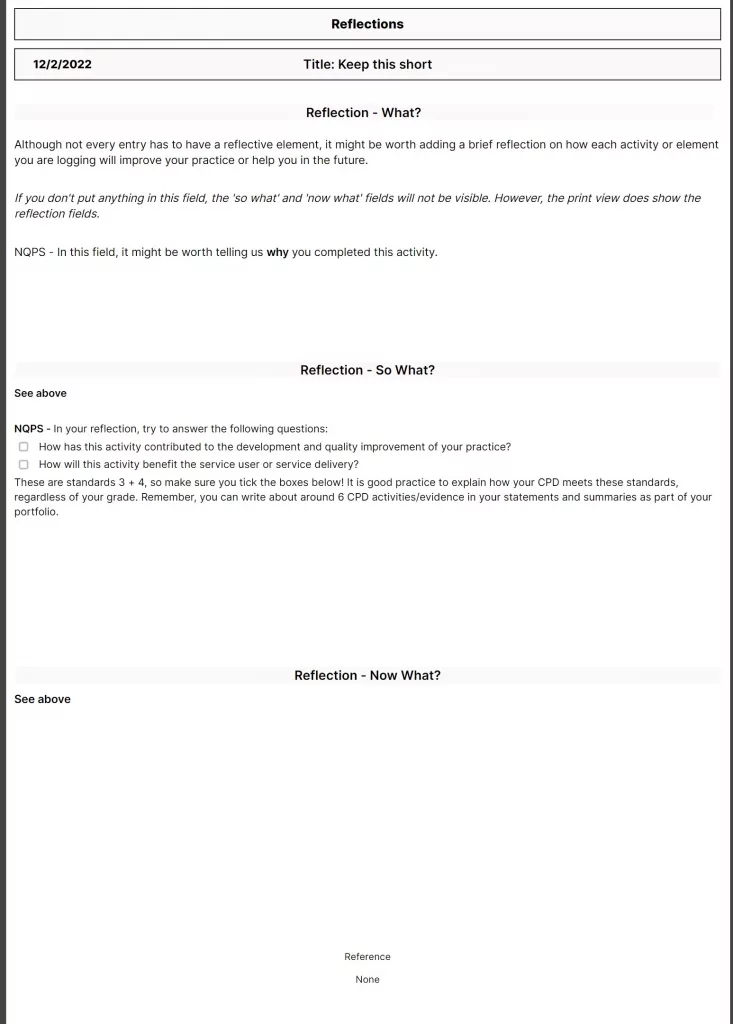
If you are exporting your portfolio to PDF, choose to print, then ‘save as PDF’ as your printer type. You will end up with several PDFs that will need to be merged using your preferred tool. I am now recommending the smallpdf website/app. This app also allows you to number PDF pages and edit the final version (delete pages you don’t want, etc) for free. Downloads have a daily limit, so be sure to only download when you’re happy it’s ready.
If you are a NQP who would like electronic signatures on your portfolio, you can then send your portfolio to your mentor/manager and ask them to fill in the signature column using Adobe Acrobat (free). They can then save and email this final version back to you.
Need help or more info, or want to go ahead and get started? Great, head here for the details.
[tabbyending]
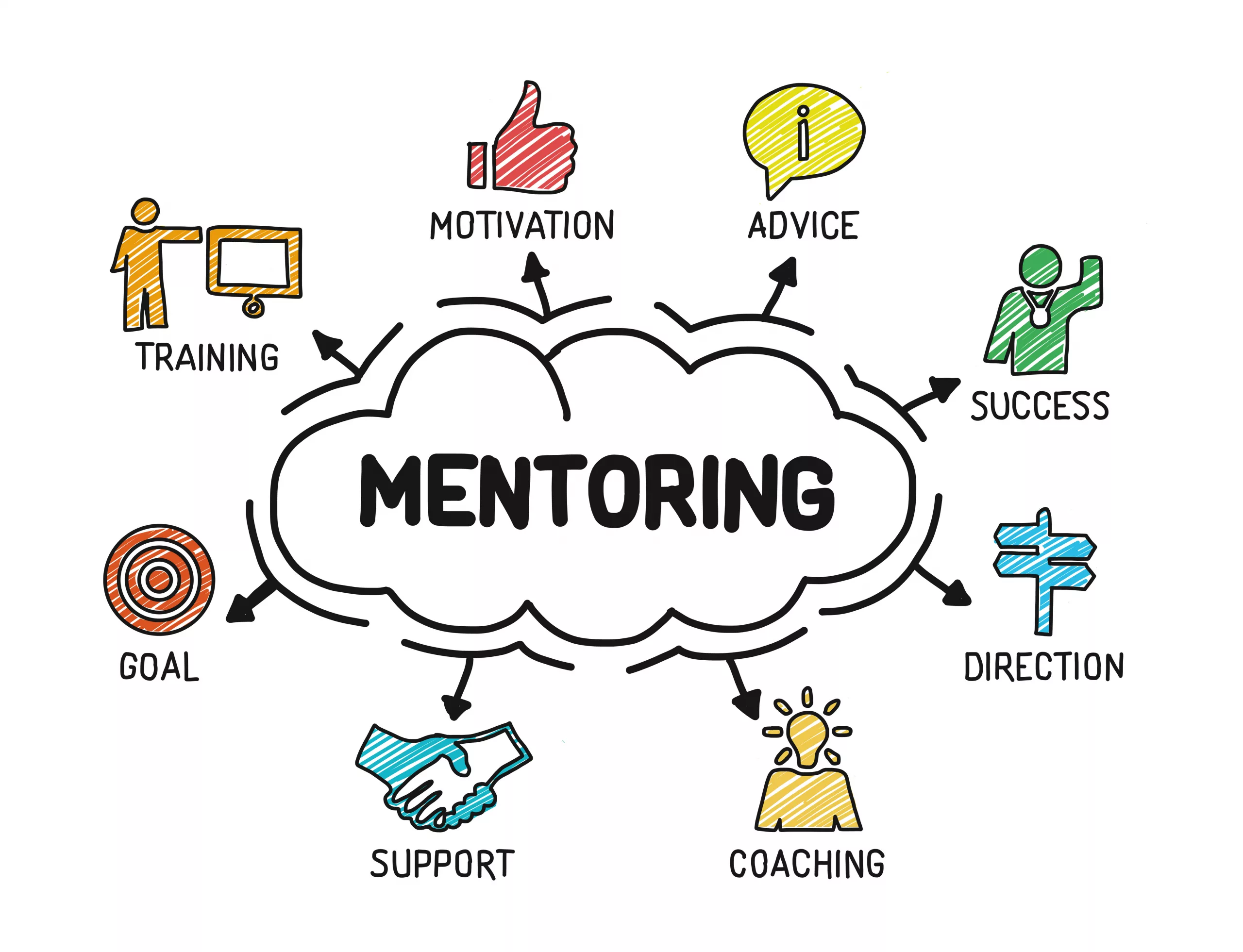
As HCPs we are used to having mentors. We are assigned them in training programmes, trained to become them as part of our progression, and some workplaces offer ‘team leader’ style roles for continued mentorship post-training. But what about when we want advice on accessing career pathways that aren’t immediately available?
What about when we are thinking of reducing hours, changing contracts, trying different Trusts and don’t know anyone currently doing the same?
LinkedIn is a great tool – if people respond, and I have said for some time that if you look for someone doing what you would like to do, you will likely find them. The problem is, that doesn’t mean you can ask them how they got there, what courses were worthwhile (or are now worthwhile amidst constantly moving barriers like Trusts previously wanting level 3 certificates now wanting level 4, and evolving career maps), or how to get anyone in your chosen line of work to answer your enquiries.

Paramedics are now working across a variety of fields, and as I have written recently, I believe that we may soon reach a point like other professions of working a generic few years before choosing specialist paths. However, I am aware that many are trying to work out which path is most suited to them, which one isn’t a dead-end and involves a good mix of a healthy shift pattern, interesting work, and career progression. It isn’t easy to choose when many pathways are new or still being developed. Some appear in one part of the country several months before they pop up in another and as most of us have experienced, the same pathway doesn’t necessarily look or feel the same in every Trust.
I believe that it should be easier for us to find mentors and support each other to answer simple questions like those written above. I hope to soon provide Article 999 mentors who will available to answer questions and offer guidance. These mentors will be working in a variety of specialised roles. They may have specialist interests that have become part of their career. Going forward, they may be able to provide more in-depth career discussions and advice, and some of them may be interested in collaborating on projects and ideas.

We as Paramedics do have the benefit of information and support available from unions and the College of Paramedics, but we don’t have an easy to access resource of helpful, responsive, qualified mentors who are there to help you:
If you are interested in becoming a mentor for Article 999 please email me at article999uk[at]gmail.com with your name, role (and registration number if you are registered), clinical background and experience, area of specialist interest(s), and mentoring experience and qualifications. Please note this is currently voluntary, but committed mentors will be contacted in the future as this project develops and grows. Mentors will also receive a certificate that could be used for CPD portfolios.
If you are interested in being mentored then please let us know by liking this post, commenting and/or sharing it.
“Mentoring is a brain to pick, an ear to listen, and a push in the right direction.”
John C. Crosby
(one of many quotes that describe effective mentoring)

This is a discussion I have had with several people recently. I’ve observed the same discussion on social media: Is it better to specialise by taking specific job roles or courses, or to keep up with the ‘jack of all trades’ role of a Paramedic?
Our profession is at a point of developing specialisms that seem to be staying put. We can now work in primary and urgent care, in research, in palliative care, resuscitation and education roles, or in other community roles such as rapid response. There are ACCP routes popping up around the country. There are resuscitation roles in specialist hospitals, and community roles that focus expertise on specific conditions. I can see a potential future for new staff being one of a few years of general practice, followed by a series of options containing different specialities and of course, different rotas. This is the way other professions have gone and of course, Paramedicine is young compared to the role of a Doctor or Nurse. Perhaps it is only natural for career paths like these to develop over time. It certainly makes for a more interesting, unique career, and it allows us to develop expertise. Specialising also contributes to a clear CV that should help lead to further roles in the area. It could be argued that without emphasising those areas of expertise on our CV, we might stand out less to a potential employer.
Some argue that remaining general means we never develop expertise in any given area, hence the ‘jack of all trades’ expression that I have heard previously expressed about our profession – we all know how that expression ends. Can anyone be a master of all?
Many of the roles currently available offer part-time work. I am working in one of these, four days a week. It means the majority of my time is spent with adults, but as I maintain frontline shifts I could still come across paediatrics and maternity jobs. I may specialise in one or two areas, but if this means I do not develop in other areas then I am not being honest with myself: I need more CPD related to those areas I now come across less because I am at risk of deskilling. If I want to develop as a Paramedic then surely I need to develop in all areas of practice.
My answer to this conundrum is simple: If you do not intend to maintain any frontline work, you do not need to remain general. But if you intend to keep up any of that work, even if this will only be occasional, you must develop in all areas within your remit. You may still specialise and opt for higher level courses in the areas that take up the majority of your time, but it seems sensible to ensure you develop in all the areas you work in. It’s those areas we see the least that will make us the most hesitant. I cannot safely leave my paediatric knowledge behind with what I learned several years ago when I could still see young patients. I cannot stop learning about maternity when those jobs have the potential to be so time-critical. I don’t want to stop focusing on trauma.
I believe to be the best for our patients, we must juggle all areas. Our expertise is then not necessarily about the courses we have done but the experience we have gained. As I spend the majority of my time working in one or two areas, I could argue those are my specialisms – but I am also still remaining general.
Share your opinion in the comments below.
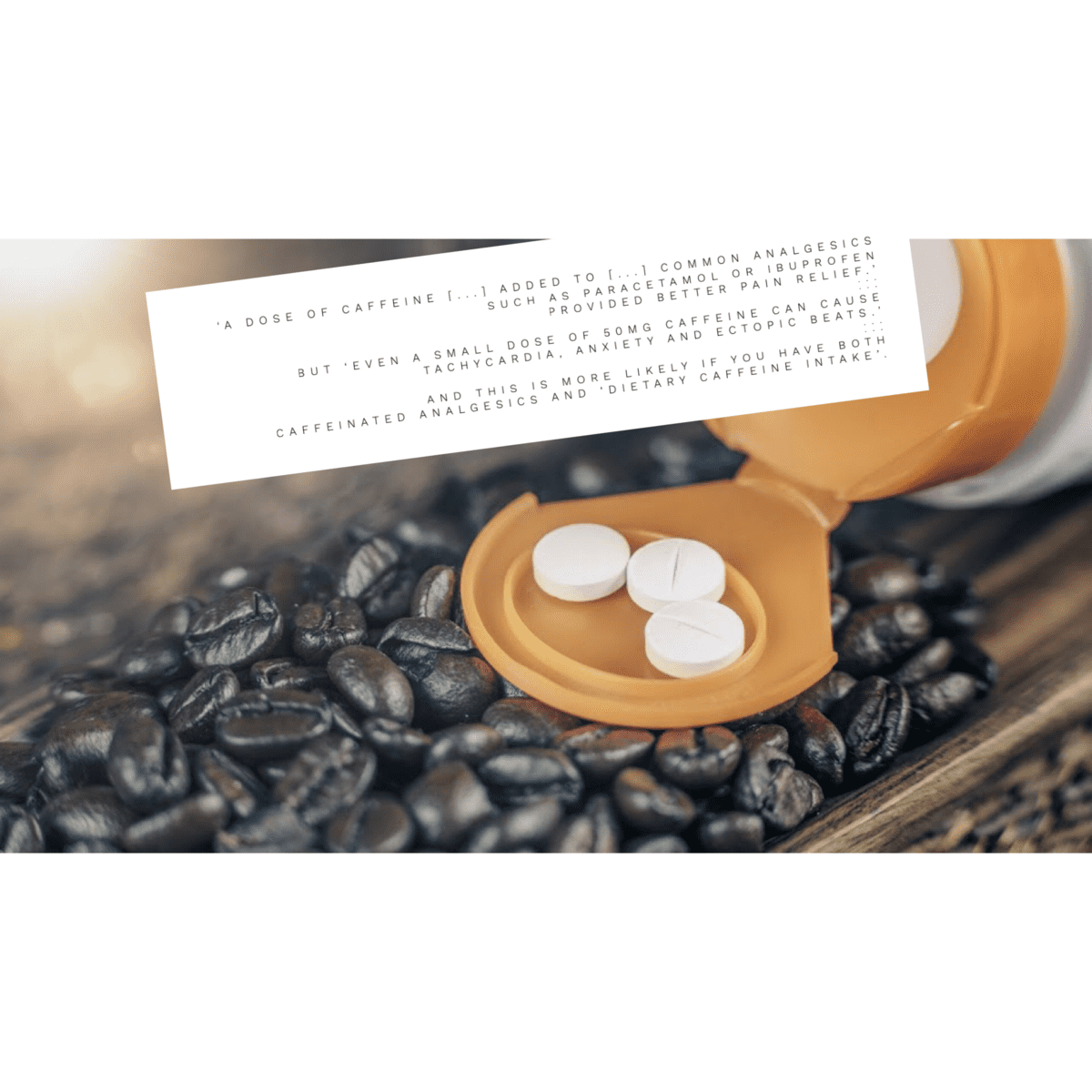
Many of our patients have high temperatures, especially during COVID outbreaks. Some of them are taking over the counter pain relief as required. This is of course recommended, however many of our patients are also tachycardic due at least in part to their high temperatures. When they complain of palpitations, do they need to be aware of the effects of caffeine-paracetamol combinations? Should they be taking this combination at all, or should they simply ease off dietary sources of caffeine while taking analgesics? Here are a few quotes on the subject for discussion. Full references are below. For a fast fact summary, have a look at the featured image below:

A dose of caffeine equivalent to a mug of coffee added to a standard dose of common analgesics such as paracetamol or ibuprofen provided better pain relief. Analgesic plus caffeine increased the number of people who had a good level of pain relief by 5% to 10% compared with analgesic alone
Derry et al, 2014.
When the recommended paracetamol-caffeine dosing regimen is combined with dietary caffeine intake, the resulting higher dose of caffeine may increase the potential for caffeine-related adverse effects such as insomnia, restlessness, anxiety, irritability, headaches, gastrointestinal disturbances and palpitations.
EMC, 2017
Even a small dose of 50 mg caffeine can cause tachycardia, anxiety and ectopic beats. Toxicity is normally seen at doses > 500 mg, but this depends on tolerance.
Take into account dietary and other medicinal sources of caffeine: people may not be aware from the brand name that a particular preparation contains caffeine. Consider whether paracetamol with caffeine is necessary: it cannot be assumed that it will be tolerated in the same way as paracetamol alone.
NPS MedicineWise, 2010
Derry, C.J. et al, 2014. Caffeine as an analgesic adjuvant for acute pain in adults. [online] Available at: https://www.cochrane.org/CD009281/SYMPT_caffeine-analgesic-adjuvant-acute-pain-adults (Accessed 21/01/21)
EMC, 2017. Paracetamol & Caffeine 500/65 mg Effervescent Tablets. [online] Available at: https://www.medicines.org.uk/emc/product/7416/smpc#gref (Accessed 21/01/21)
NPS MedicineWise, 2010. Paracetamol with caffeine (Panadol Extra) available over the counter from pharmacies. [online] Available at: https://www.nps.org.au/radar/articles/paracetamol-with-caffeine-panadol-extra-available-over-the-counter-from-pharmacies (Accessed 21/01/21)
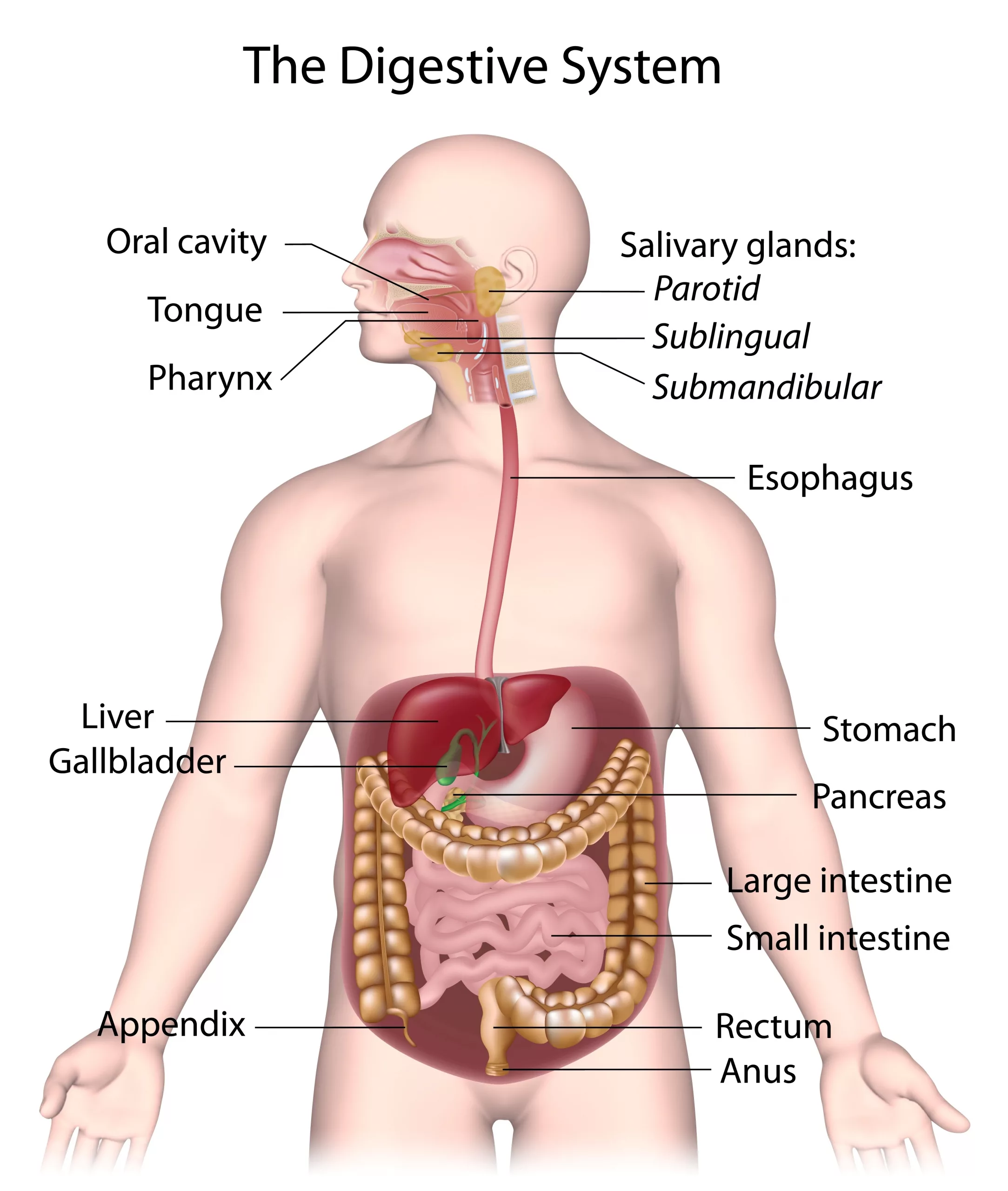
A Biology (basics) post.

‘The human digestive system consists of the alimentary canal [the gut] and its associated glands, the salivary glands, the liver and the pancreas. The alimentary canal begins at the mouth and ends at the anus. Between the two openings is a long convoluted tube organised into several distinct regions.’
(Boyle and Senior, 2008: 131).

The Short Answer
The digestive system is:
the ‘alimentary canal and its associated glands, the salivary glands, the liver and the pancreas.’ (Boyle and Senior, 2008: 131)

The Extended Answer
Within the alimentary canal are:
(Boyle and Senior, 2008: 130-131)
The digestive system is therefore consisted of all of the above as well as the liver ‘and its adjuncts – the gallbladder and bile ducts’ (Keeton et al, 2020), pancreas, and the salivary glands.

Of course, each component has its own functions and parts. As such, this answer could be extended even further.
References
Boyle, M. And Senior, K. 2008. Human Biology, Third Edition, Collins: London
Collison, P. et al, 2001. Nelson Modular Science 1, Nelson Thornes: Cheltenham
Keeton, W.T. et al, 2020. Human Digestive System, Available Online: https://www.britannica.com/science/human-digestive-system (Accessed 13/09/20)

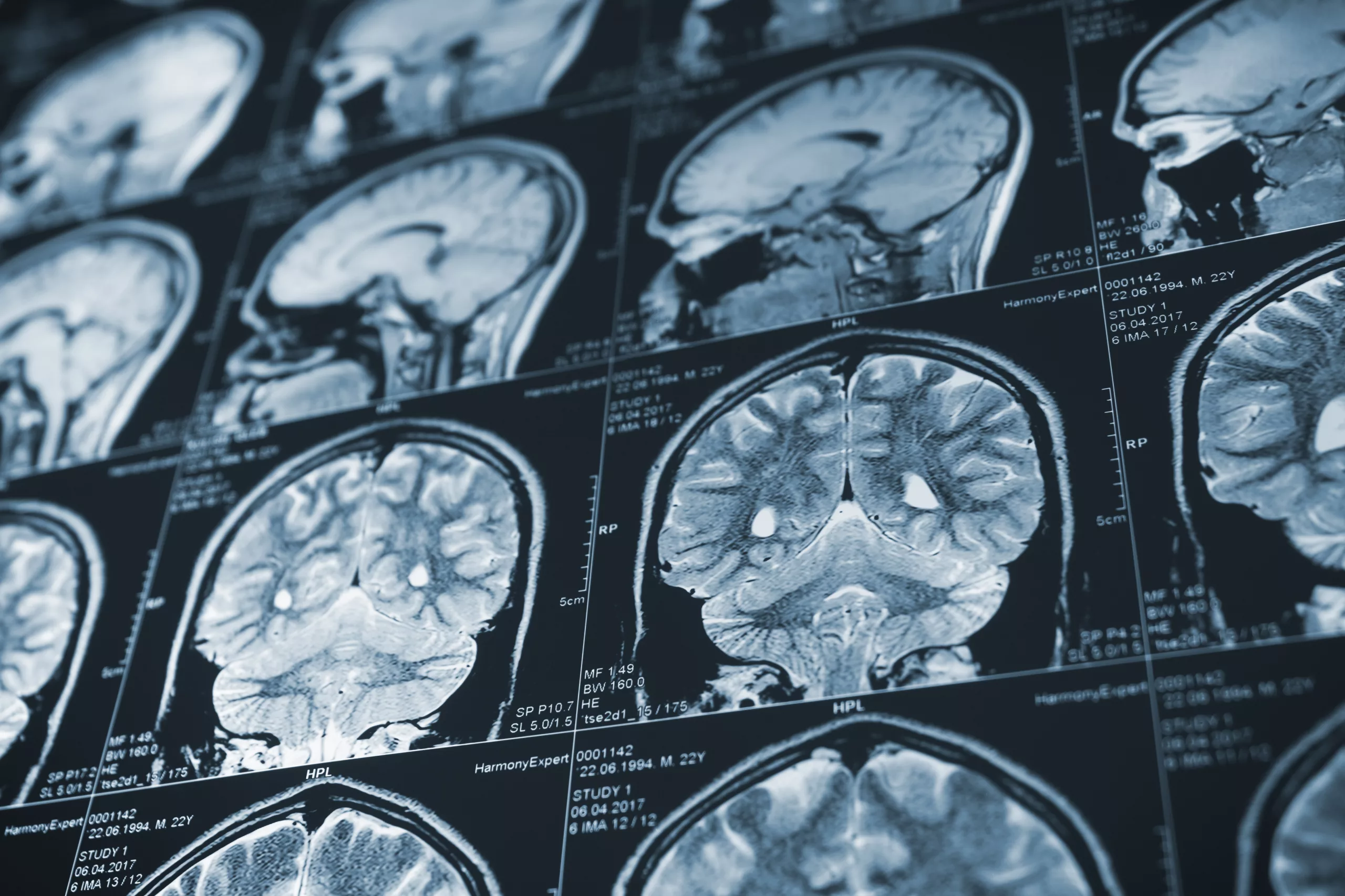
This post shows the key points and quotes as they relate to frontline ambulance staff; anything not relevant has not been included, but you may read more by following the link to the guidelines here.
Remember to read our disclaimer before putting into practice anything you see, hear, or read here. Also remember to check your local guidelines and the scope of practice for your role before putting any of this into practice.
Article 999: Simplifying the Long Stuff; Presenting the Relevant Stuff; Refreshing you on the Important Stuff.
www.article999.co.uk

‘any trauma to the head other than superficial injuries to the face.’ p6
National Institute for Health and Care Excellence [NICE], 2014: 6
‘Head injury is the commonest cause of death and disability in people aged 1-40 years in the UK.’
NICE, 2014: 6
‘The incidence of death from head injury is low, with as few as 0.2% of all patients attending emergency departments with a head injury dying as a result of this injury.’
NICE, 2014: 6
‘the majority of fatal outcomes are in the moderate (GCS 9-12) or severe (GCS 8 or less) head injury groups’
NICE, 2014: 6

‘For adults who have sustained a head injury and have any of the following risk factors’
–> This should happen within one hour of identifying the situation.
(NICE, 2014: 10)
*Consider ‘the pre-injury baseline GCS may be less than 15. Establish this where possible’ (NICE, 2014: 19).
If the patient is on anticoagulants and has none of the above, they should have a CT head ‘within 8 hours of the injury’. (NICE, 2014: 12)

(NICE, 2014: 13)

Any of:
(NICE, 2014: 11)
If a child has ‘more than one’ of these, he/she should have a CT scan within an hour:
(NICE, 2014: 11)
Note: If the child has just one of these, he/she ‘should be observed for a minimum of 4 hours after the head injury’ and if he/she then develops more of the above, a CT is warranted. (NICE, 2014: 12)
The rules regarding CT cervical spine scans are different in children, compared to adults, due to the risk of radiation to their thyroid.


And:
Also, ‘depending on judgement of severity:’


During these transfers, patients ‘should be accompanied by a doctor with appropriate training and experience in the transfer of patients with acute brain injury. […] Patients requiring non-emergency transfer should be accompanied by appropriate clinical staff.’
NICE, 2014: 32-33

National Institute for Health and Care Excellence. (2014). Head injury: assessment and early management (NICE Clinical Guideline 176). Retrieved from https://www.nice.org.uk/guidance/cg176

#medicalwriting #nice #paramedic #emt #frontline #emergency #ambulance #headinjury
A platform can look simple at first but feel different once you start moving through the catalogue. I noticed that while browsing blaze spins.
I usually compare the mobile layout before signing up, especially when I plan to play from a phone. The pages I checked around jokers ace casino were easy to scan without constantly zooming in.
Rules and game details are easier to compare when they are accessible from the catalogue. I looked at savanna wins casino with that in mind.
I was comparing different UK gaming pages and paid particular attention to how the navigation behaves on smaller screens. savanna wins casino was one of the layouts I checked on mobile.
I normally check the game search first because a large lobby is not very useful if finding a title takes too long. During one comparison I used winit casino as one of the sites to review.