“At Pentland Medical, we are proud to introduce innovative new products to the UK healthcare system. Hemashock not only has the potential to save lives but improve the longer term outlook for survivors of cardiac arrest and severe shock. We are excited to be part of this journey and show that there is a better way which will lead to better outcomes for patients” – Jamie Munro, Pentland Medical
A new product in the UK market, the Hemashock from Pentland Medical, acts as an ‘autotransfusion tourniquet’ in cardiac arrest and hypovolemic shock. Rather than merely working as a tourniquet, these auto-transfusion tourniquets ‘sends blood from the legs to the core’. Here’s more about how this specific product works:
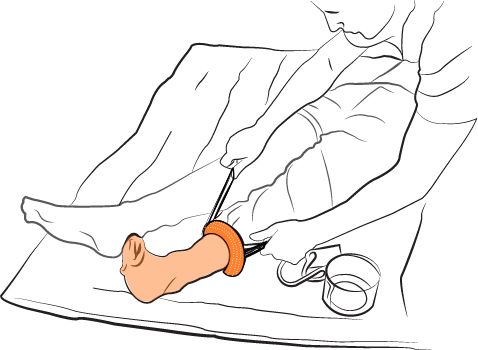
And here’s how it could look in practice for a solo-rescuer application (graphic only):
There is some limited evidence of the positive impact of this device. In one case of a PPH:
‘IV fluids and Pitocin 20 mg IV had no effect on bleeding or BP. An auto-transfusion tourniquet (A-TT), (HemaShock, OHK Medical Devices, Tirat Carmel, Israel) was placed on one of her legs. Within 1 minute blood pressure started to increase and heartrate slowed.’
Another case links survival from a presumed cardiac etiology to the application of this device. This is of course difficult to prove, and there are a number of variables that could have impacted the positive outcome – not just to ROSC (CPR quality, identification and/or treatment of other reversible causes, number of shocks) but also to discharge – in particular, target temperature management was used, something still under study and recently removed from Resuscitation Council guidelines following a lack of consistent evidence for its use. However, the article certainly reads convincingly – a patient who is in refractory VF, who swiftly develops ROSC following application of the device.
In fact, in a clinical validation at one medical centre, the device appears to have resulted in a higher chance of ROSC in cardiac arrest patients who have had prolonged resuscitation and poor indicators for survival. Notably though, only one patient survived to discharge.
For further medical evidence relating to the product, please follow this link to the product page.
Of course, application of any new product comes with barriers, and as with most interventions we must ask if it is not only necessary but also if it causes any delay or depreciation in quality of the basic and most effective interventions in a medical arrest. This study investigated the use of auto-transfusion tourniquets during cardiac arrest and found that an effective team can deploy them without impacting CPR quality.
Limitations:
There are currently no large-scale clinical trials of this device, and the device does not appear to have been tested independently of other variables e.g. target temperature management in ROSC, which is another experimental area given its addition and subsequent removal from the Resuscitation Council guidelines. Additionally, despite auto transfusion tourniquets being investigated in the study above from a team-working perspective, the actual speed of application does not appear to have been examined, something which has been heavily investigated in ordinary tourniquets. Additional human factor elements should be considered here, too – the minimum staff numbers required for application, and the minimum training required for efficient application are both high-stake areas that require further investigation.
However, the product remains an intriguing dual-purpose device with demonstrable results, and one that adds a positive vision to the future of cardiac arrest management and hypovolemia.
Summary:
Please note, this article has been produced by a request from Innovel Medical. No financial or other incentive beyond mere site promotion has been involved, no practical exposure to the product mentioned has been experienced, and this article does not constitute a product recommendation. As always, Article 999 is disconnected from any employers the author works for (see the full disclaimer via the site menu).
In 1999, Anna Bagenholm survived a cardiac arrest after a prolonged down-time and a temperature of just 13.7c. The circumstances of her survival continue to make international news and to inform and inspire research about target temperature management. There have been very few documented cases of survival from such extreme hypothermia, especially with minimal neurological impact. Consider the statistics on neurological impact from ordinary cardiac arrests, with less down-time, and Anna’s case becomes even more extraordinary. But does her survival mean we should target hypothermia in cardiac arrest patients? Should we target hypothermia in ROSC? Let’s have a look at the case and the research that has followed:
The case
Situation: 29 Year Old Female (Anna Bagenholm) is submerged head-first in a hole in the ice in a mostly frozen stream for 80 minutes.
Background: She has no medical history. She has slid down an icy slope while skiing with colleagues.
Assessment: She was conscious for the first 40 minutes, but has been unconscious for 40 mins since. After recovery, she is in cardiac arrest. Her ECG shows asystole. During the resuscitation attempt, the following is also learned:
Temp: 13.7
Pupils: dilated
She is warmed and the resuscitation team are watching an echo of her heart, which begins to move. ROSC was not gained until 4 ½ hours after she fell, and she spent 35 days on life support.
Questions: What would your expectations be of her ROSC management? What would your expectations of her survival and neurological impact be?
Recommendation — today:
Maintain a target temperature at a constant value between 32°C and 36°C for at least 24 h.
Avoid fever (> 37.7°C) for at least 72 h after ROSC in patients who remain in coma.
Do not use pre-hospital intravenous cold fluids to initiate hypothermia.
(Resuscitation Council, 2021)
Decision/Outcome: Not only does Anna survive, her long-term neurological impact is minimal. Have a look at the video:
More Questions:
What target temperature does your Trust follow for ROSC management? Do you think it should be lower, or higher, having seen Anna’s case?
Do you think it’s possible to replicate the results of Anna’s treatment? What makes her situation so different to a cardiac arrest patient who has been treated with target temperature management?
The Research
Have a look at the results of some recent studies into target temperature management, below:
Year
In or out of hospital study
Presenting rhythm
Targets
Outcome
2002
OHCA
Shockable
33 and 37
Positive for survival and neurological impact
2010
OHCA
Shockable
Cooled IV fluids (No target temperature listed)
No difference
2013
OHCA
Both shockable and non-shockable, but presumed cardiac cause
33 and 36
No difference
2014
OHCA
Both shockable and non-shockable
2L of normal saline at 4 degrees, vs standard care
No difference
2018
OHCA
Shockable
32, 33, 34
No difference
2019
OHCA and IHCA
Non-shockable
33 vs 37.5
Improved survival and good neurological outcome (CPC = 1 or 2)
2021
OHCA
Presumed cardiac cause
33 vs 37.5
No difference
Adapted from: Rasmussen and Girotra, 2021.
Final discussion point:
Why can’t controlled studies replicate the kind of outcome that Anna had? Share your thoughts below, or on our Facebook or Twitter pages.
References (excluding videos and direct links above):
Rasmussen, T. P. and Girotra, S. 2021. A Contemporary Update on Targeted Temperature Management, Available at: https://www.acc.org/latest-in-cardiology/articles/2021/11/09/13/16/a-contemporary-update-on-targeted-temperature-management (Accessed 15/05/2022).
Resuscitation Council, 2021. Post-Resuscitation Care Guidelines, Available at: https://www.resus.org.uk/library/2021-resuscitation-guidelines/post-resuscitation-care-guidelines (Accessed 15/05/2022).
For clarity, the term ‘in-water rescue breaths’ has been replaced with ‘on-water rescue breaths’ as these are given on the water surface.
Drowning Vs Diving
When we talk about the diving casualty, we don’t just mean a drowned patient. Any drowned patient may have some other medical cause to explain why they drowned in the first place – a cardiac or neurological cause, for example – and the same is true for the diving patient. But in diving, we may not mean drowned at all, not in the traditional sense. If a patient has managed to keep their regulator in for the entire ascent, and that regulator is working properly, have they drowned? Or is the bigger issue the subsequent decompression illness from not breathing on ascent, and immersion pulmonary oedema?
Let’s have a look at the guidelines for the management of a drowned casualty.
UK Guidelines and First Aid
Most first-aiders will know the drowning protocol:
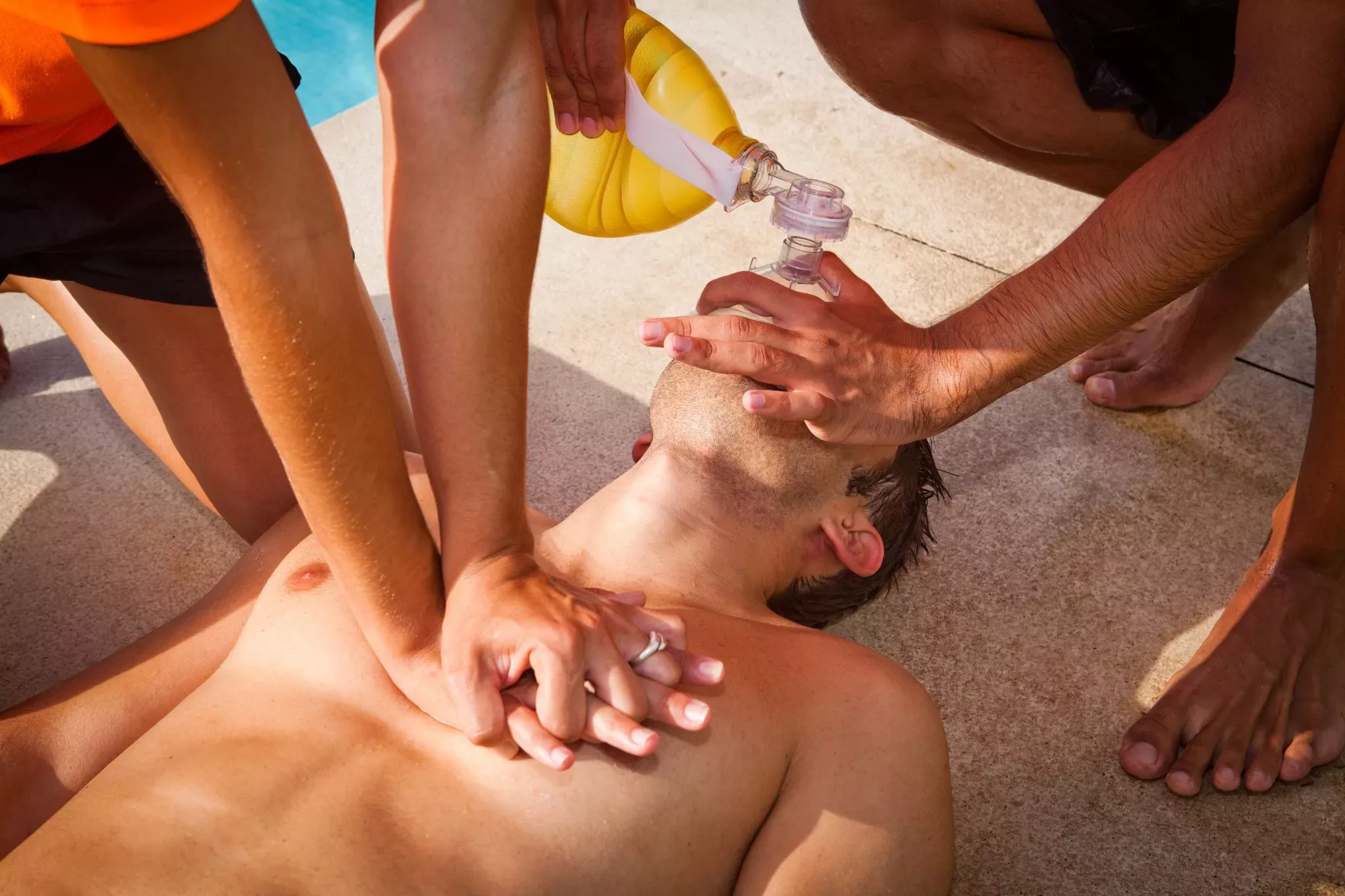
Start resuscitation as soon as safe and practical to do so. If trained and able this might include initiating ventilations whilst still in the water or providing ventilations and chest compressions on a boat.
Start resuscitation by giving 5 rescue breaths / ventilations using 100% inspired oxygen if available.
Deakin et al (2021)
European Guidelines
What’s interesting is when you then look at the European Resus Council Guidelines 2021. Here, you’ll find much more detail under the drowning section, including the background research that has informed the guidelines. Of note, there is ‘limited evidence […] to inform the treatment of the drowning victim’ (Lott et al, 2021: 197). Despite this, a table of research includes evidence on in-water resuscitation. Four main points are raised:
Rescue breaths ‘by highly trained rescue teams with water rescue equipment is feasible’
These breaths should be given for ‘up to 1 min’ (emphasis added) (10 breaths) ‘before attempting transfer to land’
No further rescue breaths should be given before landing the patient on land or on the boat
If a rescuer is alone and has no rescue equipment, they should not begin rescue breaths and should instead tow ‘directly to the shore’ or boat (emphasis added).
(Lott et al, 2021: 199).
Why 10 breaths? This should equate to one every 6 seconds, which is exactly what we would do during continuous CPR with an advanced airway, or during ventilation-only CPR in respiratory arrest (Newell, Grier, & Soar, 2018). (However, this paper highlights the potential for increased survival after 30:2 versus continuous CPR).
Note the difference in wording between the 2015 guidelines (below) and the 2021 guidelines (above):
If a rescuer, in general a surf-lifeguard, finds a non-responding drowning victim in deep open water, the rescuer may start ventilation when trained to do so before moving the victim to dry land or rescue craft. Some victims may respond to this.
Truhlář et al. (2015).
The 2015 guidelines leaned more towards in-water ventilations than the 2021 guidelines do. The wording was perhaps vague, and left the decision up to the rescuer for when to start ventilations and how long to perform them for, unless the patient was not responding to initial ventilations. In this case, the guidelines emphasised towing the patient to the boat or shore – if it was near – without further ventilations.
The 2021 guidelines, though clearer, do not detail what defines water rescue equipment, or what defines highly trained. Do rescue divers, who are trained at BLS level, constitute ‘highly trained’? Do lifeguards, who frequently practice water rescue, count as highly trained? Or is this term reserved for only ALS-trained healthcare professionals who are also trained in water rescue, or at minimum ILS-trained rescue divers? When we talk about rescue equipment do we mean use of bag-valve-masks and airway adjuncts? Does water rescue equipment include a BCD that is inflated? Translating this advice into diving medical advice is not easy.
British Sub-Aqua Club Guidelines – What Might Change?
BSAC provide dive rescue courses and teach on-water rescue breaths (Cumming, 2011: 56-57), however this information has yet to be updated to the 2021 Resus Council guidelines, and it will be interesting to see what changes when it is updated. The referenced book recommends ventilations while towing, which was not a feature of the 2015 ERC guidelines and makes this book less reliable as a source of information. On the contrary, their Sports Diver student guide (BSAC, 2020: 47), has been updated to stop the practice of giving rescue breaths while towing. Perhaps the biggest change in the next issue will be that a lone rescuer may not be advised to start ventilations in the water, unless help is coming to them and BCDs are considered rescue equipment. Rescuers should also be reminded that the Resus Council advise up to one minute of rescue breaths (Lott et al, 2021: 199). One other change that would be good to see would be a friendly reminder to not perform rescue breaths if this would cause a delay in transport and treatment of the patient – an exemption for some treatments that HCPs should be well versed in. An example of where this might apply would be where the time it takes to give rescue breaths is longer than the time it would take to evacuate this patient to the shore or a nearby boat.
UKDMC – Are Times Changing?
This statement from the UKDMC (Edge and Wilmshurst, n.d.) states that there is a higher chance of neurological damage, despite an apparent improvement in survival rates, when on-water resuscitation is performed. Remind anyone of the trial results from something else we do in resus? They also note that even when lifeguards are performing in-water ventilations, the patient aspirates, and the rescuer tires. And this was in a pool… Now imagine waves of salty water lapping over both patient and rescuer. Multiple other issues arise – ventilation may be restricted by diving equipment that covers the chest, rescuers will be unable to assess chest rise and fall due to this equipment, and even those of us who are HCPs won’t have regular practice, especially in the special circumstances of resus of diving patients.
This doesn’t even consider that in the absence of pulse checks (due to wet/dry suits covering the neck), the rescuer is unable to assess respiratory versus cardiac arrest, and may be at risk of confirmation bias – that casualty who was in cardiac arrest when they surfaced, they have a pulse on the boat so we must have got them back, right? Or, that unconscious patient who wasn’t breathing is breathing now, so we saved them – or were they just breathing so shallow that, in amongst the noise of the boats and the waves, and with all that equipment on them, we could not look, or listen, or feel. Realistically, this may be one reason there is limited evidence. It will be interesting to see how diving organisations respond in the future and whether their guidelines continue to change.
References
British Sub-Aqua Club, 2020. Sports Diver: Student Guide. BSAC.
Cumming, B. 2011. Safety and Rescue for Divers, BSAC: Cheshire.
Newell, C. Grier, S. And Soar, J. (2018) ‘Airway and ventilation management during cardiopulmonary resuscitation and after successful resuscitation’, Critical Care, 22(190). doi: https://doi.org/10.1186/s13054-018-2121-y
‘For more than 50 years, treatment strategies have included the use of various drugs, but there is limited evidence that such treatments are effective’ (Perkins et al, 2018).
8014 patients of the 10, 623 initially selected were included in the trial.
Of these, 4015 were given adrenaline and 3999 a placebo.
Of those who were given adrenaline and survived until discharge, 39 (31.0%) out of 126 patients had a ‘severe neurological impairment’ and of those who were given the placebo, the same was true for ’16 of 90 patients [17.8%]’
(Perkins et al, 2018).
Exclusions to the trial
‘…those with anaphylaxis, pregnant women and children’ (below age 16).
After the pilot, life-threatening asthma as a suspected cause of the cardiac arrest was added as an exclusion because of ‘the potential overlap between the presentation of asthma and anaphylaxis’.
Anaphylaxis was excluded because adrenaline is considered potentially ‘beneficial’ for this condition
(Warwick Clinical Trials Unit, 2018).
The trial only looked at the effects of the use of adrenaline during out-of-hospital cardiac arrest and not at the use of adrenaline during ROSC, which is a protocol that some Trusts follow (Warwick Clinical Trials Unit, 2018). In addition, this does not cover any treatment initiated by the hospital if the patient was transported there.
Conclusions
‘the benefits of epinephrine that were identified in our trial are small, since they would result in 1 extra survivor for every 112 patients treated. This number is less than the minimal clinically important difference that has been defined in previous studies.29,30 Among the survivors, almost twice the number in the epinephrine group as in the placebo group had severe neurologic impairment’ (Perkins et al, 2018).
Limitations
Perceived limitations include: ‘Information about the quality of CPR was limited to the first 5 minutes of cardiac arrest and involved fewer than 5% of the enrolled patients.’ (Perkins et al, 2018)
Further limitations to consider could be:
time to CPR
patient’s co-morbitities that weren’t already considered in the study
More information
Warwick’s Clinical Trials Unit have produced an infographic with more information here.
View the University of Warwick’s press release here.
References
NIHR, 2018. Investigating the role of adrenaline in cardiac arrest. Available Online: https://www.nihr.ac.uk/news/investigating-the-role-of-adrenaline-in-cardiac-arrest/8931 (Accessed 19/07/18)
Perkins, G.D. et al, 2018. A randomized trial of epinephrine in out-of-hospital cardiac arrest. New England Journal of Medicine. doi: 10.1056/NEJMoa1806842
Warwick Clinical Trials Unit, 2018. Available Online: https://warwick.ac.uk/fac/med/research/ctu/trials/critical/paramedic2/faqs/ (Accessed 19/07/18)
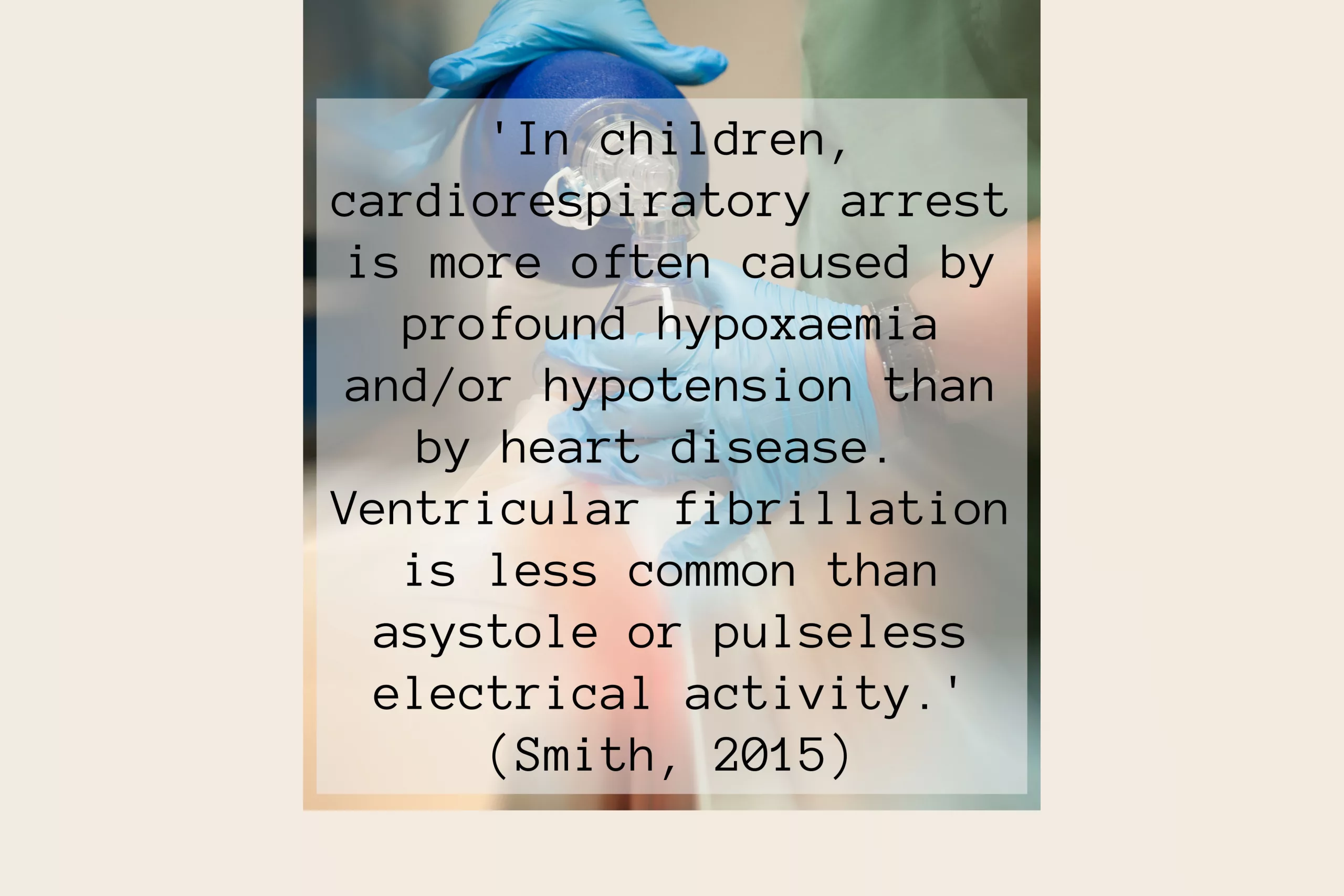
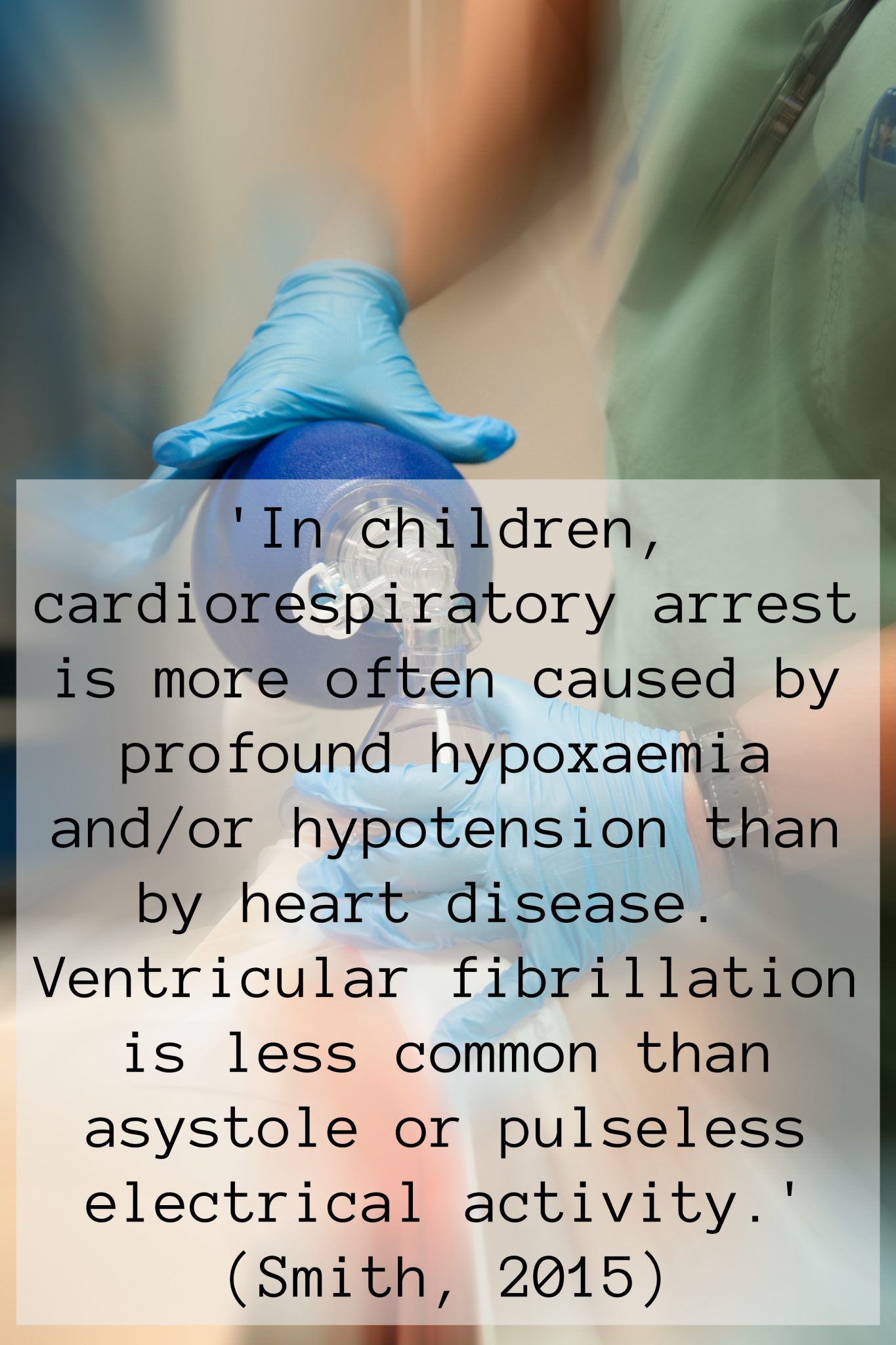
Smith, G. 2015. Prevention of cardiac arrest and decisions about CPR, Available Online: https://www.resus.org.uk/resuscitation-guidelines/prevention-of-cardiac-arrest-and-decisions-about-cpr/#decisions (Accessed 02/05/2018)
Created using Visme. An easy-to-use Infographic Maker.
Association of Ambulance Chief Executives (AACE), 2016. UK Ambulance Services Clinical Practice Guidelines 2016, Bridgwater: Class Professional Publishing