Tag: end of bed assessment

  • End of Bed Assessment – 16 Reasons Your Patient is Pale

    End of Bed Assessment – 16 Reasons Your Patient is Pale

    Here’s a list I’ve had for a while but not published: obvious, less obvious, and utterly surprising reasons your alive patient might be pale. References within. Detailed reference list coming soon.

    Image above – a person with vitiligo (Source: Adobe Stock)
    1. Shortness of breath (which may also be due to anaemia) – https://www.ncbi.nlm.nih.gov/pmc/articles/PMC2996160/
    2. Distributive, Cardiogenic, Obstructive + Dissociative shocks (Pilbery & Lethbridge, 2016: 247)
      • Including SOB/DIB, PE, pneumothorax, anaphylaxis
    3. Lung disease, leading to central cyanosis (Douglas et al, 2013: 45) including asthma and COPD (exacerbations & chronic)
    4. Acute myocardial infarction – https://patient.info/doctor/acute-myocardial-infarction
    5. Heart failure – https://em.osumc.edu/education/journalClub/SignsandSymptomsofHeartFailure.pdf
    6. Shock, caused by hypotension – https://www.nhlbi.nih.gov/health-topics/hypotension
    7. Vasovagal – ‘Facial pallor is often the first sign of an impending vasovagal faint’. https://academic.oup.com/brain/article/132/10/2630/329792>
    8. Shock – hypovolaemia – https://artifactsjournal.missouri.edu/2016/04/hypovolemic-shock-and-fluid-resuscitation/
    9. Lingual Raynaud Phenomenon – leading to a white tongue, temporarily – http://www.cmaj.ca/content/188/15/E396
    10. Drugs – Amiodarone can cause a ‘bluish-grey’ skin discoloration (Douglas et al, 2013: 44)
    11. Vitiligo (segmental and non-segmental) due to the lack of melanin, causes ‘pale patches of skin’ (Douglas et al, 2013: 46); non-segmental vitiligo ‘is thought to be an autoimmune condition’ (NHS – Vitiligo)
    12. Albinism (Douglas et al, 2013: 46)

    Discoloration of the hands/nails/eyelids:
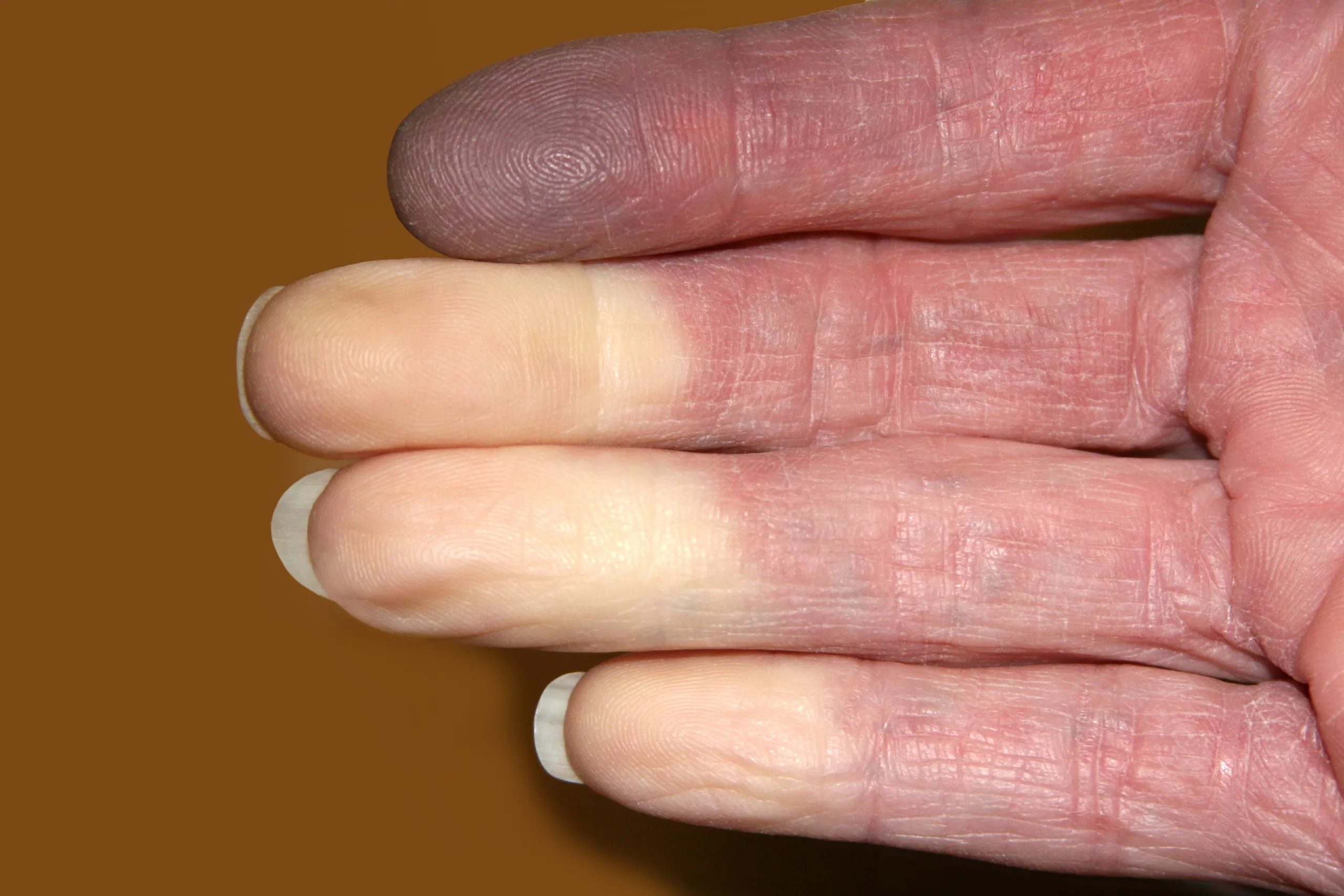
    Photo above demonstrates reynauds (Source: Adobe Stock)

    13. White discoloration of nails – 6 of 155 HIV patients in a 1998 study had this, amongst other more prevalent changes of their nails  – https://jamanetwork.com/journals/jamadermatology/fullarticle/189490

    14. Anaemia – ‘pallor of the conjunctiva, palm, nail beds or at any site was associated with a significantly lower hemoglobin concentration’ – From <https://academic.oup.com/jn/article/129/9/1675/4721973>

    15. Raynaud Phenomenon – leading to white/yellow/purple fingers, temporarily – http://www.cmaj.ca/content/188/15/E396

    Red herring

    16. Rigor mortis and liver mortis in an alive patient who was suffering from a dissecting abdominal aorta: https://content.sciendo.com/view/journals/sjfs/22/1/article-p11.xml

    Have I missed any? Add in the comments below —>
  • Cheat Sheets: Scene Overview

    Scene Overview

    Harris, 2016; Pilbery & Lethbridge, 2016 *This can be made available in alternative formats & colours on request*

    And more…

    Harris, 2016; Pilbery & Lethbridge, 2016 *This can be made available in alternative formats & colours on request

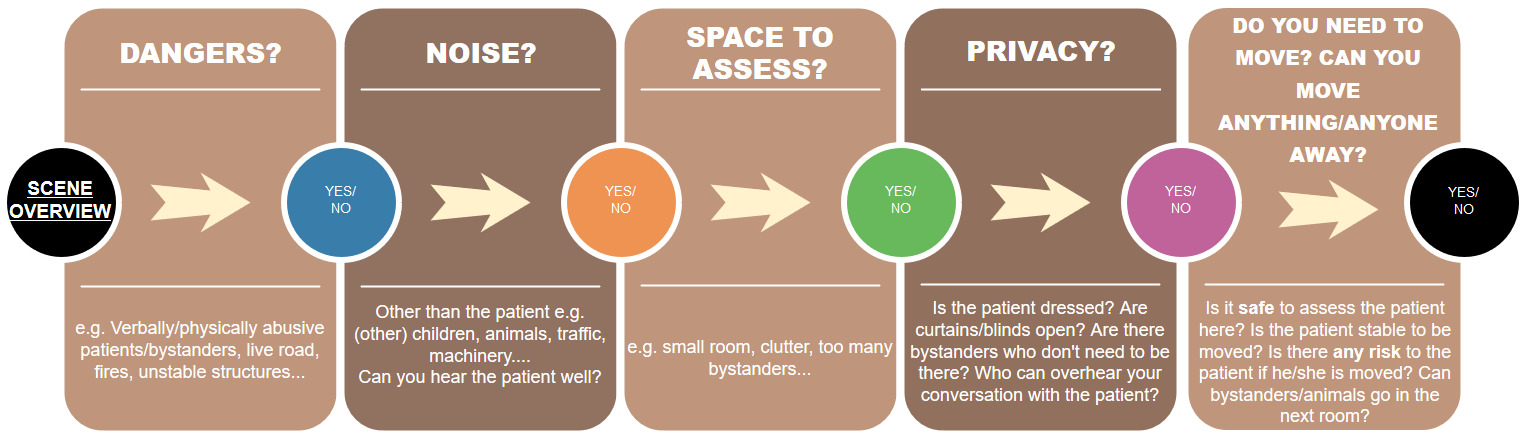
    You may find varying suggestions for what to consider in what is usually referred to as your ‘scene assessment’ (Harris, 2016: 1; Pilbery & Lethbridge, 2016: 126) or ‘end of bed […] assessment’ (Spurr, 2014). This is a cheat sheet to assist you in identifying these important factors. There are a few examples within each category, forming part of what is surely an endless list. Harris (2016: 1-3) also recommends considering use of PPE, considering vehicle position, and considering CBRNE incidents. Pilbery & Lethbridge (2016: 127) recommend considering outside/inside temperature, terrain that is not reachable by land ambulance, and referring to major incident guides where applicable. Major incidents are not covered within this cheat sheet, but this sheet may guide you through the initial thought process prior to announcing a major incident…

    Final Note & References

    This is a cheat sheet which is designed to complement your scene assessment. This cheat sheet is in the author’s own words but ideas have been used from the below texts. Any copies of the above cheat sheets should be paired with the below references.

    Harris, G. 2016. ‘General principles of assessment’ in A.Y. Blaber and G. Harris, ed. 2016. Assessment Skills for Paramedics, 2nd ed. Berkshire: Open University Press, pp. 1-13

    Pilbery, R. and Lethbridge, K. 2016. Ambulance Care Practice, Bridgwater: Class Professional Publishing

    Spurr, J. 2014. End-of-Bedogram: The Art Formally Known as Intuition, Available Online: http://injectableorange.com/2014/03/end-bedogram-art-formally-known-intuition/ (Accessed 26/03/18)


    Feedback? Comments? Please post below…

    This post is yet to be peer reviewed. Please get in touch if you have any comments.