Tag: chest

  • Considering the Differential Diagnoses of Chest Pain? Consider This.

    Considering the Differential Diagnoses of Chest Pain? Consider This.

    Guest Post, by Paul Burgess of Athletic Nutrition.

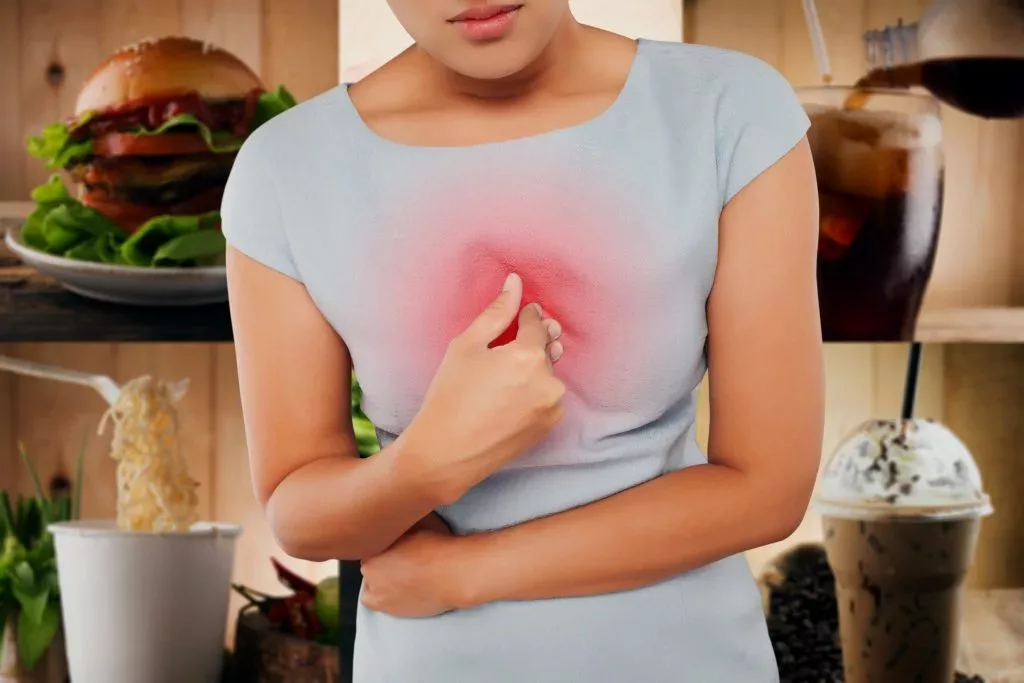
    There is a common misconception that if someone experiences heart burn it is because they have too much stomach acid that is passing up the lower esophageal sphincter (LES). The LES is the valve which, in a healthy person, prevents this from happening. Interestingly, many patients presenting with heart burn actually have LOW stomach acid, which results in the same symptoms.


    [tabby title=”Super Summary”]

    • Low stomach acid is more likely to be the cause of heartburn
    • Bloating and food intolerances may be heightened by low stomach acid
    • Anti acid medications can make the problem worse
    • Getting into a decent sleep pattern can make all the difference.

    [tabby title=”Anatomy in Images”]

    The Stomach’s location
    The stomach in relation to other organs

    [tabby title=”What causes low stomach acid?”]

    Low stomach acid is the result of many factors that come into play at the same time. These factors, or causes are common in our modern day lifestyle, far more common than the causes of potentially high stomach acid. Their prevalence means that in the majority of cases you can be pretty sure that the cause of heart burn is not high but low stomach acid.

    Attributing causes are:
    • Poor sleep
    • Under eating (e.g on a diet)
    • Stress
    • Too much exercise in a calorie deprived state
    • Over use of antibiotics
    • Regular use of NSAIDs
    • H Pylori
    • Eating too quickly
    • Small intestinal bacteria overgrowth
    • Yeast infections
    • Food sensitivities
    • Age
    • Alcohol

    Now if you look through the list above you probably know a few people (if not many) who fit into at least 3 or 4 of those categories. If nothing else most people are sleep deprived and even if they do actually get to bed, the quality of their sleep is poor and broken. A high number of people have been on some kind of diet (which usually means calorie restriction) for many years. They are likely stressed and probably have a drink now and then.

    As you can see, it’s easy to live what is considered an apparently ‘normal’ lifestyle nowadays, a lifestyle that causes low stomach acid.


    [tabby title=”What is Stomach Acid & Why Is It Important?”]

    Stomach acid is also called hydrochloric acid due to its chemical structure of one hydrogen ion combined to one chlorine ion, making HCL. It is responsible for sterilizing any food that wishes to make it into your gut. It assists with killing off viruses, yeast, parasites and breaking down protein.

    Its most important role is the breakdown of protein in to its constituent amino acid parts, ready for absorption later in the digestive process.

    So, without adequate levels of stomach acid, there is a vicious cycle of poor digestion, chronic gut inflammation, microbial overgrowth, leaky gut, elevated stress hormones and lowered nutrient absorption. The only things that will break this loop are to reduce stress in all its forms and support adequate stomach acid production.

    [tabbyending]

    [tabby title=”So What’s Wrong With Omeprazole?”]

    This is the problem with mistaking low stomach acid symptoms for high stomach acid:

    The GP will recommend any one of a number of anti-acid medications such as Omeprazole, or the patient will self medicate with over the counter remedies such as Rennies or Gaviscon.

    If this is the case it will stop the feeling of heartburn BUT it will actually push the stomach acid down even further. Once this happens the health of the patient will decline over time due to even poorer absorption of nutrients, higher chances of bacterial infections and higher elevation of stress hormones.

    [tabby title=”So What’s the Answer?”]

    So what’s the answer?

    Its pretty simple really. The first thing to do is manage the lifestyle factors causing the issue in the first place. Better sleep, manage stress, less alcohol, etc.

    From a support point of view a good digestive enzyme that includes HCL with each meal would be all you really need to stop the pain immediately. For good measure, a 30 day course of probitiocs to improve the good bacteria in the gut would be a positive step.

    [tabby title=”Questions To Be Answered Soon”]

    Should we continue encouraging patients to try their own gaviscon in non-cardiac sounding chest pain as a one-off measure to see if it resolves the pain?

    If the gaviscon does resolve the pain, what does this tell us about the likely cause of the chest pain? (Remember, trop-t levels may still be necessary).

    Do acidic or alkaline foods affect the reflux much?

    [tabbyending]

    This was the first of Article 999’s Guest Posts, posts that have been written by other professionals. These posts, unlike the remainder of Article 999’s, are not referenced to academic sources as they are the expert opinion of the author. These posts are additions to the category of ‘nice to know’. Please remember to check your local guidelines and read our full disclaimer before putting into practice anything you see here.

    Comments? Questions? Let us know what you think by adding your comments below.

    This post is yet to be peer reviewed. Please get in touch if you have any comments.
  • What is Negative Pressure Breathing?

    What is Negative Pressure Breathing?

    Negative pressure breathing is how we breathe normally, without the aid of bag-valve-masks or mechanical ventilators.

    Inspiration – Normally

    Breathing in is produced by ‘contraction and downward motion of the diaphragm [which] causes a negative pressure in the chest’ —–> inspiration. (Goldberg, 2014: 51, emphasis added)

    Inspiration is therefore a muscular process (the diaphragm is a muscle) which is normally mainly reliant on the diaphragm. However, accessory muscles including the ‘pectoralis major and minor’ may also be used and are ‘vital to survive in certain pulmonary conditions’ (Goldberg, 2014: 51).

    Let’s explain this by breaking it down:

    Why does a contracting diaphragm cause negative chest pressure?

    Because the volume has increased. This process is represented in Boyle’s Law (Rice University, 2016). Put simply, more space = more volume. When there’s more space in the chest, as with the contracting diaphragm, there is more room for air particles to move. They’re not crammed in any more, so there’s not much pressure.

    On the other hand, when those air particles are tightly squeezed in a smaller space, there is less pressure.

    To summarise:

    • more space = more volume
    • less space = less volume
    • more volume = less pressure
    • less volume = more pressure
    • Tightly squeezed particles in little volume cause a lot of pressure
    • Free moving particles in a lot of volume cause less pressure

    Why does negative pressure cause inspiration?

    This has to do with the laws of thermodynamics. ‘For anything to happen, energy has to move or flow or change’ and ‘energy has an absolute unfailing tendency to go from “more concentrated” to “less concentrated”‘ (Watson, 2014).

    So, it’s not so much because there is a negative pressure that we inhale. It’s because there is a change in pressure. When the diaphragm contracts, the pressure changes from high to low. Now there is no equilibrium. One of the laws of the universe (which is called a law because it’s been observed over and over again in different ways) occurs as a result: energy attempts to shift toward equilibrium. And the way it does that is by moving from an area of high pressure (outside the body) to one of low pressure (inside us).

    Watson, 2014 has written a great explanation of this here: http://www.ftexploring.com/energy/2nd_Law.html>

    Also, this is a great video which demonstrates the process: https://www.youtube.com/watch?v=q6-oyxnkZC0

    Expiration – Normally

    pexels-photo-321576

    This is ‘largely passive’, frequently happening ‘without any muscle action’ when relaxed. The contracted diaphragm simply ‘springs back into shape’ (Goldberg, 2014: 51). However, using the ‘external and internal intercostal muscles’ amongst others, you can ‘voluntarily exhale forcefully’ (Goldberg, 2014: 51).

    Either way, this process creates more pressure because there is now less volume (less space) for air particles to move around. Following the laws described above, air moves from an area of high pressure (the lungs) to an area of low pressure (outside) (Collison et al, 2002: 57; Watson, 2014).

    It’s intuitive that this change in pressure and lack of equilibrium (Watson, 2014) will ensure that the process repeats itself. Each time the diaphragm contracts, the volume changes so the pressure changes. Air flows inside. Then there’s too much pressure and less volume as the diaphragm is returning to shape (Goldberg, 2014). So air flows out. Then the diaphragm contracts again…

    References

    Baker, D. n.d. Emergency and Transport Ventilation: an introductory guide, Smiths Medical International Limited: Bedfordshire

    Collison, P. et al, 2002. Nelson Modular Science: 2, Nelson Thornes Ltd: Cheltenham.

    Goldberg, S. 2014. Clinical Physiology made ridiculously simple, MedMaster: Miami.

    Rice University, 2016. The Process of Breathing, Available Online: https://opentextbc.ca/anatomyandphysiology/chapter/22-3-the-process-of-breathing/ (Accessed 01/11/2017)

    Watson, D. 2010. The Second Law of Thermodynamics, Available Online: http://www.ftexploring.com/energy/2nd_Law.html (Accessed 01/11/2017)


    This article has not been endorsed by any company.

    With thanks to Smiths Medical for providing information.


    review time Business Concept , time for review , Business team hands at work with financial reports and a laptop
    This post is yet to be peer reviewed. Please get in touch if you have any comments.