Category: Where did I read that?

  • Should Patients Take Caffeine-Containing Analgesics?

    Should Patients Take Caffeine-Containing Analgesics?

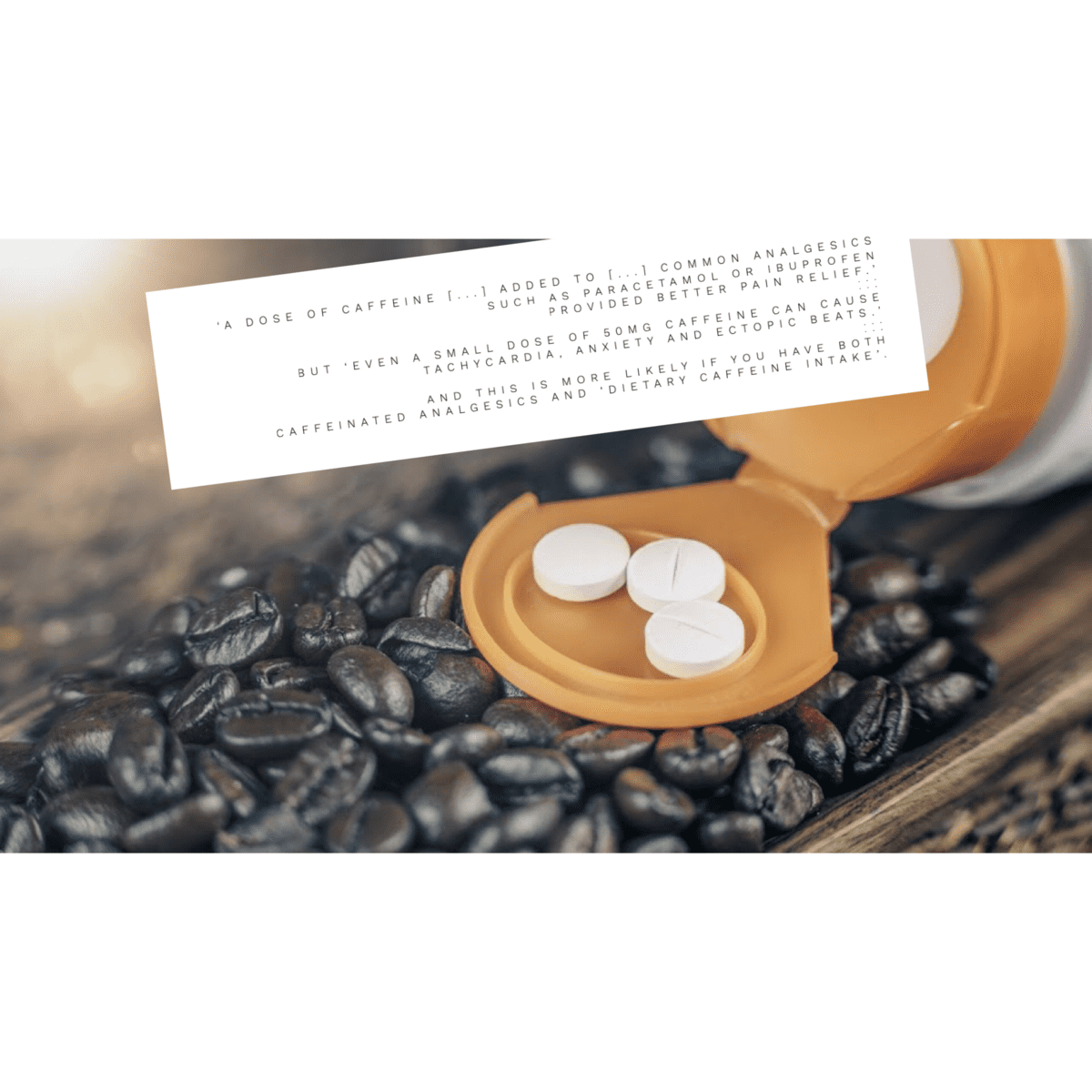
    Many of our patients have high temperatures, especially during COVID outbreaks. Some of them are taking over the counter pain relief as required. This is of course recommended, however many of our patients are also tachycardic due at least in part to their high temperatures. When they complain of palpitations, do they need to be aware of the effects of caffeine-paracetamol combinations? Should they be taking this combination at all, or should they simply ease off dietary sources of caffeine while taking analgesics? Here are a few quotes on the subject for discussion. Full references are below. For a fast fact summary, have a look at the featured image below:

    A dose of caffeine equivalent to a mug of coffee added to a standard dose of common analgesics such as paracetamol or ibuprofen provided better pain relief. Analgesic plus caffeine increased the number of people who had a good level of pain relief by 5% to 10% compared with analgesic alone

    Derry et al, 2014.

    But…

    When the recommended paracetamol-caffeine dosing regimen is combined with dietary caffeine intake, the resulting higher dose of caffeine may increase the potential for caffeine-related adverse effects such as insomnia, restlessness, anxiety, irritability, headaches, gastrointestinal disturbances and palpitations.

    EMC, 2017

    Even a small dose of 50 mg caffeine can cause tachycardia, anxiety and ectopic beats. Toxicity is normally seen at doses > 500 mg, but this depends on tolerance.

    Take into account dietary and other medicinal sources of caffeine: people may not be aware from the brand name that a particular preparation contains caffeine. Consider whether paracetamol with caffeine is necessary: it cannot be assumed that it will be tolerated in the same way as paracetamol alone.

    NPS MedicineWise, 2010

    References

    Derry, C.J. et al, 2014. Caffeine as an analgesic adjuvant for acute pain in adults. [online] Available at: https://www.cochrane.org/CD009281/SYMPT_caffeine-analgesic-adjuvant-acute-pain-adults (Accessed 21/01/21)

    EMC, 2017. Paracetamol & Caffeine 500/65 mg Effervescent Tablets. [online] Available at: https://www.medicines.org.uk/emc/product/7416/smpc#gref (Accessed 21/01/21)

    NPS MedicineWise, 2010. Paracetamol with caffeine (Panadol Extra) available over the counter from pharmacies. [online] Available at: https://www.nps.org.au/radar/articles/paracetamol-with-caffeine-panadol-extra-available-over-the-counter-from-pharmacies (Accessed 21/01/21)

  • An Easy Way to Remember How to Identify Left and Right Bundle Branch Blocks

    An Easy Way to Remember How to Identify Left and Right Bundle Branch Blocks

    Dubin, 2000, pp: 191-198

    Easily remembered as: In English we read from left to right, but the ECG prints a view of the heart from right (V1-V2) to left (V5-V6).

    Reference

    Dubin, D. (2000) Rapid Interpretation of EKG’s. 6th edition. Florida: COVER Publishing Company.


    Like it? Hate it? Spot a mistake? Let me know in the comments below ->

  • PARAMEDIC-2 Trial Results

    PARAMEDIC-2 Trial Results


    ‘For more than 50 years, treatment strategies have included the use of various drugs, but there is limited evidence that such treatments are effective’ (Perkins et al, 2018).

    Now the PARAMEDIC-2 trial results are in…

    • 8014 patients of the 10, 623 initially selected were included in the trial.
    • Of these, 4015 were given adrenaline and 3999 a placebo.
    • Of those who were given adrenaline and survived until discharge, 39 (31.0%) out of 126 patients had a ‘severe neurological impairment’ and of those who were given the placebo, the same was true for ’16 of 90 patients [17.8%]’
      (Perkins et al, 2018).

    Exclusions to the trial

    • ‘…those with anaphylaxis, pregnant women and children’ (below age 16).
    • After the pilot, life-threatening asthma as a suspected cause of the cardiac arrest was added as an exclusion because of ‘the potential overlap between the presentation of asthma and anaphylaxis’.
    • Anaphylaxis was excluded because adrenaline is considered potentially ‘beneficial’ for this condition
      (Warwick Clinical Trials Unit, 2018).

    The trial only looked at the effects of the use of adrenaline during out-of-hospital cardiac arrest and not at the use of adrenaline during ROSC, which is a protocol that some Trusts follow (Warwick Clinical Trials Unit, 2018). In addition, this does not cover any treatment initiated by the hospital if the patient was transported there.

    Conclusions

    ‘the benefits of epinephrine that were identified in our trial are small, since they would result in 1 extra survivor for every 112 patients treated. This number is less than the minimal clinically important difference that has been defined in previous studies.29,30 Among the survivors, almost twice the number in the epinephrine group as in the placebo group had severe neurologic impairment’ (Perkins et al, 2018).

    Limitations

    Perceived limitations include: ‘Information about the quality of CPR was limited to the first 5 minutes of cardiac arrest and involved fewer than 5% of the enrolled patients.’ (Perkins et al, 2018)

    Further limitations to consider could be:

    • time to CPR
    • patient’s co-morbitities that weren’t already considered in the study

    More information

    Warwick’s Clinical Trials Unit have produced an infographic with more information here.

    View the University of Warwick’s press release here.

    References

    NIHR, 2018. Investigating the role of adrenaline in cardiac arrest. Available Online: https://www.nihr.ac.uk/news/investigating-the-role-of-adrenaline-in-cardiac-arrest/8931 (Accessed 19/07/18)

    Perkins, G.D. et al, 2018. A randomized trial of epinephrine in out-of-hospital cardiac arrest. New England Journal of Medicine. doi: 10.1056/NEJMoa1806842

    Warwick Clinical Trials Unit, 2018. Available Online: https://warwick.ac.uk/fac/med/research/ctu/trials/critical/paramedic2/faqs/ (Accessed 19/07/18)


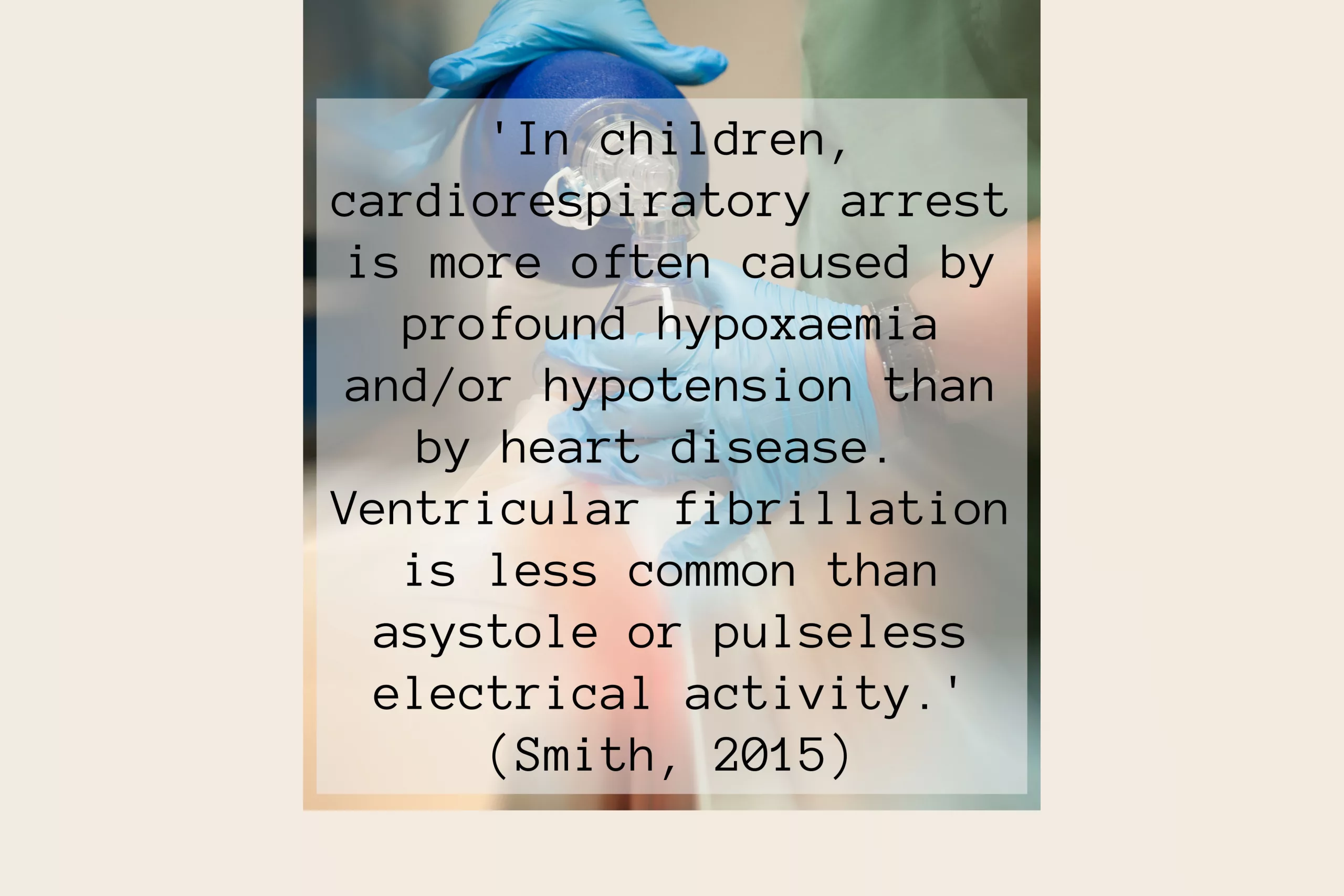
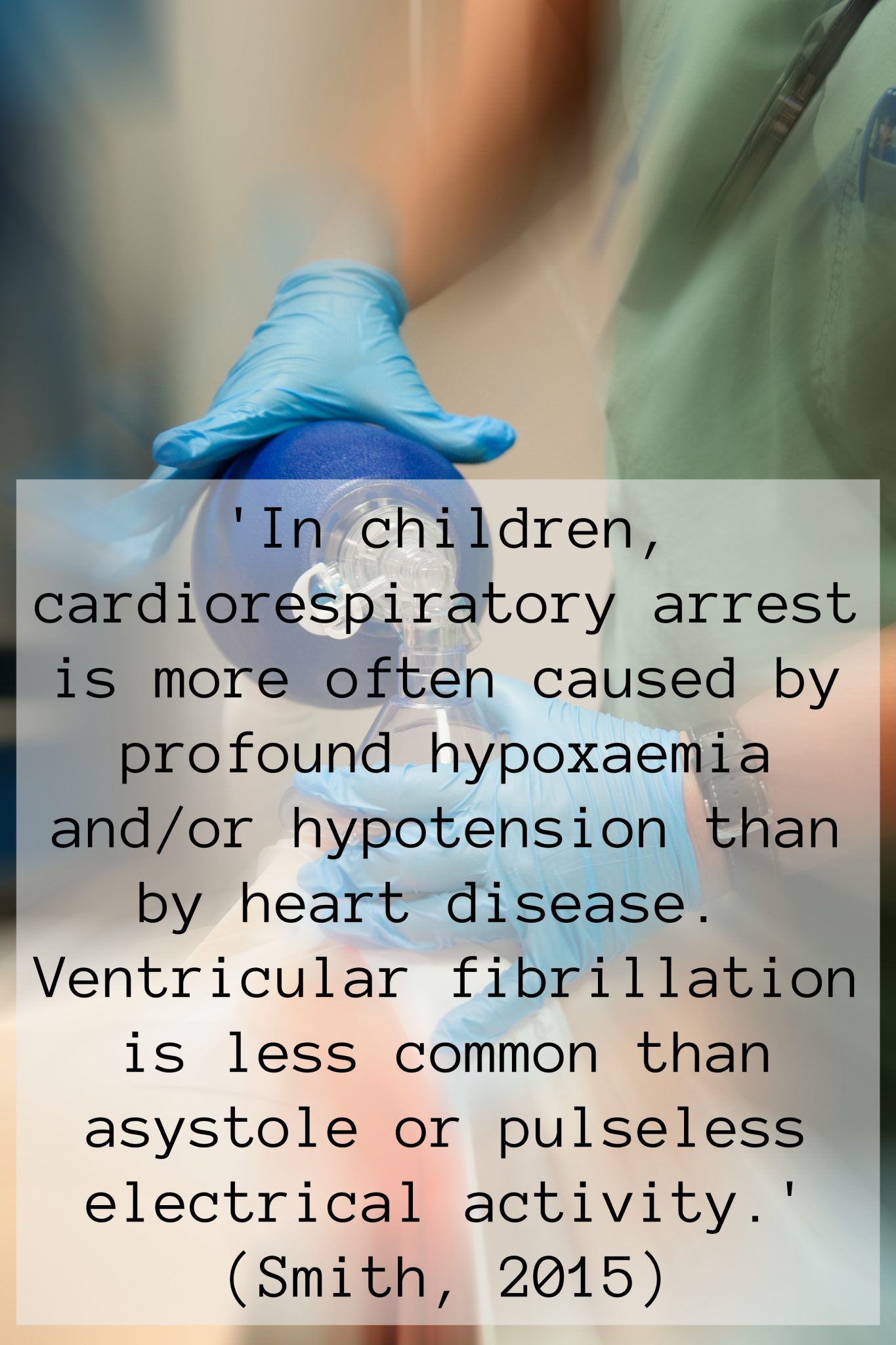
  • Children are more likely to arrest due to a lack of oxygen or hypotension than a cardiac cause

    Children are more likely to arrest due to a lack of oxygen or hypotension than a cardiac cause


    Smith, G. 2015. Prevention of cardiac arrest and decisions about CPR, Available Online: https://www.resus.org.uk/resuscitation-guidelines/prevention-of-cardiac-arrest-and-decisions-about-cpr/#decisions (Accessed 02/05/2018)